
The increasing threat of extreme heat is claiming more lives across the United States than ever.
As temperatures continue to rise, the U.S. has seen a dramatic spike in heat-related deaths, more than doubling over the past two decades.
This disturbing trend underscores the urgency of addressing the dangers of extreme heat and the broader implications of climate change.
The alarming numbers
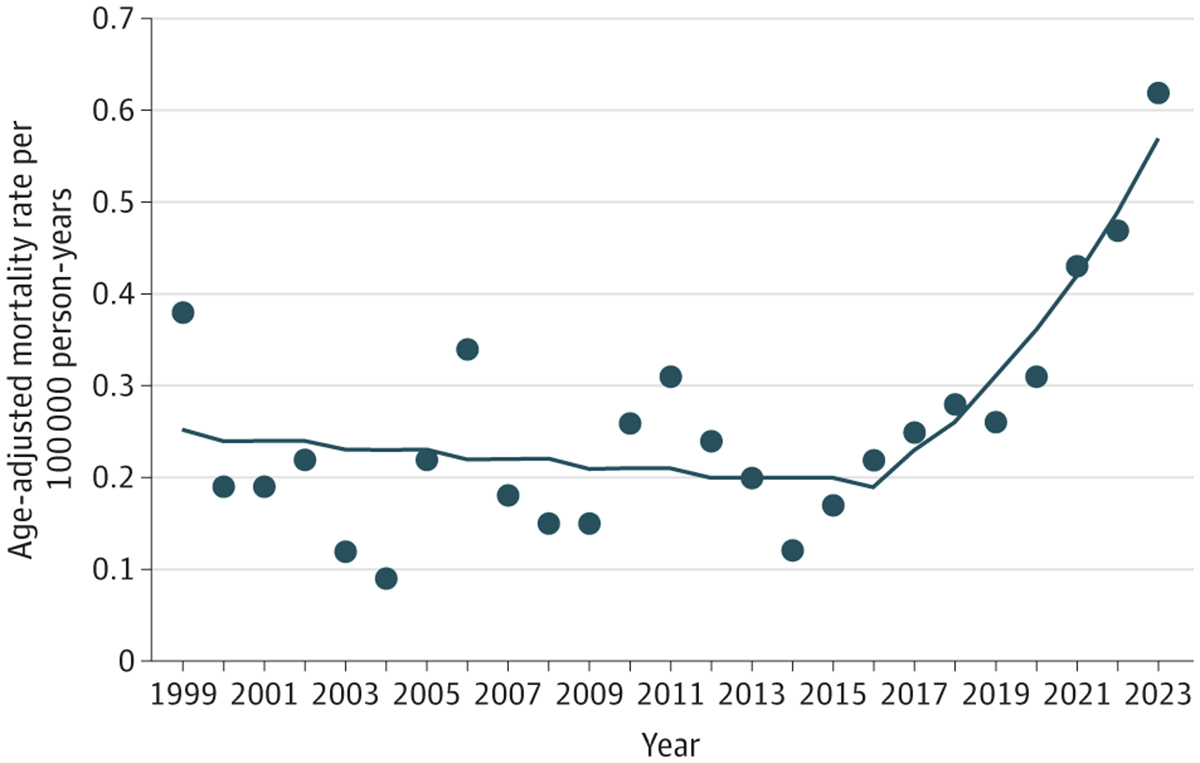
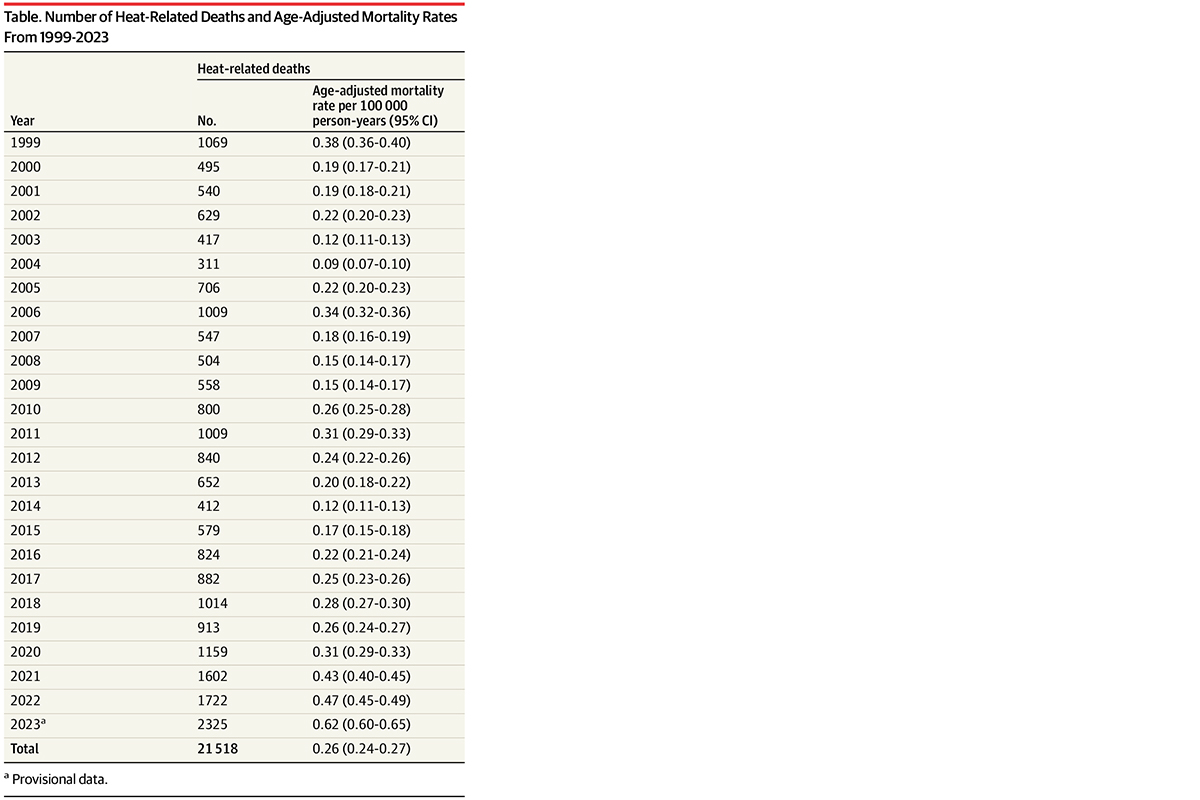
Between 1999 and 2023, the U.S. recorded over 21,500 heat-related deaths, with a sharp rise in recent years. In 1999, there were 1,069 deaths attributed to heat, but by 2023, this number had surged to 2,325—a staggering 117% increase.
The age-adjusted mortality rate (AAMR), which accounts for population age differences, rose by 63% during this period, signaling a growing public health crisis.
This increase isn’t just a statistical blip. The data reveal a significant and sustained rise in fatalities linked to extreme heat, particularly since 2016 [1].
This period saw the most rapid increase in heat-related deaths, a trend that mirrors the broader patterns of rising global temperatures.
Several factors contribute to the increase in heat-related deaths. The most obvious is the rising average temperatures across the U.S., driven by climate change.
The year 2023 was the warmest on record since 1850, and the risks associated with heat exposure grow with each passing year [1].
Urbanization also plays a role. With their heat-retaining concrete and asphalt, cities can become veritable ovens during heatwaves, especially for vulnerable populations like the elderly, young children, and those with preexisting health conditions.
Another factor is the increasing frequency and intensity of heat waves. What was once a rare event, with longer durations and higher peak temperatures, has become increasingly common.
This relentless heat strains the human body’s ability to regulate temperature, leading to heat exhaustion, heat stroke, and other related conditions.
Understanding the data
The study that provided these insights analyzed death records from 1999 to 2023, focusing on cases where heat was either the underlying or a contributing cause of death.
The data were sourced from the CDC’s WONDER platform, which integrates death counts with U.S. Census population estimates to calculate mortality rates.
What’s particularly telling is the trend analysis using Joinpoint regression. This method identified a significant shift in heat-related deaths starting in 2016, with an annual increase of 16.8% in the AAMR—a sharp contrast to the nonsignificant downward trend observed from 1999 to 2016.
This change points to a critical juncture in our climate trajectory. While previous years showed some variability in heat-related deaths, the consistent rise after 2016 suggests we are now in a new, more dangerous phase of heat exposure risks [1].
Regional and demographic variations
The impact of heat isn’t uniform across the U.S. Some regions and populations are more vulnerable than others. For instance, the southwestern U.S., already known for its high temperatures, has seen some of the most significant increases in heat-related deaths.
However, even traditionally cooler regions are not immune, with rising temperatures pushing the limits of what local populations and infrastructures can handle.
Demographically, certain groups are at higher risk. Elderly individuals, especially those aged 65 and above, are more susceptible to heat-related illnesses. Children, outdoor workers, and individuals with chronic illnesses are also at elevated risk.
Additionally, socio-economic factors like air conditioning and healthcare access can influence an individual’s risk of dying from heat exposure [1].
The role of public health interventions
Despite the grim statistics, some measures can help prevent the risks associated with extreme heat.
Public health interventions, such as expanding hydration centers and public cooling spaces, can provide immediate relief to the most vulnerable.
Increasing green spaces and improving urban planning to decrease the urban heat island effect can also make a significant difference in cities.
Public awareness campaigns are crucial. Educating individuals on the risks of heat, recognizing the signs of heat-related illnesses, and emphasizing the significance of staying hydrated and cool during heatwaves can be life-saving.
Local governments and health organizations must prioritize these efforts, especially as we head into increasingly hotter years.
Addressing this issue requires a multi-faceted approach. Individuals need to be aware of the risks and take steps to protect themselves and their loved ones during extreme heat events.
On a broader scale, cities and states must invest in infrastructure and policies that mitigate the effects of extreme heat, particularly for the most vulnerable populations.
Staying informed and proactive is essential in the face of these challenges. The data from the past two decades make it clear that the time to act is now—before the heat turns deadly for even more Americans.
[1] JAMA Network. Trends of Heat-Related Deaths in the US, 1999-2023

