
Australian-led research project lands $11.5 million grant to advance RA immunotherapy into clinical trials.
Researchers developing an immunotherapy treatment for rheumatoid arthritis (RA) have secured an AUD $11.5 million grant to advance the breakthrough treatment into clinical trials. The immunotherapy, called ASITI-RA, is designed to reprogram the immune system, with the goals of delivering long-lasting remission from RA and avoiding the need for lifelong immunosuppressive therapies.
RA is a chronic autoimmune condition that causes painful inflammation in the joints and significantly impairs quality of life. The disease affects more than 20 million people worldwide, including a disproportionately high number of women. Research suggests that RA can also accelerate the aging process, with sufferers tending to have shorter life expectancies and potentially aging physically and cognitively faster than those without the disease. Patients with RA were found to be, on average, two years older than their biological age at diagnosis, and for every ten biological years, they aged the equivalent of 11.4 years.
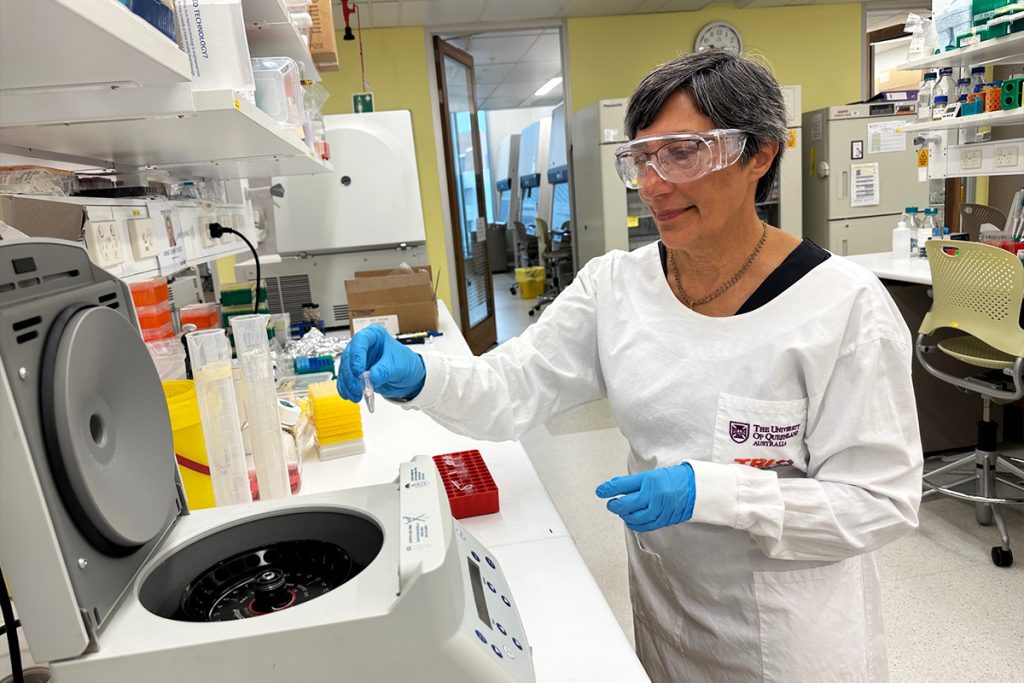
The Reset Rheumatoid Arthritis project is led by University of Queensland professor Ranjeny Thomas, and includes researchers from a number of institutions, including The University of Sydney, Monash University, King’s College London, and Leiden University Medical Center.
Prof Thomas said the new grant funding from the Australian government’s Frontier Health and Medical Research initiative, will support the next phase of project.
“We can now accelerate work to ready us for clinical trials of ASITI-RA, an antigen-specific immunotherapy we developed to reprogram the immune system to sustain long-term remission in RA,” she said Thomas. “Within two years, we expect to be able to start Phase 1 clinical trials of the immunotherapy, which aims to reduce the need for lifelong immunosuppression.”
Early-phase clinical trials led by Thomas and her team have already yielded promising results, with participants in two dose groups experiencing disease remission within just eight weeks. A significant finding from these early trials was the change in patients’ disease-specific antibodies. The researchers suggest that this response differs from that of current therapies and indicates a deeper, more targeted impact on the disease mechanism.
“Based on our results, this funding provides a world-first opportunity to leverage these learnings, and to progress our new immunotherapy to trial to interrupt the disease process and achieve safe treatment withdrawal,” said Thomas. “Immunotherapies like this might also be used to prevent the onset of RA in people at high risk, and in people recently diagnosed with other autoimmune disorders like Type 1 diabetes.”

