
NeuroAge test combines AI, genetics and medical imaging to provide brain aging insights and build data for cellular reprogramming therapies.
Neurodegeneration-targeting biotech NeuroAge Therapeutics has launched a new test designed to transform how brain aging is understood and addressed. The NeuroAge Test integrates AI, imaging techniques, genetic insights and cognitive evaluations to predict biological brain age and assess the risk of dementia up to three decades before symptoms emerge.
San Francisco-based NeuroAge says its test not only identifies early indicators of cognitive decline but also provides actionable strategies to promote long-term brain health, empowering individuals to take charge of their cognitive resilience. The launch of the test is a first step towards the company’s broader mission to enable a preventive approach to cognitive health by developing personalized cellular reprogramming therapies capable of reversing brain aging.
Longevity.Technology: The inspiration behind NeuroAge comes from its founder, MIT-trained physician and neuroscientist Dr Christin Glorioso, who was profoundly affected by witnessing her grandmother’s battle with Alzheimer’s disease. Motivated to develop proactive solutions for combating age-related cognitive disorders, the company has developed a diagnostic tool that it claims represents a significant step forward in brain health monitoring and intervention.
We caught up with Glorioso to learn more about the new test, and how it supports the company’s broader mission of enabling interventions that can mitigate the risk of neurodegenerative diseases and promote resilience against age-related brain decline.
What sets the NeuroAge Test apart is its detailed examination of brain health across structural, functional and molecular dimensions. Unlike traditional methods that focus narrowly on cognitive performance, the test provides a more nuanced understanding of brain aging by incorporating a wide array of advanced biomarkers.
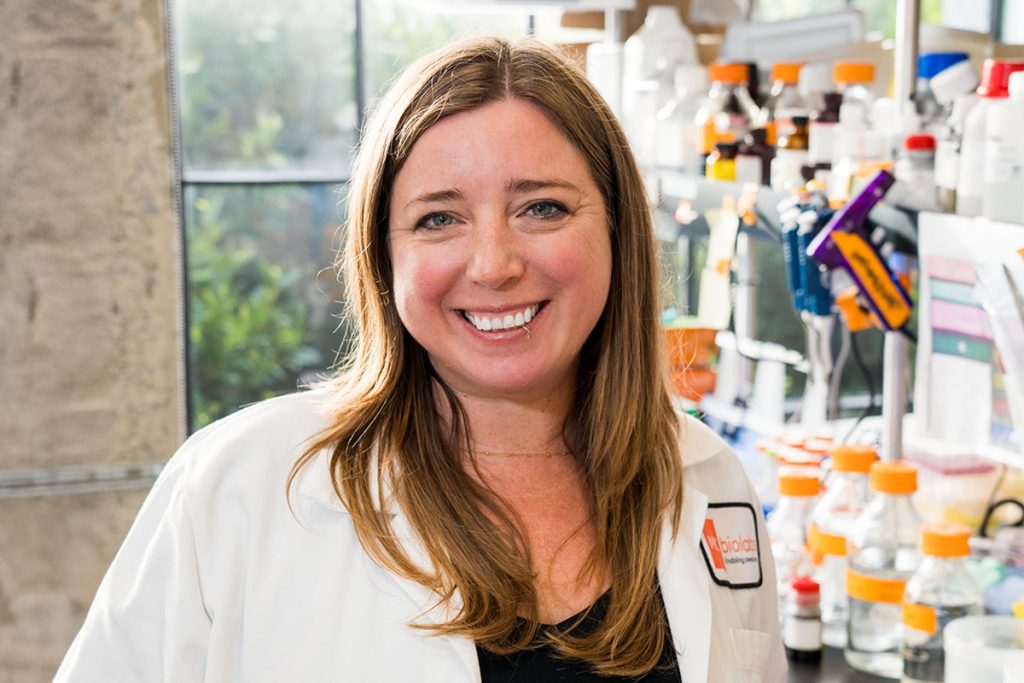
“We use AI to combine well established ways of measuring brain aging- brain volume on MRI and cognitive testing with our proprietary RNA-based blood biomarkers to create a much more accurate way to track dementia risk,” says Glorioso, explaining that the approach is based on 20 years of research conducted of MIT and has been trained on data from more than 500,000 people.
A brain-specific aging clock
The NeuroAge test evaluates 52 RNA gene expression levels predictive of brain aging through blood analysis.
“The RNA-based blood biomarkers are a set of 52 levels of genes that change with age and predict the levels of genes in your brain,” says Glorioso. “This is an organ-specific aging clock similar to what was published by the Tony Wyss-Coray lab except we use RNA instead of protein levels.”
The test also leverages whole-genome DNA screening to detect hundreds of genetic markers associated with neurodegenerative conditions, including Alzheimer’s, Parkinson’s and various forms of dementia.
“We separately assess people’s genetic risk for neurodegenerative diseases using whole genome sequencing,” says Glorioso. “We test for more than 200 genes for Alzheimer’s including rare risk mutations that run in families. By comparison, the 23andMe PGS test only includes one gene for Alzheimer’s. Knowing people’s genetic risk allows them to gauge how much they should be focused on lifestyle to prevent later neurodegenerative diseases.”
Finally, NeuroAge’s test also offers unique features include interactive cognitive challenges, known as NeuroGames, that assess memory, attention and processing speed, alongside state-of-the-art brain MRI technology, offering detailed three-dimensional imaging to assess cognitive health.
Start brain health testing early
The NeuroAge Test not only provides individuals with an in-depth understanding of their brain health but also delivers personalized recommendations, based on users’ genetics and biomarkers, to guide preventive and therapeutic strategies. For example, every Sunday, users answer questions about the exercise, sleep, eating patterns and medications and supplements they are taking.
“This allows us to use AI to then give people recommendations about what people with similar biomarkers are doing to successfully slow their brain aging,” says Glorioso. “For example, hours of fasting, type and amount of exercise, type of diet, or medications like hormone replacement or GLP-1s.”
Through NeuroAge’s dashboard and reporting features, users gain insights to optimize their brain function, with the aim of delaying or avoiding the onset of neurodegenerative diseases.
“If you are five years younger in your brain aging, you are six times less likely to have Alzheimer’s in the future, also less likely to have Parkinson’s, and have better memory, mood, and overall brain health,” says Glorioso. “Tracking your brain age over time lets you see if your health interventions are working to slow down your brain aging.”
With NeuroAge claiming it can deliver insights 30 years ahead of symptoms, when does Glorioso think people should consider taking the test?
“We suggest around age 25,” she says. “This is the age that development stops and aging begins. This gives people a baseline and decades to start tracking and lowering their brain age through lifestyle changes.”
The NeuroAge test was initially rolled out in select longevity clinics, and Glorioso says that it is now being offered in nine 9 clinics in locations including New York, San Francisco and London.
“We are launching the direct-to-consumer version of the test December 5th and will be available in 12 US states and in the UK to start,” she says. “We anticipate being in all 50 states and many European countries by summer 2025. The long-term vision is for the NeuroAge Test to be offered as a simple blood test yearly like cholesterol testing. This will be covered by insurance and available to everyone. We are running a 75-person clinical study now towards this goal that is funded by the Alzheimer’s Drug Discovery Foundation.”
Building data for cellular reprogramming
While the longer-term focus of NeuroAge is to develop small molecule therapeutics designed to reprogram neurons into a younger, healthier state, Glorioso explains that the test is an integral part of that process.
“At our core we are a therapeutics company and creating this one of a kind multi-modal multi-omic dataset offers a huge advantage for drug discovery and biomarker development for clinical trials,” she says. “Because we have genetic data alongside functional and MRI data, we can use causal inference, like causal AI and Mendelian randomization, to understand why some people are aging faster or slower and design drugs to target those biomarkers. Also, because we are designing drugs to reprogram brain aging, not remove amyloid, we will need separate biomarkers for clinical trials as early endpoints. The NeuroAge Test allows us to develop those.”
To mark the launch of its test, NeuroAge is hosting an event at MBC Biolabs in San Francisco this Thursday. The occasion will showcase the capabilities of the NeuroAge Test, alongside expert presentations on strategies to maintain cognitive health and prevent decline.

