
Neurotech lands $50m to commercialize graphene electrode BCI technology that can decode and modulate neural signals in real-time.
While Elon Musk’s Neuralink tends to hog the headlines when it comes to brain-computer-interface technology developments, other companies are also making significant strides in the field. This week, Barcelona-based neurotech Inbrain Neuroelectronics successfully raised $50 million in a Series B financing round to advance its graphene-based BCI technology. The company also revealed it has partnered with life sciences giant Merck to facilitate the clinical development of its BCI therapeutics for potential applications across both the central and peripheral nervous system.
Inbrain’s technology is being developed to enable personalized and adaptive treatments for a range of neurological conditions, such as Parkinson’s, with real-time monitoring to optimize therapeutic outcomes and minimize side effects. The new capital will enable the company to advance its ongoing clinical trials, expand its team and further develop the AI-driven aspects of its platform to enhance treatment effectiveness.
“We’re shaping the future of brain-computer interface therapeutics,” said Carolina Aguilar, co-founder and CEO of Inbrain. “This funding empowers us to advance our AI-driven graphene neurotechnology, which has already shown great results versus current commercial neuromodulation technology.”
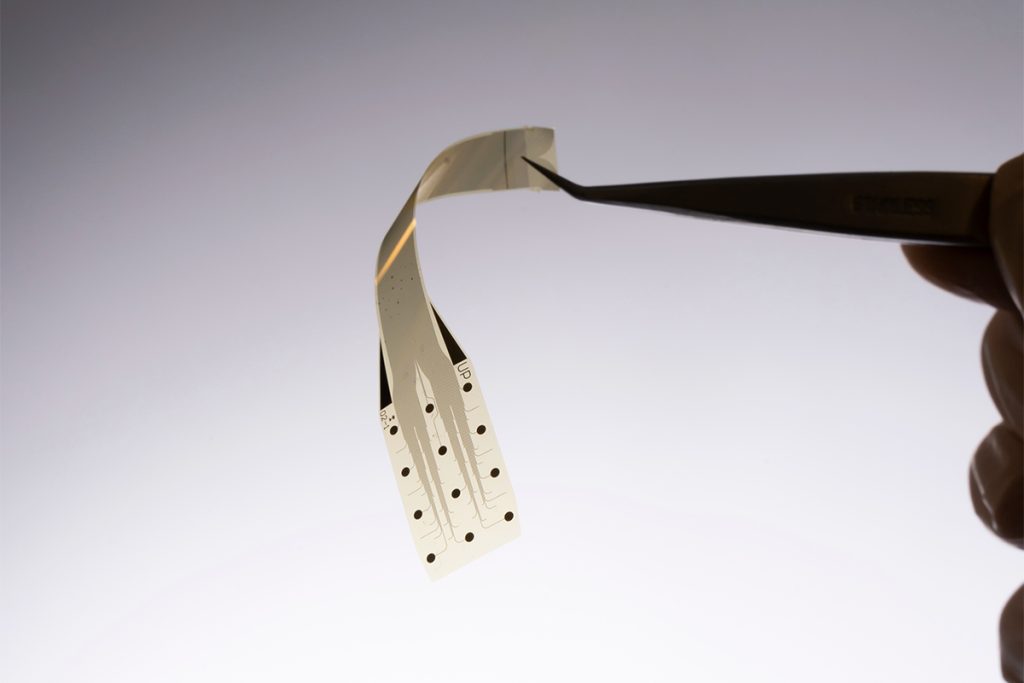
Based on graphene, a unique material valued for its flexibility, strength and conductivity, Inbrain’s platform aims to deliver a high level of precision in neuromodulation through the use of AI and micrometric graphene electrodes that can decode and modulate neural signals in real-time. With an ultra-thin design of just 10 micrometers, the company claims its first implant can safely interact with neural tissue, offering a level of detail in neural signal processing that has yet to be achieved by other neuromodulation devices.
Inbrain recently announced the world’s first human implantation of its BCI in a clinical trial at Salford Royal Hospital in Manchester, UK. The ongoing trial seeks to evaluate the safety of Inbrain’s device in patients with brain cancer and will enroll up to ten participants to determine the potential advantages of graphene over traditional materials in neural applications.
Inbrain has already achieved FDA Breakthrough Device Designation for its platform’s potential to target Parkinson’s Disease, and the company’s subsidiary, INNERVIA Bioelectronics, is working on expanding the technology to address peripheral nerve and systemic diseases.

The new funding round, which brings the total raised by the company to $68 million, was led by imec.xpand and also included contributions from the European Innovation Council’s EIC Fund, Fond ICO Next Tech, CDTI-Innvierte and Avançsa, alongside existing investors.
“By harnessing the remarkable properties of graphene, Inbrain is advancing cutting-edge neurotechnology applications that could significantly improve patient outcomes and also position Europe as one of the leaders in the global BCI industry,” said Marcin Nowak, investment director at European Investment Bank.
Lead investor imec.xpand is an investment fund associated with imec, a nanoelectronics R&D and innovation hub, which is supporting Inbrain to scale its technology for commercial production.
“This unique graphene-based BCI platform has the potential to redefine how we treat neurological disorders by offering more precise, adaptable, and intelligent therapeutics,” said Frank Bulens, partner at imec.xpand. “We look forward to supporting the Inbrain team in accelerating their clinical trials and bringing this next-generation technology to patients.”

