
FibroBiologics CSO explains how a fibroblast-enabled artificial thymus may hold the key to restoring and maintaining immune system function as we age.
This week, regenerative medicine biotech FibroBiologics announced key progress in the development of its artificial thymus organoid technology. The company, which specializes in fibroblast-based therapeutics, said its data shows that its thymus organoid can persist and operate for over 50 days following transplantation into animal models. The organoids also demonstrated vascularization and supported the production of mature T cells that play a vital role in immune recognition and response.
FibroBiologics says the mature T cells produced by its artificial thymus were shown to identify and respond to a broad range of antigens, a pivotal part of forming a balanced and effective immune defense, particularly for patients with compromised immunity due to age or treatments like chemotherapy. The company is now working towards completing the necessary studies, with the goal of filing for an Investigational New Drug (IND) application and initiating a clinical trial.
Longevity.Technology: Leveraging fibroblasts and fibroblast-derived materials, FibroBiologics is developing cell therapies to address a wide range of conditions, from wound care and degenerative disc disease to multiple sclerosis. With more than 150 issued or pending patents, the company is also exploring fibroblast therapies to extend thymic function.
The thymus, integral to immune system function, declines with age, reducing immune resilience. FibroBiologics believes that its fibroblast-enabled thymus organoids may counteract this decline, thereby enhancing immune response, and the company is leveraging this principle in its artificial thymus organoids. To learn more about this work, we sat down with FibroBiologics’ Chief Scientific Officer, Dr Hamid Khoja.
Fibroblasts, abundant across all human tissues, secrete and maintain the extracellular matrix that keeps cells, tissues, and organs together. They also play a key role in immune modulation and offer promising applications in disease treatment and regenerative medicine. According to FibroBiologics, fibroblasts are more accessible and easier to isolate than stem cells, requiring less complex and costly culturing, which positions them as a cost-effective, potent alternative.

“Evolutionarily, fibroblasts have taken on key roles in practically every aspect of tissue repair, tissue regeneration, tissue maintenance and even immune modulation,” says Khoja, explaining that this makes them an ideal candidate for developing innovative cell therapies.
Fibroblasts vs aging
Having isolated and characterized over 16 different types of dermal fibroblasts, FibroBiologics has also identified specific fibroblast subtypes that are particularly well-suited for certain clinical applications. By identifying, characterizing, and banking specific subtypes, the company aims to target and optimize the performance and functionality of its regenerative products for chronic, age-related diseases.
“Age has been characterized to include systemic, chronic inflammation, accompanied by cellular senescence and immune senescence, which leads to a whole gamut of other chronic diseases over the course of life,” Khoja explains. “Our goal is to utilize the key characteristics of fibroblasts to build products that will potentially help in curing or treating age-related chronic diseases.”
One of FibroBiologics’ key development programs is focused on addressing ‘thymic involution’, the gradual shrinkage and decline of the thymus gland as we age. This process leads to a weakened immune system, contributing to a host of age-related chronic diseases, including autoimmune disorders, cancer, and infections.
Khoja explains that the thymus gland is quite large when we are born, but it starts declining even from a very early age.
“After puberty it seems to reduce significantly over time and has a half-life of about 16 and a half years,” he says, suggesting that the reason for its decline is likely to be evolutionary.
“Humans are living longer,” explains Khoja. “Just 300 years ago, a 60-year-old would have been unheard of. Now we have many more people living into their 80s, 90s, and even 100s, and I think we’re seeing the impact of that in terms of higher prevalence of immune disorders and cancer. We’re just living beyond our evolution at this point. And part of that because your thymus is no longer able to teach your immune system to detect and destroy these pathogenic changes.”
Building an artificial thymus
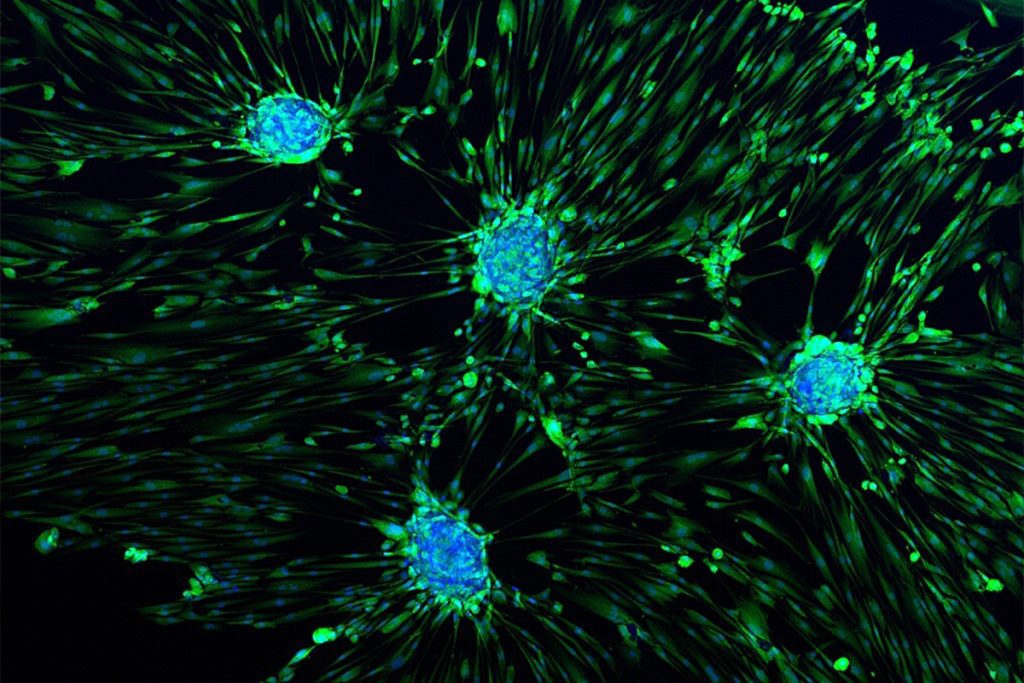
FibroBiologics’ approach involves creating an artificial thymic organoid, a miniature version of the thymus gland, which is maintained by the company’s fibroblast technology.
“We’ve been able to show that we can make an artificial thymic organoid that contains potentially all the components of the thymus organ,” says Khoja. “And it’s allogeneic, which means it can be transplanted from one person to another. It’s the presence of our specific fibroblasts that is important in maintaining the organoid and keeping it safe from the immune system.”
The thymic organoid currently in development at FibroBiologics’ lab can be cryopreserved, allowing it to be shipped and stored for long-term use. When it is time for administration, the organoid is injected subcutaneously, typically near the lymph nodes. The goal is to leverage the artificial thymus’ ability to teach and release immune cells into circulation via the lymph nodes, helping to restore and regulate the patient’s immune system.
By targeting specific fibroblast subtypes and maintaining the organoid without genetic modification, Khoja says the company aims to develop a safe and effective treatment that can be accessible to a wide range of patients.
“We always try to look at the most usable mode of a drug product that could be used by everyone,” he says. “There are many autologous therapies being developed that are derived from your own cells, but I don’t envisage any of our products being developed that way. I’d prefer all our products to be developed allogeneically so that they are easier to obtain for everyone.”
Maintaining immune functionality
In its recent animal studies, FibroBiologics demonstrated that its artificial thymic organoids can persist for longer than 52 days and replace a portion of the lost thymic function.
“We were able to replace 20% of the lost functionality of the thymus gland in these animals, with just a handful of these organoids transplanted subcutaneously,” Khoja says.
While the specific details of a future clinical trial have yet to be determined, Khoja suggests potential indications could include patients with chronic inflammation, or those who have undergone chemotherapy or other treatments that have impacted their thymus gland function.
Of course, FibroBiologics is not the only company exploring the potential of the thymus to combat aging and disease. Dr Greg Fahy of Intervene Immune conducted a clinical study in 2015, which found that participants’ epigenetic age was “significantly decreased” through thymus regeneration. Earlier this month, we covered the launch of Tolerance Bio, and other companies in the space include Thymmune, Vidaregen and Thymox.
Differentated by its fibroblast-enabled approach, Khoja hopes that FibroBiologics’ technology will one day allow thymic functionality to be maintained as people age.
“I could envision at some point in the future that tests would be conducted to determine your thymic functionality,” he says. “And if the results are below a certain level, then you get an organoid treatment to maintain the thymic functionality that you had when you were in your 40s, for example.”

