
Aging drug discovery conference demonstrates that longevity is increasingly attracting the attention of those outside the geroscience field.
The world’s largest biopharma conference on aging continues apace this week in Copenhagen, bringing together a combination of longevity scientists, clinicians and executives to discuss the latest developments in the field… along with some lighter moments!
Our man on the ground at ARDD 2024 lauded the quality of the presenters, noting that the vast majority of the world’s leading aging researchers were participating in this year’s event. A point backed up by Insilico Medicine founder Alex Zhavoronkov, who told us, “Seventy of the leading global scientists on aging are at this conference… it is the summit where pharma and academia meet.”
More from Zhavoronkov later, but his comment on the link-up between academia and pharma is an important one, and one echoed by many others at ARDD, including Longevitytech.fund founder Petr Sramek. The strong pharma presence at ARDD is a clear indicator that developments in aging science are increasingly of interest to those outside the established geroscience “bubble”. For the field to deliver on its potential, it needs more involvement from major players in other sectors – and that includes Big Pharma.
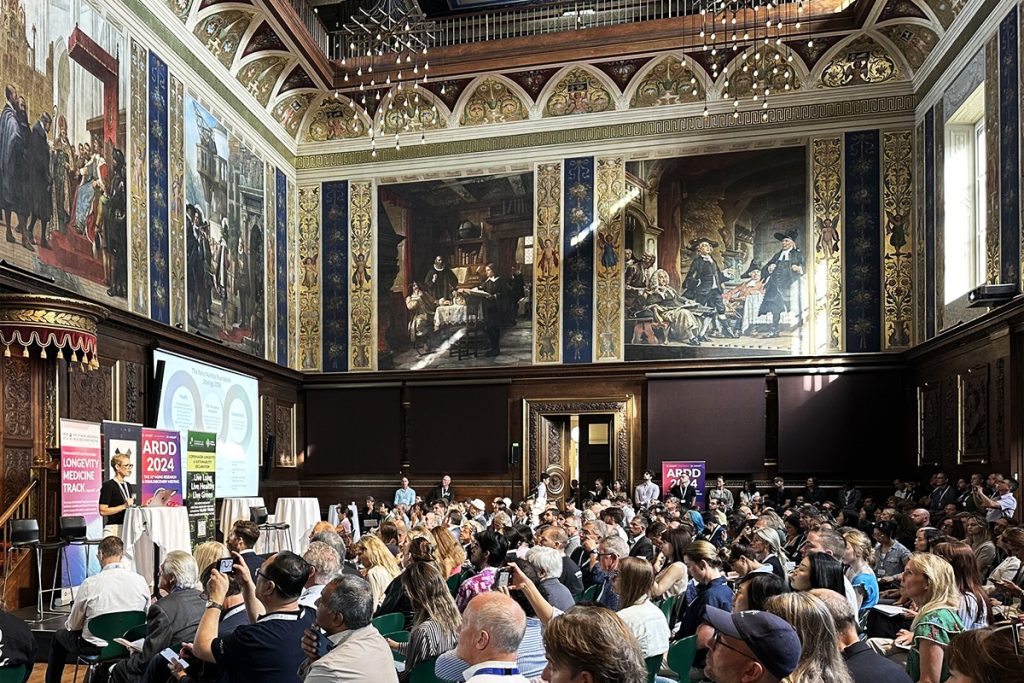
But the pharma companies aren’t just in Copenhagen to listen – they’re getting involved too…
For example, Novo Nordisk Foundation’s Marie Kveiborg presented on the importance of strategic partnering to move new discoveries through to the clinic, while Eli Lilly’s Andrew Adams spoke on genetic medicine’s potential to rid the world of disease, and Regeneron’s David Glass discussed the link between certain gene signatures the risk of age-related disorders. Then Novartis’ Mara Fornaro focused on the importance of elucidating the molecular mechanisms implicated in diseases of aging, before Pfizer’s Michael Baran joined a fascinating investor panel that sought to discuss the path to turning longevity biotech into an “industry.” And that’s just to mention a few.
Speaking of Novo Nordisk, Tuesday’s sessions kicked off with GLP-1 pioneer Professor Jens Juul Holst speaking about the potential of drugs like semaglutide to impact on the metabolic aspects of aging. This is a hot topic in the field, and, when we spoke to Holst about his work earlier this year, he told us it was “more probable than not” that the drugs will have an effect on longevity.
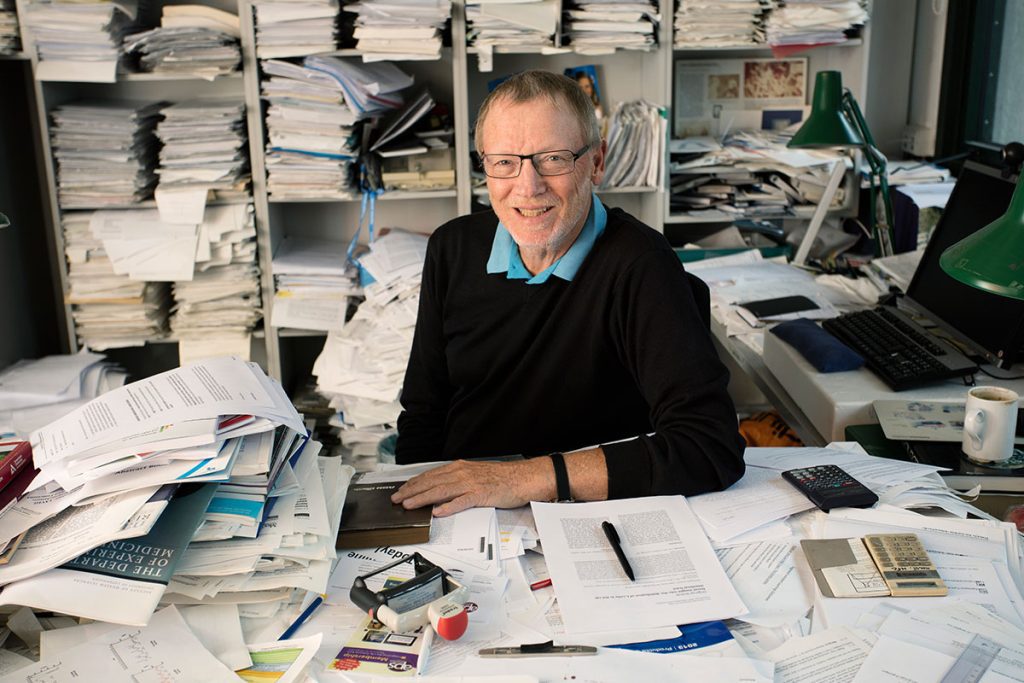
Yesterday, Harvard professor David Sinclair presented on the Information Theory of Aging, and the progress made by his lab, including reversing cellular aging through induced epigenetic changes. In lab experiments, Sinclair shared how he and his team restored vision in mice with glaucoma and rejuvenated brain cells, leading to improved learning and memory in older mice. He also spoke about preliminary findings, which suggest cellular reprogramming shows potential in the treatment of cancer by reversing cancerous cells back to a healthy state, prompting their self-destruction.
Longevity medicine rises
The translation of geroscience into “longevity medicine” is a growing component of the agenda at ARDD, with dedicated tracks on two days of the conference.
National University of Singapore professor Andrea Maier is a familiar face to many in longevity circles due to her commitment to turning evidence-based longevity science into cutting-edge clinical practice. In her ARDD presentation, Maier discussed her work on the HELO study, a global study to explore public awareness of longevity medicine, before announcing an exciting new industry partnership.
While some attendees were participating in their 11th ARRD, others were getting involved for the first time, including the scientist and author Andrew Steele, who echoed Prof Maier’s interest in increasing public awareness of the scientific progress being made in longevity.
“This is my first ARDD,” he told us. “I think we need to do a better job of communicating with politicians and the wider community as there is some really cool science here and not enough people know about it.”
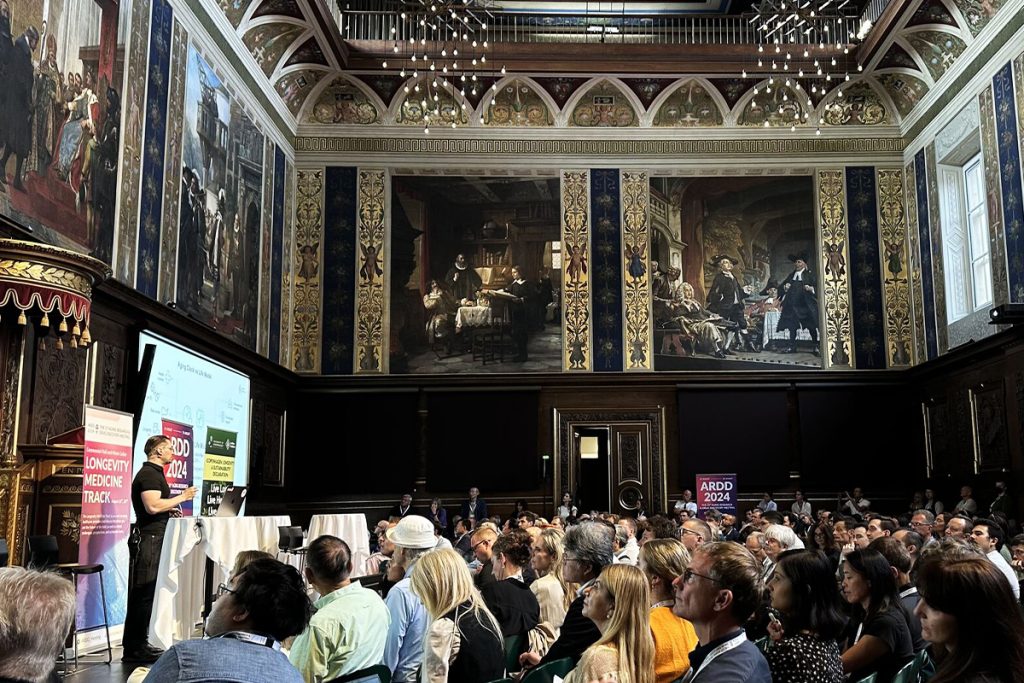
ARDD 2024 concludes today with another full day of fascinating presentations from the likes of Aubrey de Grey, Alexey Moskalev, Vera Gorbunova and Steve Horvath, to name but a few. The conference will return next year, no doubt even bigger and better than ever. See you there!

