
MUVON cofounder explains how muscle regenerating technology has the potential to boost healthspan and help treat a major women’s health condition.
Swiss biotech MUVON Therapeutics today announced positive interim data from the Phase 2 clinical trial of its skeletal muscle tissue regeneration therapy. The ongoing SUISSE MPC2 study is assessing the safety and efficacy of MUVON’s muscle precursor cell (MPC)-based therapy for the treatment of stress urinary incontinence in women.
The interim readout included data from 10 patients with at least six months’ follow-up post-injection of the tissue engineered product. Based on the data, the international Data Safety Monitoring Board has recommended the continuation of the study, which means that MUVON now expects the release of the final data from the completed study by Q3 2025.
Longevity.Technology: The continuation of MUVON’s clinical trial is not only encouraging for the millions of women who suffer stress urinary incontinence after childbirth, but potentially also for millions more people around the world who may one day benefit from the company’s progress in skeletal muscle tissue regeneration. To learn more, we sat down with MUVON co-founder and CEO Dr Deana Mohr, who shared the inspiring story behind her company’s innovative approach to skeletal muscle regeneration and its potential to improve human healthspan.
Mohr’s journey began over a decade ago during her PhD studies in regenerative medicine at ETH Zurich, where she was focused on skeletal muscle regeneration using a cell-based-therapy approach. But it was a chance encounter at a conference that set Mohr on her current path.
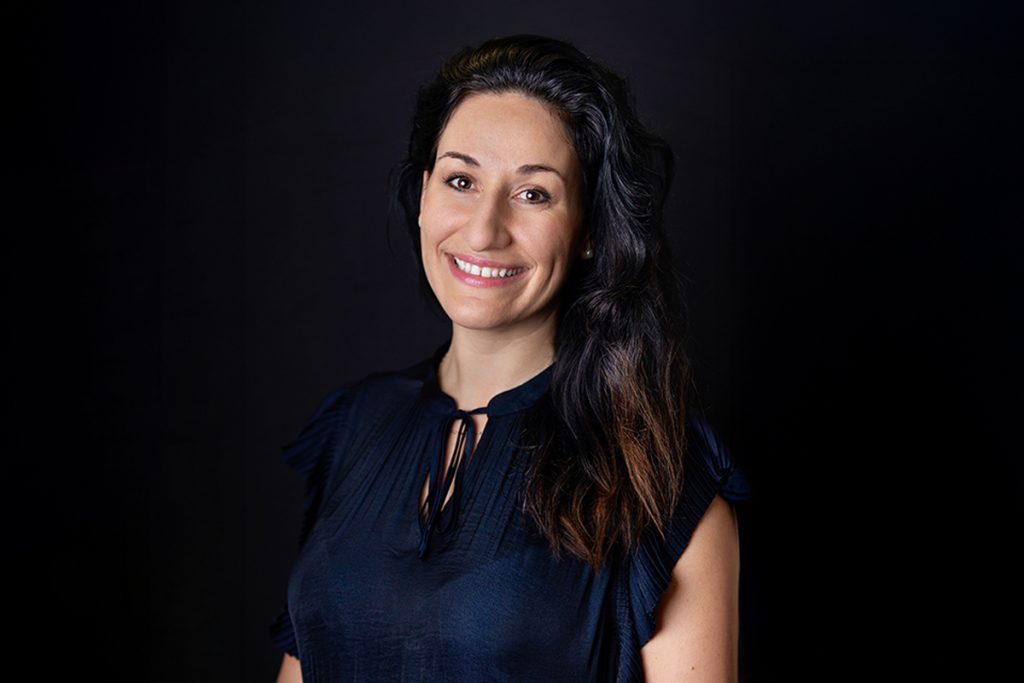
“I was at a conference on regenerative medicine where one professor was showing what happens during childbirth, and I was quite shocked by the number of muscles that get damaged during this natural process,” she recalls.
From PhD to startup
This revelation led Mohr to focus her efforts on helping women who suffer from the debilitating effects of pelvic floor muscle damage, particularly stress urinary incontinence, which affects up to 40% of women over 40. She began conducting animal experiments, and was encouraged by the results.
“I saw that the approach was able to get damaged muscles twitching again – moving and fulfilling their function,” says Mohr. “They were getting new neurons, new vascularization, and everything looked very positive.”
Buoyed by these promising preclinical findings, Mohr and her team filed for first-in-human trials and received approval just weeks before her PhD defense. The trial approval was the basis for founding MUVON in 2020.
“Fast forward to today, and from a one-woman show, we are now a team of 20 people and close to completing our first Phase 2 clinical trial,” says Mohr, highlighting the interim data revealed by the company today. “We have experts in regulatory, quality, manufacturing, innovation, commercial and business development functions – spanning all the requirements of a clinical-stage biotechnology company.”
Affordable personalization is key
MUVON’s focus on small but vital muscles sets it apart from many other companies in the regenerative medicine space.
“Most of the companies out there are focused on genetic muscle diseases like Duchenne muscular dystrophy, and are targeting large muscles and systemic diseases,” says Mohr. “What we do is exactly the opposite. We are focused on highly personalized skeletal muscle tissue regeneration of small muscles in the body with big impact on the quality of life and healthspan of those patients.”

MUVON’s personalized approach is a key differentiator. As Mohr explains, “We take a small muscle biopsy from a healthy muscle in the patient. Then we find the key muscle precursor cells, make hundreds of millions of them, and prepare the tissue-engineered product for injection. It is then injected minimally invasively into the damaged muscle.”
The company’s autologous, non-genetically modified approach is crucial, as it ensures safety and high acceptance by patients – and can be scaled up fast.
“We don’t have complex genetic modifications, which will also allow us to develop the product in closed, fully automated machines that enable rapid production scale-up,” says Mohr.
According to Mohr, MUVON has prioritized scalability and affordability from the outset. She says that the company’s approach will cost “a lot less” than personalized cell-based cancer therapies, for example.
“We really want to do regenerative medicine for the masses, for common diseases. And that’s why we started thinking about scalability early in the days during the development so that we can bring to the market, a scalable solution at an affordable and attractive price, both for payers and for patients.”
The road to the commercialization
With promising Phase 1 data in hand and an ongoing Phase 2 trial about to complete, Mohr believes that MUVON is on the cusp of having its first approved therapy.
“The next step will be a large-scale, multi-center trial to confirm the efficacy we have seen so far, and to continue tracking safety and monitoring possible side effects,” she says. “With this, we would aim to generate the comprehensive data needed to support marketing approval in Europe and US as key first markets.”
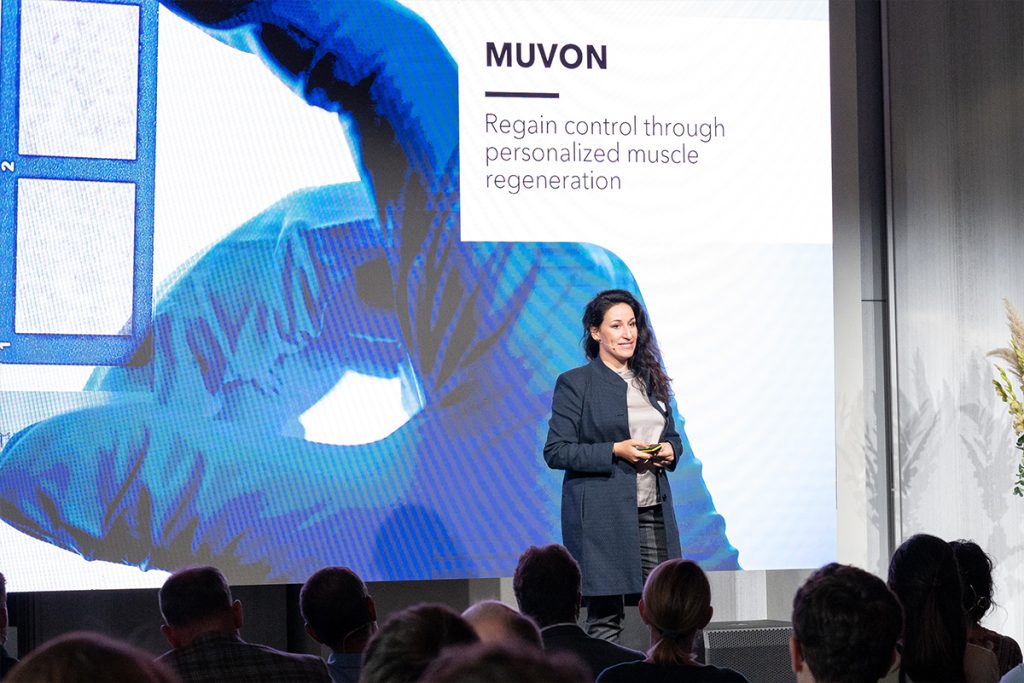
While Mohr doesn’t want to commit to specifics of the company’s plans beyond that, it is clear that the company’s approach will be quickly applied to additional indications, should it prove successful in incontinence.
From a funding perspective, MUVON has successfully raised significant non-dilutive funding in addition to some seed capital, which has seen the company through all its clinical work to date.
“Based on the interim readout, we are now raising another $20 million before the final Phase 2 readout,” says Mohr. “This will allow us to prepare everything for the first pivotal trial that would potentially allow for marketing authorization in our first target markets.
“I believe that, with the right motivation and collaboration with the right stakeholders, then bringing truly innovative therapies to patients in need is possible. And, with appropriate funding, we can succeed.”
Looking to the future
Beyond its lead indication, Mohr sees the potential for MUVON’s technology to address other muscle-related conditions in the near future.
“We are constantly identifying additional chronic diseases and conditions that develop over time, and we believe that the power of muscle tissue engineering could help restore function and improve the quality of life of those patients,” she says.
“As we hit 40, we lose 1% of skeletal muscle mass per year, which is significant. By improving physical resilience and overall functionality, muscle regeneration could contribute to long-term healthspan. As we know, physical activity and capabilities are closely related to mental health and cognitive function in the aging populations.
“I’m confident that with continued advancements in personalized tissue engineering, we can also address this. It might take a while, but it may well be possible sooner, than later.”

