
Evvy co-founder explains how ignoring female biology skews aging science – and why menopause and microbiomes deserve center stage in longevity.
Despite living longer than men, women often face years – even decades – of delayed diagnoses, vague syndromes and under-researched symptoms. This isn’t just a healthcare problem – it’s a longevity problem, and as the science of healthspan advances, a glaring omission remains: women’s data.
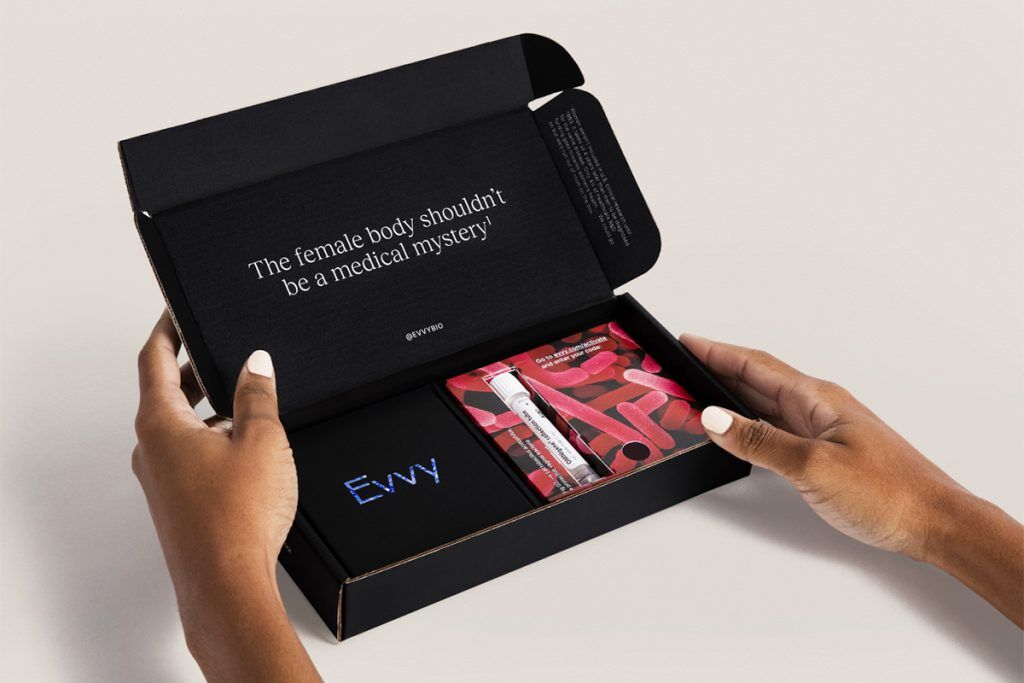
Some companies are beginning to take that omission seriously – one of these is Evvy, a precision health platform focused on the vaginal microbiome and its links to broader systemic health. Through advanced metagenomic sequencing and clinician-backed care pathways, Evvy is working to close the gender data gap and challenge the outdated notion that gynecological symptoms exist in a silo. With a focus on menopause, infection, inflammation and beyond, the company is generating the kind of granular, female-specific data that’s been missing from the longevity conversation – and making the case that vaginal health isn’t separate from aging biology, but central to it.
Longevity.Technology: It’s no longer defensible to build the future of healthspan on male-centric datasets; yet female biology remains, in large part, excluded from the longevity conversation – its rhythms overlooked, its metrics under-measured, its systems siloed into ‘reproductive health’ and then promptly ignored. Ovarian aging – one of the most abrupt and system-wide shifts in the human body – is still widely treated as a side note, rather than a biological flashpoint with profound implications for immunity, inflammation and cellular resilience. The vaginal microbiome, a dynamic ecosystem influenced by age, hormones and immune crosstalk, is rarely mentioned in the same breath as geroscience – but perhaps it should be; it is one of the few aging-related systems we can observe, measure and meaningfully intervene in, in real time.
Diagnostic delay has long been a feature of women’s health; the true cost, though, isn’t merely frustration – it’s accelerated aging driven by chronic, unaddressed dysfunction. Healthspan isn’t simply about living longer, it’s about not spending decades waiting for a name, a diagnosis or even acknowledgment. When entire datasets are deleted under the guise of budgetary efficiency – maternal outcomes, STI rates, contraceptive access – we don’t just lose information, we lose the opportunity to study aging through a uniquely high-resolution lens. Geroscience claims to be the science of extending healthy years for everyone; that claim only holds water if the field finally begins to take female biology seriously – not as an edge case, but as the standard from which longevity can be meaningfully measured. We sat down with Pita Navarro, Evvy’s Co-Founder and Chief Science Officer, to explore how the gender gap in clinical research intersects with aging biology, what’s at risk as key women’s health programs face funding cuts and why the vaginal microbiome – often overlooked – could hold crucial insights for healthy aging.
Closing the sex and gender data gaps in clinical research will contribute directly to improving women’s healthspan – but the potential ramifications go wider. As Navarro explains, it’s time to stop treating female biology as a side note in longevity science.
“The truth is, we can’t meaningfully extend lifespan – let alone healthspan – for half the population if our foundational data was never built for them. The female body follows different immunologic, hormonal and microbiologic rhythms, all of which shape aging trajectories in ways that are still poorly understood.”
Closing the gender data gap isn’t just about equity, says Navarro – in fact, she describes it as a “scientific unlock,” explaining that when we study female-specific systems like the vaginal microbiome or hormonal transitions such as menopause, we gain access to early, often reversible signals of biological aging. “These markers offer critical intervention windows that could delay or prevent the onset of chronic disease, ultimately extending both the quality and quantity of life for women,” she adds. “At Evvy, we’re building the datasets and discovery engine that longevity science has been missing.”
The company has made the point that women aren’t living longer lives – they’re living longer waits for answers, and Navarro makes the point that diagnostic inequity is a core failing of the system.
“The average woman spends over a decade of her life in diagnostic limbo – waiting for the right diagnosis, the right test, or simply to be believed,” she explains. “These delays aren’t benign. They allow low-grade inflammation, infection, and hormonal imbalance to persist unchecked – accelerating biological aging in ways we’re only beginning to quantify.”
Navarro adds that what’s worse, the research system often siloes ‘women’s health’ from the rest of medicine, even though gynecologic and reproductive symptoms are early indicators of broader systemic dysfunction. The key innovation here isn’t just faster diagnosis – it’s earlier pattern recognition, as she explains.
“With the right data and tools, we can spot aging before it manifests as disease. That’s what Evvy is building: infrastructure that transforms the diagnostic delay into a predictive advantage.
“A lot of women who are turning to Evvy have gone years without answers for their symptoms and conditions. By giving them access to advanced testing and real-world data, we’re hoping women will be able to decode what’s happening in their bodies, finally.”
One of the dark horses in the women’s health waiting room is the vaginal microbiome, and companies like Evvy are working to raise awareness and understanding of this overlooked biome and the influence it can have on broader aging biology, including immune function, inflammation and disease susceptibility.
Navarro explains that the vaginal microbiome is more than a localized ecosystem, describing it as ‘a mirror of systemic health’. As estrogen declines during menopause, the loss of Lactobacillus-dominant states creates a tipping point in mucosal immunity. Navarro explains that this microbial shift increases local inflammation, susceptibility to infection, and even influences urinary and sexual health, all of which impact overall wellbeing in midlife and beyond.
But Navarro says there is a bigger idea to look at.
“The vaginal microbiome may be one of the few aging-related systems that’s modifiable in real time,” she says. “Unlike genetics or even some aspects of immunosenescence, the microbiome can be measured, monitored, and reshaped. That’s a huge opportunity, not just to mitigate symptoms, but to actively slow biological aging processes tied to immune decline, metabolic dysfunction, and chronic inflammation.”
Navarro points out that this highlights the utmost importance of studying how the biome influences broader aging pathways, and why supporting it may be one of the most underexplored tools in promoting healthy aging for women.
This brings us neatly to the concerns about the defunding of NIH/CDC programs related to maternal and reproductive health. What do we risk losing when these gender-specific datasets and research lines disappear?
Navarro is clear things are now moving in the wrong direction. “When funding for maternal and reproductive health disappears, we lose data,” she says. “Without data, we can’t make progress. We risk losing the opportunity to decode aging through one of the most data-rich, dynamic systems in the human body: the female reproductive axis. Pregnancy, postpartum recovery, menstrual cycles, and menopause are far more than reproductive events, they’re high-resolution readouts of immune, metabolic, and microbiologic adaptation.”
She adds that defunding these programs erases the chance to study how stress resilience, tissue regeneration and systemic inflammation fluctuate across life stages in a way no male analog can replicate.
“Reproductive health offers a built-in, cyclical dataset that can teach us how to age better – if we choose to study it. At Evvy, we’re committed to making sure we don’t waste that opportunity.”
While funding for institution-led longevity research may be in decline, personalized healthspan interventions are booming, with increases in individual biomarker services, AI-driven risk stratification and microbiome mapping. But are they personalized for women to the necessary extent?
Navarro says that ‘precision’ health models are built on imprecise foundations, with the vast majority of biomarker discovery and training data for AI risk models still excluding female-specific variables, let alone nuanced patterns like hormone cycling, pregnancy history or microbiome composition.
But Evvy is flipping that pipeline.
“Instead of retrofitting male-centric tools for women, we’re generating the first large-scale, vaginal microbiome-based dataset that links microbial states to clinical outcomes – spanning infection, inflammation, fertility, and aging,” Navarro explains. “Our vision is to build predictive models rooted in the biology that actually governs women’s lives. Only when we integrate sex-specific signals from the start can precision health fulfill its promise for everyone.”
So, if Evvy could redesign clinical research for women through a geroscience lens, what would Navarro’s roadmap look like?
“We’d start by reframing what we consider to be ‘aging biomarkers’ altogether,” she says. “Too often, we rely on endpoints like mortality or disease diagnosis to study aging – when in women, some of the earliest biological shifts show up in entirely different places: menstrual regularity, vaginal microbiome patterns, perimenopausal transition timelines, and immune adaptability through hormonal cycles.”
Navarro adds that what is needed is aging studies that treat the female body as its own longitudinal sensor network, and that this would mean integrating high-frequency, noninvasive measures across microbial, endocrine and immunologic systems and studying how those systems interact – not just in isolation, but as a network that evolves over time. In addition, the platform would need to track how resilience, defined as recovery from perturbations, differs across these systems, not just decline.
“Ultimately, longevity research must move from a disease-centric model to a systems-integrity model,” she says. “And in women, that means embedding the rhythms of female biology – not removing them – as the centerpiece of how we study aging.”

