
Longevity.Technology System users:
To check your anaerobic threshold :
- Download the LT System app on your Android or Apple smartphone.
- Open the LT System app and select ‘DNA Results.’
- Under ‘Physical,’ scroll down and find ‘Anaerobic Threshold’
- Now, scroll down to find your results and recommendations.
Not a user yet?
That’s OK, you can sign-up for your Epigenetic & DNA test here.
The anaerobic threshold (AT) represents the point during exercise when your body shifts from using oxygen to relying on energy sources stored in your muscles. This change can lead to lactic acid buildup, causing that familiar burning sensation in your muscles.
Understanding and improving your AT can help you push through these barriers, enhancing your stamina and overall performance.
Improving your AT involves targeted training strategies such as high-intensity interval training (HIIT), tempo runs, and lactate threshold workouts. These exercises push your body to adapt, enhancing your ability to sustain higher intensities without fatigue.
Ready to take your fitness to the next level? Let’s explore how understanding and optimizing your anaerobic threshold can transform your workouts and boost your performance.
How is anaerobic measured?
Measuring your anaerobic threshold might sound complex, but several methods make it manageable, even for non-professionals [1]. Each method has advantages and can provide valuable insights into your fitness level. Here’s how you can measure your anaerobic threshold effectively.
1. Laboratory tests
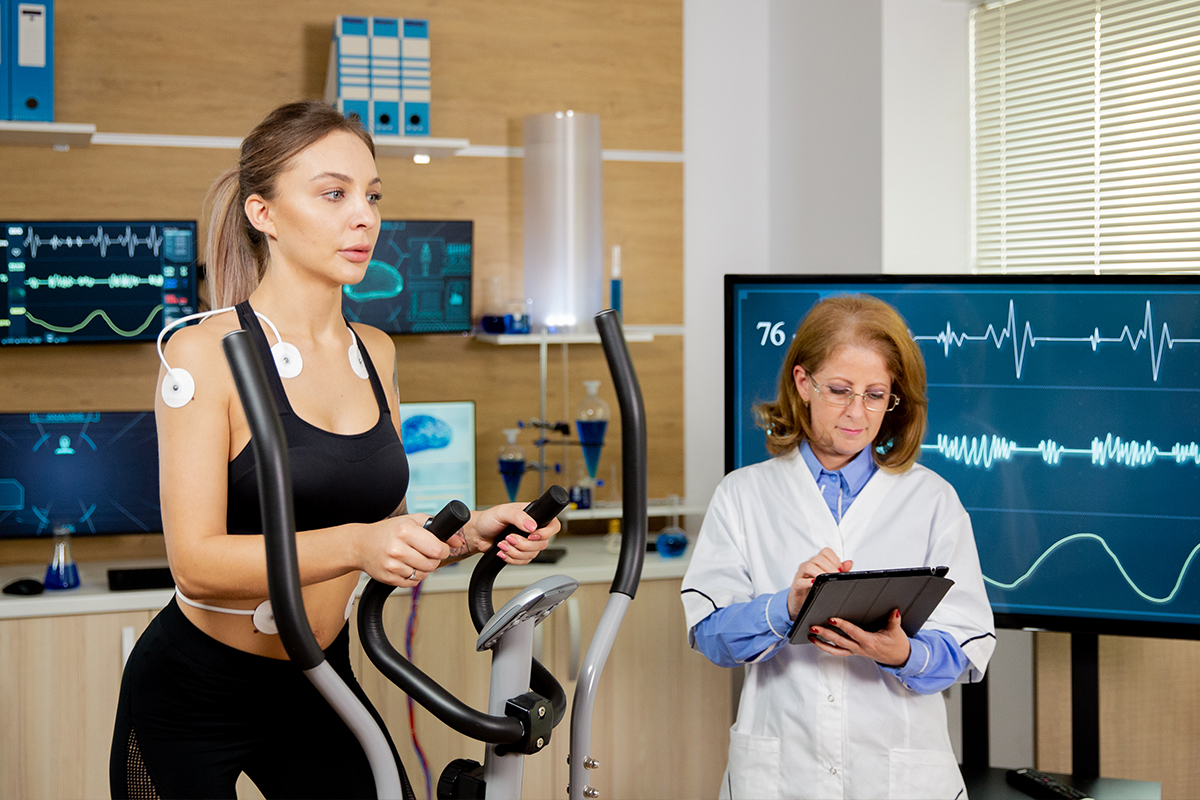
Laboratory tests offer the most precise measurement of your anaerobic threshold. These tests typically involve sophisticated equipment and controlled settings, ensuring accurate results.
VO2 max test
This test measures your body’s maximum oxygen uptake during intense exercise. The test progressively increases intensity on a treadmill or stationary bike while monitoring your oxygen consumption and carbon dioxide production.
The point where lactic acid rapidly accumulates marks your anaerobic threshold. This provides a clear picture of your cardiovascular fitness and endurance capacity.
Lactate threshold test
This test involves taking blood samples at regular intervals during a graded exercise test [2]. As the intensity increases, the lab measures the lactate levels in your blood. The point at which lactate levels show a sharp increase indicates your anaerobic threshold.
This highly accurate test offers detailed insights into your metabolic response to exercise.
Laboratory tests are ideal for athletes seeking precise data to optimize their training. While they require access to specialized facilities and can be costly, the detailed information they provide can be invaluable for tailoring your workouts and improving performance.
2. Field test
Field tests offer a practical and accessible way to measure your anaerobic threshold without specialized equipment. These tests can be performed in real-world settings, making them convenient for most athletes.
Time trials
Conduct a 30-minute trial, such as a run or cycle, maintaining a steady, maximum effort throughout. Record your average heart rate during the final 20 minutes.
This average heart rate closely approximates your anaerobic threshold, providing valuable insight into your endurance capacity.
Heart rate monitoring
Use a heart rate monitor during high-intensity workouts. Gradually increase the exercise intensity and note the heart rate at which maintaining the effort becomes unsustainable and fatigue sets in [3]. This heart rate serves as a reliable indicator of your anaerobic threshold.
Field tests offer several advantages:
- Practicality: They can be performed almost anywhere, making them accessible for athletes at all levels.
- Cost-effectiveness: No need for expensive equipment or lab access.
- Real-world relevance: Measurements are taken in conditions similar to your regular training environment.
While slightly less precise than laboratory tests, field tests provide useful estimates of your anaerobic threshold, helping you tailor your training effectively and improve your performance.
3. Self-assessment methods
Self-assessment methods provide convenient, cost-free ways to estimate your anaerobic threshold. They are accessible to everyone and require no specialized equipment.
Talk test
Gauge your ability to speak during exercise. If you can comfortably maintain a conversation, you are likely below your anaerobic threshold.
If talking becomes difficult and you can only manage short phrases, you are likely at or above your threshold. This simple method helps you identify your exercise intensity practically and immediately.
Perceived exertion
Use the Borg Rating of Perceived Exertion (RPE) scale to assess your effort. On a scale from 1 to 10, where 10 represents maximum effort [4], your anaerobic threshold typically falls around a 7 or 8.
At this level, you should feel a significant increase in effort, and sustaining the exercise will become more challenging.
Advantages
- Accessibility: No equipment or special facilities needed.
- Immediate feedback: Allows for real-time adjustments during workouts.
Disadvantages
- Less precision: These methods provide rough estimates rather than exact measurements.
Despite their simplicity, self-assessment methods offer valuable insights into your anaerobic threshold, helping you adjust your training intensity and improve your overall fitness effectively.
Epigenetic & DNA Test
The Longevity.Technology Epigenetic & DNA Test provides personalized insights into your genetic predispositions and how your body responds to different types of exercise.
Understanding your unique genetic profile can help you tailor your training more effectively, complementing the talk test and perceived exertion methods.
Advantages
- Accessibility: No equipment or special facilities needed.
- Immediate feedback: Allows for real-time adjustments during workouts.
- Personalized insights: The Longevity.Technology Epigenetic & DNA Test offers tailored recommendations based on your genetic profile.
Despite their simplicity, self-assessment methods offer valuable insights into your anaerobic threshold, helping you adjust your training intensity and improve your overall fitness effectively.
How do I improve my anaerobic threshold?
Improving your anaerobic threshold can significantly enhance your endurance and overall fitness. You can push your limits and achieve better performance with targeted training strategies. Here’s how you can effectively boost your anaerobic threshold:
1. High-intensity interval training (HIIT)
High-intensity interval training (HIIT) is a powerful method for boosting your anaerobic threshold. It includes alternating between brief intervals of high-intensity exercise and rest or low-intensity activity.
HIIT sessions are highly effective because they push your body to adapt to high-intensity efforts, improving your anaerobic capacity and endurance.
| Benefit | Description |
|---|---|
| Efficiency | Short, intense workouts that maximize time and results. |
| Versatility | Can be applied to various exercises like running, cycling, etc. |
| Enhanced endurance | Improves the ability to sustain high-intensity efforts. |
| Increased metabolic rate | Boosts metabolism even after the workout ends. |
| Burns more calories | High-intensity intervals burn more calories in less time. |
Example of HIIT workout:
- Warm-up: 10 minutes of light jogging
- Interval: 30 seconds of sprinting, followed by 1 minute of walking or jogging
- Repeat: 8-10 times
- Cool-down: 5-10 minutes of light jogging or walking
Incorporating HIIT into your routine can help you break through performance plateaus and achieve significant fitness gains.
2. Tempo runs
Tempo runs, or threshold runs, are an effective way to improve your anaerobic threshold by maintaining a steady, challenging pace just below your anaerobic threshold for an extended period.
This type of training helps your body become more efficient at clearing lactic acid, delaying fatigue and enhancing endurance.
| Benefits | Description |
|---|---|
| Improved efficiency | Enhances the body’s ability to clear lactic acid. |
| Increased stamina | Helps sustain a faster pace for longer durations. |
| Boosted performance | Ideal for improving race times and overall workout performance. |
| Better endurance | Builds endurance by maintaining a challenging pace over an extended period. |
| Enhanced mental toughness | Develops the mental strength needed to maintain effort under fatigue. |
Example of tempo run:
- Warm-up: 10-15 minutes of easy running [5]
- Main set: 20-30 minutes at a pace you can sustain but find challenging
- Cool-down: 10-15 minutes of easy running
Incorporating tempo runs into your training routine can help you push your limits, improve your overall fitness, and achieve better race times or workout performances.

3. Lactate threshold training
Lactate threshold training focuses on exercising at a pace just below your anaerobic threshold. This training method is crucial for improving endurance and overall performance by enhancing your body’s ability to manage and clear lactic acid, delaying fatigue.
| Benefit | Description |
|---|---|
| Enhanced endurance | Increases the ability to sustain high-intensity efforts for longer periods. |
| Improved performance | Boosts overall athletic performance, especially in endurance sports. |
| Better efficiency | Helps the body adapt to higher intensities without accumulating excess lactic acid. |
| Delayed fatigue | Reduces the rate of fatigue, allowing for prolonged exercise. |
| Increased lactate clearance | Enhances the body’s ability to manage and clear lactic acid effectively. |
Example workout:
- Warm-up: 15 minutes of easy running
- Main set: 4 x 10 minutes at a pace just below your threshold, with 2 minutes of recovery jogging between intervals
- Cool-down: 10 minutes of easy running
Incorporating lactate threshold training into your routine can help you push past performance plateaus and achieve new levels of fitness and endurance.
What are some mistakes people make when working out?
Avoiding common mistakes in anaerobic threshold (AT) training is crucial for maximizing benefits and minimizing risks. Here are some pitfalls to watch out for:
1. Skipping warm-ups
Begin your workout with a suitable warm-up. Preparing your cardiovascular system and muscles for the upcoming workout lowers your chance of injury and improves performance.
2. Ignoring recovery
Rest and recovery are just as important as the workouts themselves. Overtraining can lead to burnout and injury [6]. Make sure to include rest days and low-intensity sessions in your routine to allow your body to repair and adapt.
3. Neglecting nutrition
Proper nutrition fuels your workouts and aids in recovery. A balanced diet rich in proteins, carbohydrates, and healthy fats is essential. Hydration is also key, so drink plenty of water before, during, and after exercise.
4. Inconsistent training
Consistency is key to improving your AT. Sporadic training will yield minimal results. Aim to include AT sessions regularly, ideally one to two times a week.
5. Lack of progression
Gradually increase the intensity and duration of your AT workouts. Pushing too hard too soon can lead to injuries. Listen to your body and adjust your training accordingly.
6. Not tracking progress
Keep a training log to monitor your progress. Tracking helps you understand what works and where adjustments are needed, ensuring continuous improvement.
Know your anaerobic threshold with Longevity.Technology Epigenetic & DNA Test
The Longevity.Technology Epigenetic & DNA Test offers a personalized approach to understanding how your body responds to exercise, helping you tailor your workouts for optimal results.
Let’s see the sample DNA results and recommendations provided below. Note that these are for illustrative purposes only and may not reflect your individual results.
DNA results
You have a normal AT genetically. This outcome is the most common among individuals.
Recommendations
Utilizing HIIT (high-intensity interval training) may improve your AT, as it is one of the best forms of training for enhancing this area.
While your genetic variants might not significantly impact performance in most sports, they can influence ultra-endurance events.
The anaerobic threshold is crucial for general workout intensity. One key to increasing your AT is improving your ability to oxidize lactic acid for energy production.
So, how do we achieve this?
- Provide muscle cells with sufficient oxygen: Enhance the aerobic system to help oxidize lactic acid. Train and condition your cells to become more efficient.
- Use key nutrients: Support your body’s efforts to achieve a higher lactic acid threshold.
Vasodilation and vasoconstriction
Blood flow control involves managing vasoconstriction (narrowing of blood vessels) and vasodilation (widening of blood vessels).
Excessive vasoconstriction and poor vasodilation can lead to high blood pressure and issues like asthma. Some individuals are genetically prone to vasoconstriction and struggle to vasodilate effectively.
Health top tips
- Vitamin C: One of the most potent lactic acid oxidizers.
- Beetroots and Celery: Great vasodilators that improve blood flow.
- Creatine: Buffers acidity and decreases lactic acid formation.
- Essential fatty acids, magnesium, and manganese: Key for lung and respiratory health.
Using the insights from the Epigenetic & DNA Test, you can strategically enhance your anaerobic threshold and overall performance.
In closing
Understanding and improving your anaerobic threshold can transform your fitness and performance. This key metric allows you to train smarter, not harder, by optimizing your workouts to achieve better results.
Incorporating personalized insights from the Longevity.Technology Epigenetic & DNA Test can further refine your approach. Knowing your genetic predispositions helps tailor your training and nutrition, enhancing the effectiveness of your workouts.
Implement the strategies into your routine and watch your endurance and performance soar. Transform your workouts with targeted anaerobic threshold training and unlock your full potential.
Elevate your training and push your performance to new heights with the Epigenetic & DNA Test. Visit the LT store and use the code LTSOCIAL10 for an exclusive 10% discount on your first order!
FAQs
Why is the anaerobic threshold important?
Understanding your AT helps optimize your training for better endurance and performance. It allows you to push your limits safely and effectively.
How can I measure my anaerobic threshold?
You can measure it through laboratory tests like VO2 max or lactate threshold tests. Field tests and self-assessment methods also provide practical estimates.
What are the benefits of improving my anaerobic threshold?
Improving your AT enhances endurance, delays fatigue, and boosts overall performance. It helps you sustain high-intensity efforts longer.
What types of workouts improve the anaerobic threshold?
High-intensity interval training (HIIT), tempo runs, and lactate threshold training are effective. These workouts push your body to adapt to higher intensities.
[1] https://www.ncbi.nlm.nih.gov/pmc/articles/PMC3438148/
[2] https://intermountainhealthcare.org/locations/live-well-centers/services/health-assessments/lactate-threshold/
[3] https://www.betterhealth.vic.gov.au/health/healthyliving/exercise-intensity
[4] https://my.clevelandclinic.org/health/articles/17450-rated-perceived-exertion-rpe-scale
[5] https://www.onepeloton.com/blog/tempo-run/
[6] https://www.thebodycoach.com/blog/the-importance-of-rest-days/

