
A new framework for understanding the evolving landscape of longevity therapies.
When I presented at the Rejuvenation Startup Summit in Berlin earlier this year, I decided to switch things up a little. Interactive polling was my idea – ask an informed audience about their opinions, then have some killer slides and opinions ready to respond to their feedback.
By all accounts, it went well, but I left the whole experience a little troubled.
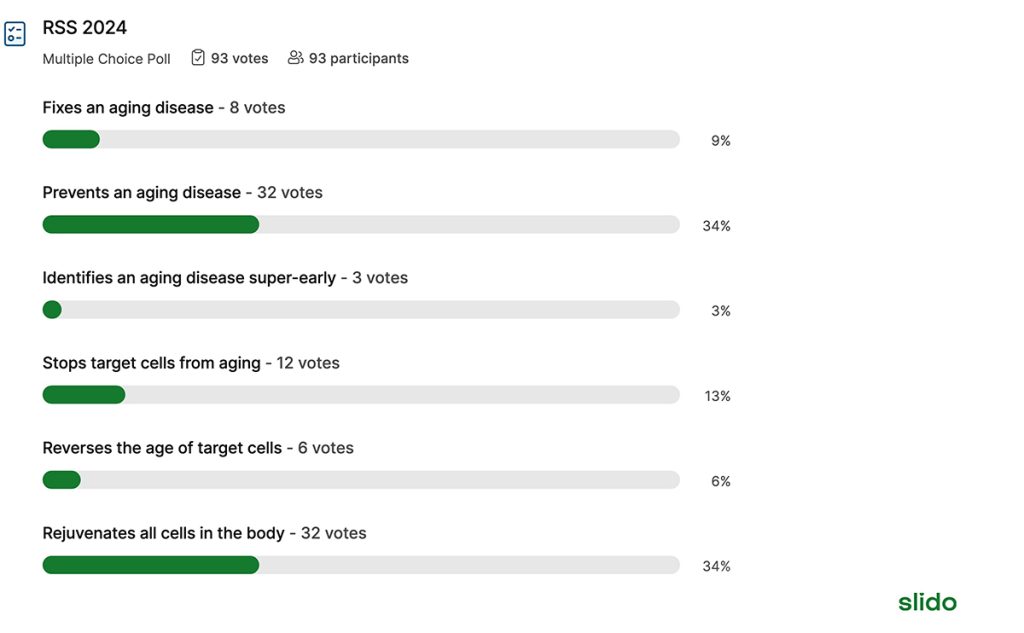
One of the questions I asked was: “What is a longevity therapeutic?” and I didn’t get the answer I expected… then I realised it was a bit of a blunt question to ask in the first place. Audience respondents were only allowed one answer – no hedging; here are the results from 93 respondents pulled from the conference audience.
So let’s break it down
Only 9% of people went with ‘Fixes an aging disease’; that’s good, as that’s what the current sick-care industry is about, an easy trap to fall in. 34% went for ‘Prevents an aging disease’; great, that’s what we’re all about right, prevention?
But how do you know which disease to prevent and in which order – diagnostics? Only 3% of respondents chose ‘Identifies an aging disease super-early’, which is diagnostics – are they the under-recognised heroes of longevity and healthspan? I think so, but diagnostics doesn’t have the revenue appeal of a blockbuster pharmaceutical.
OK, moving on. ‘Stops target cells from aging’ was my clumsy way of asking about the first potential stage of on-trend longevity therapies like senotherapeutics and cellular reprogramming (organ- and tissue-specific, mind, we don’t want to get ahead of ourselves) – 13%, fair.
6% chose ‘Reverses the age of target cells’, which is effectively the same option as the previous question but with fancier technology. 34% chose ‘Rejuvenates all cells in the body’, which is effectively the ultimate goal of the longevity industry – whole system rejuvenation, brain, heart, muscles… the works, right?
So, having confused myself and my audience with what was no more than 5 minutes of everyone’s lives, I moved on to the next subject, but later I determined to do something about clarifying longevity; it’s a beautiful mess and needs a bit of a clean-up – more clarity for all of us involved.
Understanding the complexity of longevity
Over the last year or so, I settled on ‘longevity now’ and ‘longevity next’ to separate the world of supplements, clinics and current diagnostics from the future world of longevity therapeutics. It definitely made life easier to communicate with the uninitiated, but it was over simplistic for those in the midst of growing their respective part of the industry.
I think of the longevity researcher working in their lab (after years of specialist education) at some networking event explaining what s/he is working on in longevity to someone wide-eyed and new to the sector and can imagine the frustration when the reply comes: “Oh, like that dude that injected his son’s blood to be younger?”.
Or the 50-year old biohacker that has a killer social following based on hitting a biological age of 21 talking with some scientist at a networking event who dismissively says: “Yeah, but none of those tests are proven scientifically – what about grip strength tests? They’re valid.”
Maybe the longevity clinician, sitting in a high-end clinic explaining to an expectant high net worth client that: “There’s very limited human proof that any drugs reverse aging, and I really don’t want to recommend you go offshore for stem cell treatments that haven’t been approved by the FDA.”
Or the highly educated optimist who has looked at the data and the acceleration of technologies from AI, to quantum to synbio and has concluded, quite reasonably, that humans will simply be able to live forever – it’s just a matter of time and getting regulators out of the way.
Nobody is wrong, nobody is empirically right; we are simply in the foothills of a momentous industry that’s feeling its way.
We need standards, we need oversight committees, we need money, we need accelerated regulation, and we need clarity.
A big ‘ol bucket o’longevity
So, on my flight from Berlin to my next event, I started to muse on how to get everyone into better categories. I settled on the ‘Ten Levels of Longevity’. Catchy.
Longevity.Technology has been analyzing longevity across 25 domains. We will continue to do so for our longevity investment reports. This forensic detail is highly valuable, albeit a bit too detailed for some.
It’s not often that you bump into Alex Zhavoronkov and jump straight into a conversation about head transplants but that’s what happened at my next destination: Abu Dhabi. So, I shared my early thinking with Alex and received a positive(ish) response.
After a few WhatsApp exchanges, I reckoned I was getting him onside with my first draft of the ‘Ten Levels of Longevity’. So, I pressed on and tested my hypothesis with a few other opinion leaders in the sector: it went well.
Defining the Ten Levels of Longevity
So, here goes: one level is no more important than another. A level 3 company is no better than a level 2 – just different. As levels progress numerically, they can get more complex and require more capital; later levels are further away from market than earlier levels, many of which are already in-market and making revenue.
Level 4 is the new community of longevity clinics and doctors employing professional diagnostics for health and aging biomarkers, offering clinical guidance on lifestyle, diet and therapeutic interventions to mitigate the progression of age. For many, this is the key gateway for the development of the whole industry.
Level 5 is basically the current aging disease management layer, which is pretty much the current healthcare (sick-care) industry humans have been aligned with for millennia.
Level 7 is where it starts to get very longevity-specific: therapeutic interventions that stop or reverse age-related damage in specific organs (organ specific / tissue specific / localized reversal) or for age-related diseases. These therapies may well have additional ‘overspill’ benefits for other organs/hallmarks.
Level 8 is where we all want to be: therapeutic interventions that stop or reverse age-related damage throughout the whole-body system. Levels 9 and 10 are the placeholders for ‘staying in the game’ while the great research and development work in the longevity field continues along multiple pathways of funding, regulatory approval, acquisition and commercialization.
Here are the ‘Ten Levels of Longevity’ list in full and the definitions of each level.
Ten Levels of Longevity

Level 1: lifestyle management
Active management of diet, sleep, exercise, alcohol intake, smoking, stress, etc. to slow aging disease drivers and prevent aging diseases.

Level 2: consumer diagnostics
Use of biological samples, lifestyle questionnaires, digital information and AI to identify opportunities for both clinical and lifestyle interventions to improve healthspan.

Level 3: longevity supplements
Use of dietary supplements to enhance the metabolism and replace cellular function lost with the progression of age.

Level 4: longevity clinical services
Professional diagnosis of health and aging biomarkers; clinical guidance on lifestyle, diet and therapeutic interventions to mitigate the progression of age.

Level 5: aging disease management
Clinical interventions that manage the symptoms of diagnosed aging diseases (i.e. current mainstream healthcare).

Level 6: aging disease prevention therapeutics
Clinical interventions that control aging drivers to prevent aging diseases from occurring.

Level 7: targeted aging disease reversal
Therapeutic interventions that stop or reverse age-related damage in specific organs (organ specific / tissue specific / localized reversal) or for age-related diseases.

Level 8: systemic aging reversal
Therapeutic interventions that stop or reverse age-related damage throughout the whole body system.

Level 9: organ/organism preservation or maintenance
Extending human life beyond natural limits. Companies operating at this level focus on developing technologies to replace or repair damaged organs and tissues.

Level 10: corporeal/consciousness preservation
Preservation of the body and/or consciousness for reawakening when approved aging therapeutics and disease cures become available.
Longevity experts respond
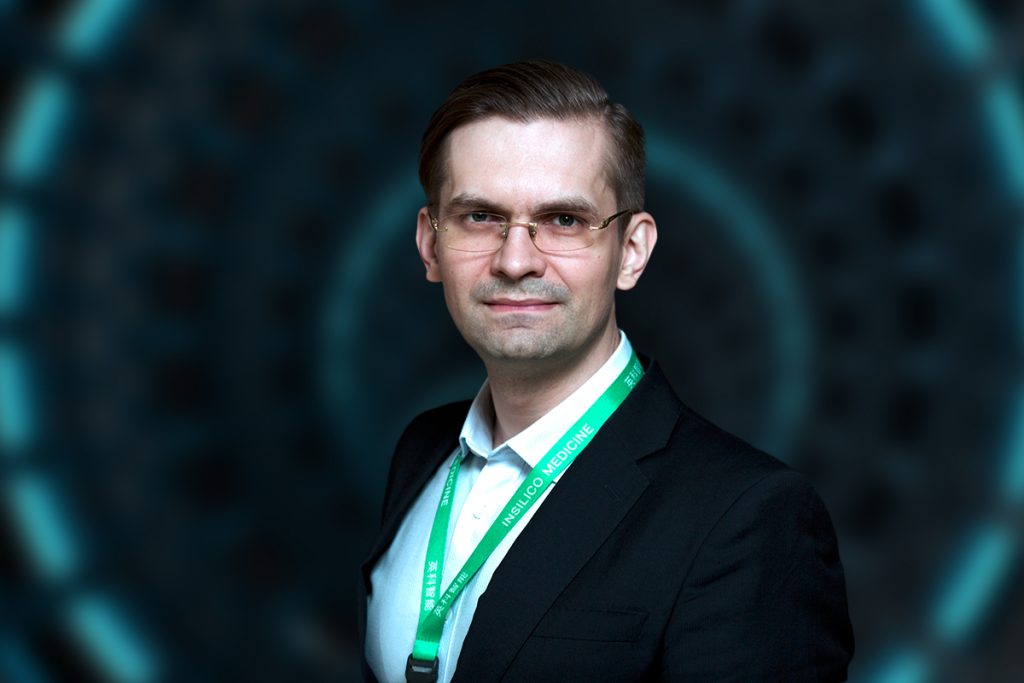
Alex Zhavoronkov, CEO of Insilico Medicine told Longevity.Technology: “When the general public talks about aging, the discussion quickly shifts to diet, exercise, sleep, meditation, or what I call ‘Do What Your Mother Told You (DYMT)’.
In this framework, it is clear that DYMT is just level 1 out of 10. It is important, but the benefits will be negligible on the grand scheme of things. You may get 10% in healthy productive life but as we learned from the DYMT movement in the US in the 1920s, the time of great innovation, these 10% may not be enough to live to the beautiful future where aging is optional. In my opinion, DYMT should Level 0. If you are writing about advances in DYMT, you are talking marginal innovation.
“Of course, if you invent safe technology that can eliminate the need for sleep and increase energy, or invent methods to development muscle without exercise – you may be touching Level 5-6. The 10-level scale of longevity technology may help shift the attention to the higher levels where risks are greater – but the benefits are higher. Level 1 is similar to keeping your money in a savings account, where the returns are significantly lower than the inflation. And just like financial management, we need to think of new ways to beat the inflation and that requires hard work, ingenuity, and involves more risk.
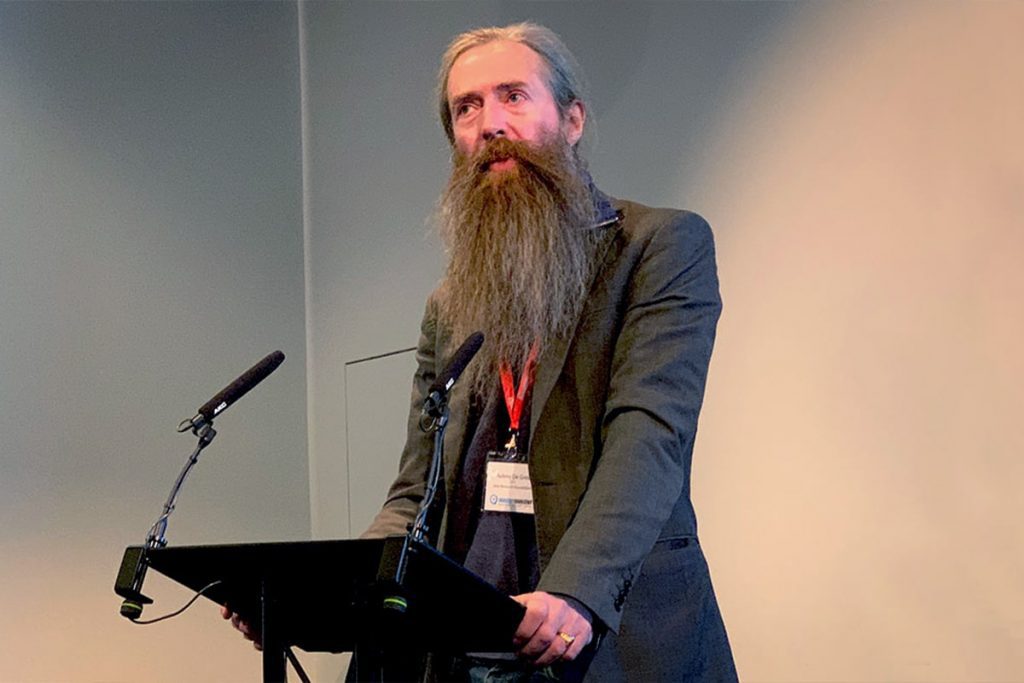
Aubrey de Grey, President & Chief Science Officer, LEV Foundation, told us: “The rapid growth of the longevity industry has created a good problem: how does a newcomer navigate so much information?
“For investors, the first step is to filter the opportunities according to one’s preferences in terms of risk, timeframe to return, impact and so on. This [Ten Levels of Longevity] classification will give enormous help to those starting out on that daunting task.”
So where are you?
For some companies, it’s easy; if you’re a supplement company, you’re at Longevity Level 3, but it gets interesting when you’re a biotech that’s working on a Longevity Level 5 disease target (today) as a regulatory pathway, but your goal is the prevent that disease from occurring in the first place (Longevity Level 6), or reversing it (Longevity Level 7).
Nobody said it would be easy – longevity is one of the most complex industries ever created and there are biotechs working on multiple diseases across more than one longevity level.
If you can count it, you can measure it.
As addressed earlier we will continue to ‘count’ data across our 25 domains but over time we will integrate the 10 Longevity Levels into our reporting. Over the coming weeks we’ll be reviewing each level and exploring some of the leading companies in each, so stay tuned.
What’s the point?
Our goal is to instantiate the 10 Levels of Longevity into everyday vocabulary: “We’re a Longevity Level 7 company” or “We only invest in Longevity Levels 1 to 3”, etc.
Of course, we want everyone to have their say: this is important and we want everyone to part of this, so please do let us have your thoughts below.

