
RLS-1496 enters Phase 1 aiming to modulate GPX4 and reduce cellular senescence – could precision therapies for skin aging be on the horizon?
Rubedo Life Sciences has announced that the first participant has been dosed in a Phase 1 clinical trial evaluating RLS-1496, its lead senescence-targeting drug candidate. The study, which is taking place in the Netherlands focuses on healthy adults with various skin conditions, including mild to moderate plaque psoriasis – but the company’s stated goal reaches far beyond dermatological disease. RLS-1496 is the first known GPX4 modulator to enter human trials, and Rubedo’s wider aim is to validate a platform that identifies and targets pathologic senescent cells implicated in tissue dysfunction and chronic inflammation – factors increasingly central to our understanding of skin aging and the broader biology of aging itself.
Skin conditions may serve here as a model of inflammation-driven pathology, but it is the underlying mechanism – a selective strike on toxic senescent cells via ferroptosis modulation – that suggests wider applicability. Rubedo’s approach avoids the blanket clearance of senescent cells; instead, it takes a precision-guided path, identifying pathological variants through single-cell profiling and targeting them with a novel lipid peroxidation pathway.
Longevity.Technology: The first patient dosed with Rubedo’s RLS-1496 represents a step forward for the senotherapeutic field, which has long struggled to balance promise with clinical precision. By targeting GPX4 and exploiting ferroptosis resistance in pathologic senescent cells, Rubedo is aiming squarely at one of the more sophisticated mechanisms driving chronic age-related diseases. This precision-first strategy, underpinned by high-resolution single-cell analytics, could help the field move beyond broad-brush senolytics toward therapies with real disease-modifying potential. While still early days, the initiation of this Phase 1 trial signals that senescence-targeting interventions are maturing into clinically credible programs – and that is a signal to which the entire longevity field should be paying close attention.
From pain to skin: expanding the senescence map
The new trial comes on the heels of Rubedo’s earlier preclinical findings that implicated senescent neurons in chronic pain – research that points to the far-reaching presence of pathologic senescent cells beyond the traditionally studied areas of fibrosis or osteoarthritis. By demonstrating the potential for senotherapeutics to address pain, and now turning to skin inflammation, Rubedo continues to build a cross-tissue case for its platform. If validated, its strategy could reframe senescence not as a single pathological endpoint, but as a modifiable node influencing multiple aging pathways.
“For the last decade, longevity scientists have been working to develop a compound ready for human trials that safely and effectively targets pathologic senescent cells,” said Rubedo CSO and co-founder Dr Marco Quarta. “We are proud that our team developed RLS-1496 into a topical drug candidate in less than three years from initiation – two times faster than the industry average via ALEMBIC, our proprietary AI-driven drug discovery platform with SenTeCh chemistry technology. The other candidates in our pipeline are following similar expedited timelines, including systemic RLS-1496, which is aimed to begin Phase 1 clinical trials in 2026.”
Skin aging: a visible window into deeper biology
Skin, of course, is more than a cosmetic canvas – it is the body’s largest organ and a sentinel of systemic change. It accumulates senescent cells with age, and these cells do not remain idle: they secrete pro-inflammatory signals, attract immune cells, and disturb the local and systemic environment. While dermatological disease might not be the end goal, it offers an accessible context in which to test whether modulating GPX4 – a key ferroptosis regulator – can alter the behavior of senescent skin cells without harming normal ones.
This is no ordinary early-stage trial. Rather than beginning with healthy volunteers, Rubedo is conducting what it describes as a basket Phase 1 – a study that will evaluate both diseased and non-diseased tissue types in parallel within the same protocol. The trial will look at multitudes of indications at the same time ,such as atopic dermatitis, vitiligo, actinic keratosis and also photo-aged skin among others, and while participants will include individuals with chronic inflammatory skin conditions, the trial will also include those with aged yet otherwise healthy skin. The intention is to examine the impact of RLS-1496 across both types of tissue, sequentially and from the outset.
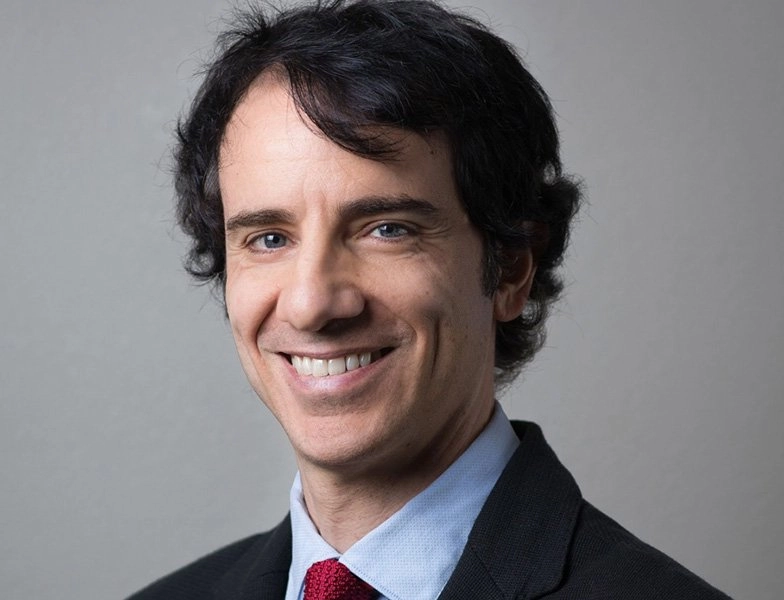
“One key point is that this basket trial will be the first of its kind: a Phase 1 study that skips healthy volunteers and directly assesses efficacy in patients,” Quarta told us. “It uniquely includes both chronic inflammatory skin diseases (evaluated in lesional skin) and skin aging (evaluated in healthy but aged skin), studied back-to-back within the same protocol. This will also mark the first clinical trial targeting GPX4, a novel, first-in-class therapeutic target.”
From a clinical standpoint, the trial will still focus on safety and pharmacokinetics – but its breadth allows for an early glimpse into therapeutic potential across the spectrum of aging and inflammation.
“We are excited to reach this important milestone not only for our lead candidate RLS-1496 but also for the advancement of longevity science,” said Frederick Beddingfield, Rubedo’s CEO. “As the first company to treat patients with a GPX4 modulator targeting senescent cells in a data-rich Phase 1 clinical trial, we look forward to assessing its potential disease-altering effects on inflammatory skin conditions and skin aging, driving our pipeline forward in line with our goal of making a meaningful impact on age-related diseases and conditions, such as obesity and pain.”
The company’s approach is backed by a single-cell discovery engine that isolates pathological cell populations for therapeutic targeting – a method designed to improve specificity and reduce off-target effects. If successful, this could represent a notable refinement over earlier senolytic strategies, which have often relied on systemic administration and produced mixed or ambiguous clinical outcomes.
Inflammation, inflammaging and the long view
Although psoriasis is often considered in isolation, it may also be viewed as an amplified, localized form of the inflammatory processes that increase with age – a visible reflection of deeper systemic dysregulation. “As clinicians, we are excited about the potential use of RLS-1496 as a topical treatment for psoriasis, other chronic inflammatory skin conditions, and skin aging itself,” said Dr Mark Lebwohl, Professor & Chairman Emeritus of the Department of Dermatology, Icahn School of Medicine at Mount Sinai.
“As researchers, we are intrigued by RLS-1496 as a potential first-in-class GPX4 modulator that was designed to selectively target inflammaging pathologic senescent cells and surrounding tissues. This is a very important milestone in longevity science, and we are thrilled to be working with the Rubedo team to drive this science forward.”
Yet the real interest here, particularly for the longevity field, lies in whether these same mechanisms – ferroptosis evasion, GPX4 dependency, SASP signaling – play a more general role in age-related tissue degradation.
If so, then the modulation of ferroptosis resistance may have effects far beyond the skin, extending into metabolic, neurological and cardiovascular domains. Inflammaging, the chronic low-grade inflammation that characterizes aging, shares molecular signatures with more acute inflammatory conditions – and intervening early in one context may provide insights for others.
As Rubedo moves deeper into the clinic, the longevity community will be watching for signs that this precision-guided, senescence-targeting approach can translate into real-world modulation of aging biology – not just in plaques, but across the patchwork of age-related decline.

