
Human-derived data leads researchers to FDA-approved compounds that reverse cell-specific gene signatures in Alzheimer’s disease.
Alzheimer’s disease continues to challenge researchers and clinicians alike – not merely for its prevalence or progressive devastation, but for its sheer biological complexity. Despite billions spent and hundreds of trials attempted, therapeutic breakthroughs remain scarce. Yet in a new study from UCSF and Gladstone Institutes, researchers propose an approach both refreshingly practical and conceptually ambitious: using human transcriptomic data to guide the repurposing of FDA-approved drugs into a potential combination therapy for Alzheimer’s.
Published in Cell, the study details how single-nucleus RNA sequencing of postmortem human brains was used to identify Alzheimer’s-associated gene expression changes in six major brain cell types. These cell-specific disease signatures were then computationally matched against the Connectivity Map (CMap), a vast database of drug-induced gene expression profiles. The aim: to identify compounds capable of reversing Alzheimer’s-linked transcriptomic changes in multiple cell types. Out of more than 1,300 drugs screened, 25 candidates emerged that met this threshold – and from these, 10 FDA-approved compounds had real-world usage records in a dataset of over one million patients [1].
Longevity.Technology: The decision to hone in on FDA-approved drugs – letrozole and irinotecan – is as pragmatic as it is strategic; repurposing offers a welcome shortcut through the glacial bottlenecks of traditional drug development, and in Alzheimer’s – where therapeutic progress has so often stumbled at late-stage hurdles – that pragmatism is refreshing. What sets this study apart is its integration of high-resolution human transcriptomics with real-world EMR data – a pairing that feels not only methodologically sound but quietly potent.
The move to correct cell-type-specific network dysregulation rather than chase single targets aligns neatly with the biological reality of Alzheimer’s – messy, multifactorial and metabolically entangled – and by extension, with the broader goals of longevity therapeutics. Whether letrozole and irinotecan are genuinely complementary or just coincidentally effective in different compartments remains to be seen; still, the framing of neurodegeneration as something that can be nudged back toward homeostasis, cell type by cell type, is a development worth watching and one that feels like a shift in posture, and perhaps, in intention.
Human-derived logic and a short path to clinic
The strategic decision to move forward with letrozole and irinotecan was not arbitrary. The two drugs were selected precisely because they complemented each other in cell-type specificity: letrozole was predicted to reverse transcriptomic changes in neurons, while irinotecan did so in glial cell populations – astrocytes, microglia and oligodendrocyte precursor cells [1]. This allowed the researchers to address five of the six major cell types affected in Alzheimer’s disease.
Moreover, both drugs showed significant associations with reduced Alzheimer’s risk in real-world patient data. Drawing on clinical records from over 1.4 million individuals aged 65 and older, the researchers found a relative risk reduction of 53.4% for letrozole and 80.5% for irinotecan in treated patients, compared with matched controls [1]. “Thanks to all these existing data sources, we went from 1,300 drugs, to 86, to 10, to just 5,” said Yaqiao Li, PhD, lead author of the study. “It’s kind of like a mock clinical trial.”
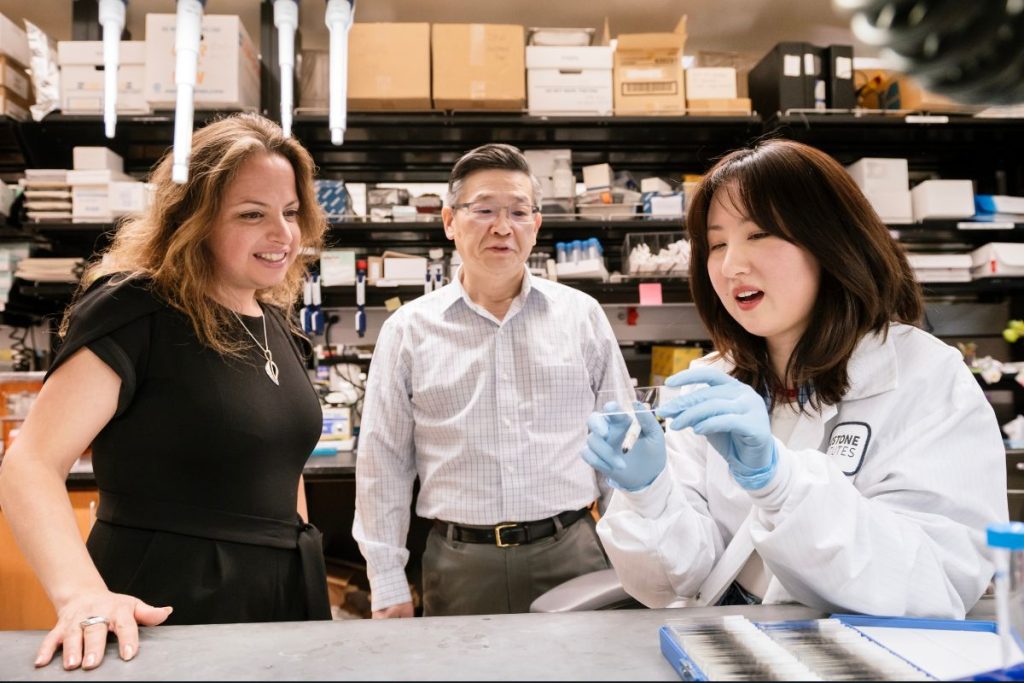
This human-centric pipeline was deliberate. “Alzheimer’s disease comes with complex changes to the brain, which has made it tough to study and treat, but our computational tools opened up the possibility of tackling the complexity directly,” said Marina Sirota, PhD, co-senior author of the paper. “We’re excited that our computational approach led us to a potential combination therapy for Alzheimer’s based on existing FDA-approved medications.”
From prediction to preclinical proof
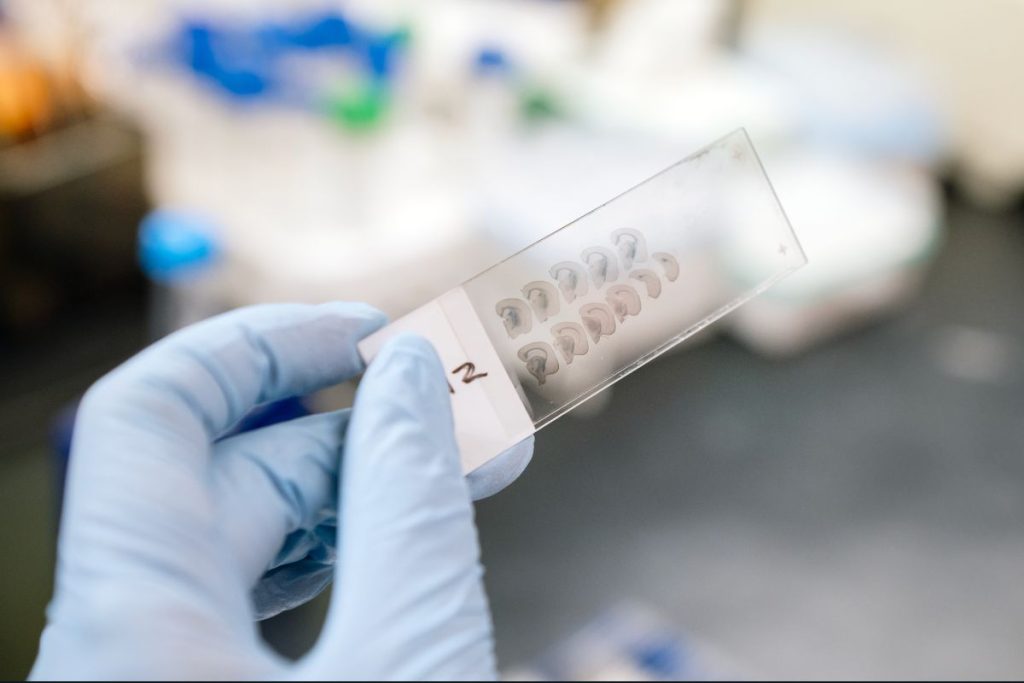
In silico predictions, no matter how compelling, require validation in biological models. The authors tested letrozole and irinotecan in 5xFAD mice – a well-characterized genetic model of Alzheimer’s. The combination therapy improved performance in memory and learning tasks and reduced classical Alzheimer’s pathologies such as amyloid plaque burden and gliosis. The transcriptional signatures in treated mouse brains also showed partial reversal of disease-associated gene expression profiles, echoing the predictions made in the human datasets [1].
“It’s so exciting to see the validation of the computational data in a widely used Alzheimer’s mouse model,” Yadong Huang, MD, PhD, senior investigator and director of the Center for Translational Advancement at Gladstone, professor of neurology and pathology at UCSF, and co-senior author of the paper, noted. “We’re hopeful this can be swiftly translated into a real solution for millions of patients with Alzheimer’s.”
Among the 25 computationally selected compounds, a number of familiar names appeared, including sirolimus (rapamycin), valproic acid and trifluoperazine. Each of these has been independently explored in longevity and neurodegeneration contexts, further supporting the relevance of the drug-repurposing framework proposed. However, letrozole and irinotecan were the only pair to satisfy all three pillars of the study’s design: transcriptomic reversal across distinct cell types, significant real-world risk reduction in EMR data and feasibility for preclinical validation.
Patterns, not plaques
One of the more striking elements of this study is its departure from the traditional framing of Alzheimer’s as a proteinopathy; instead, the authors treat it as a system-level disruption of cell-specific networks – an architecture of dysfunction, rather than a single molecular fault.
“Alzheimer’s is likely the result of numerous alterations in many genes and proteins that, together, disrupt brain health,” said Huang. “This makes it very challenging for drug development – which traditionally produces one drug for a single gene or protein that drives disease.”
Instead, the authors propose that correcting disease-altered gene expression patterns in specific brain cell types – using compounds known to exert transcriptional influence – is a promising strategy. If human transcriptomic data and real-world EMRs converge on the same targets, as they did here, that might well be enough to justify clinical testing.
From targets to networks
If there is cause for cautious optimism here, it lies not in the familiar molecules themselves but in the methodological direction of travel – data-driven, cell-specific, and human first. Longevity science has often sought to move upstream of disease, addressing biological aging itself; studies like this, rooted in multi-modal human data and focused on system-level interventions, may offer one path for doing just that.
[1] https://www.cell.com/cell/fulltext/S0092-8674(25)00737-8

