
Researchers create personalized biological clocks that measure how each body system ages – offering a new approach to tracking healthspan.
The ability to measure biological aging with granularity and reliability remains one of the key challenges of geroscience. While the field has made strides in understanding molecular hallmarks of aging, translating these insights into clinical tools that reflect real-world health remains elusive. Chronological age remains a blunt instrument – too coarse to capture the intricate mosaic of decline and resilience that shapes individual trajectories of aging.
A new study published in Nature Communications proposes a framework designed to change that. Developed by researchers from University of Washington, Stanford University, the National Institute on Aging and other institutions, the tool — dubbed the Health OctoTool — models aging not as a linear process, but as a composite of diverse, system-specific declines. Using extensive datasets from the Baltimore Longitudinal Study of Aging (BLSA), InCHIANTI and NHANES, the researchers examined disease burden across 13 body systems, including cardiovascular, musculoskeletal and metabolic domains, in over 42,000 individuals [1].
The authors write: “We propose a data-driven method to conceptualize and quantify intrinsic aging heterogeneity using systemic morbidity progression from longitudinal data.” Rather than taking a top-down view of aging, the team built a suite of metrics from the ground up — integrating real-world clinical data to derive what they call the Body Organ Disease Number (BODN), Body Clock, and a series of system-specific biological clocks [1].
Longevity.Technology: Longevity science has long sought to address the root causes of aging, but this study reflects how that perspective is beginning to filter into mainstream clinical thinking — potentially reshaping medicine’s approach to disease prevention itself. By conceptualizing aging as a system-wide, heterogeneous process rather than a uniform decline, the Health OctoTool offers a far more nuanced lens through which to understand – and ultimately modulate – biological age. Not only does it validate the limitations of using chronological age or single-disease metrics, but it also unlocks the potential for personalized interventions by mapping how different organ systems age at different rates.
This organ-by-organ entropy model doesn’t just enhance predictive accuracy for decline and mortality, it also offers a framework for aligning therapeutic strategies with individual aging trajectories. In a field where actionable, scalable biomarkers are sorely needed, the OctoTool could be a keystone technology – providing a more rigorous foundation for clinical trials, senotherapeutic deployment and population-level screening. It shifts the conversation from ‘how old are you?’ to ‘how are you aging?’ – a question at the heart of precision geroscience.
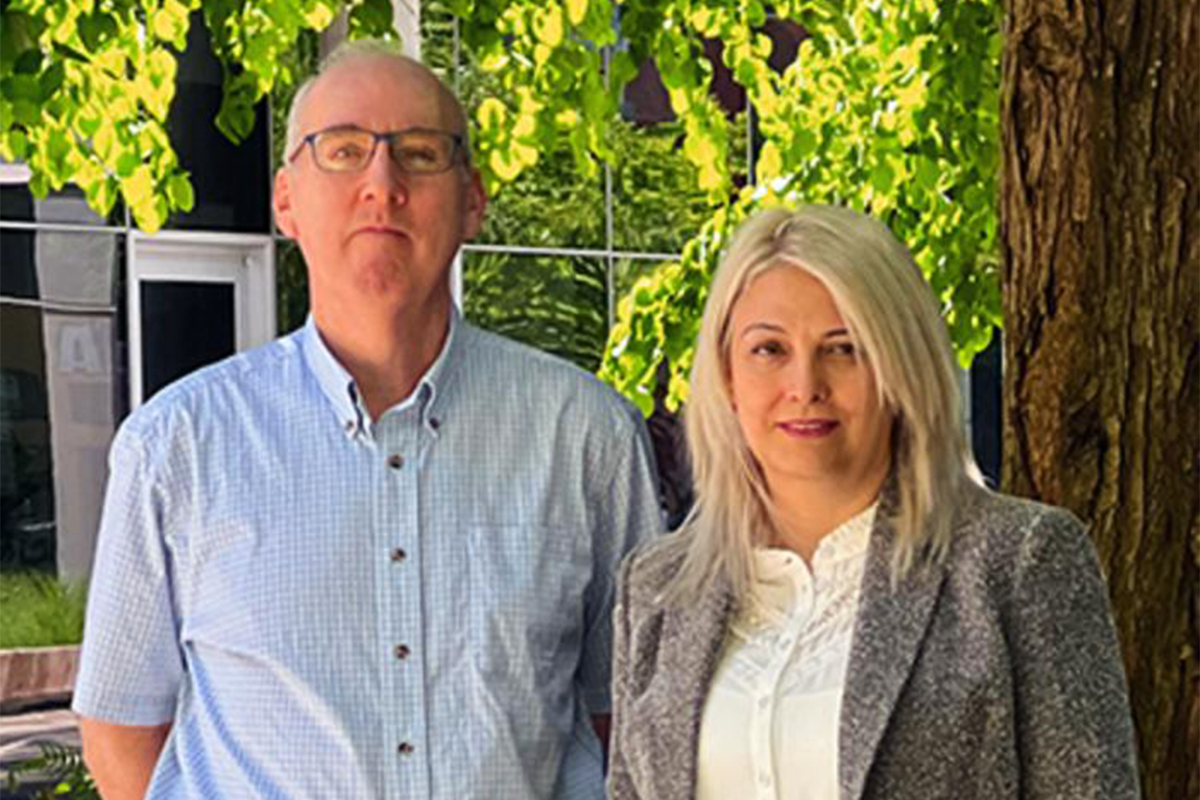
At the heart of the paper lies a recognition that aging is inherently uneven; the liver may remain robust while kidneys falter, and metabolic resilience may be preserved even as musculoskeletal function wanes. “Our findings demonstrated that organ systems age at different rates, prompting us to develop a Bodily System-Specific Age metric to reflect the aging rate of each organ system and the Bodily-Specific Clock to represent each organ system’s intrinsic biological age,” lead author Shabnam Salimi explained [2].
The development of the Body Clock – a composite score based on the weighted severity of diseases across systems – allows clinicians and researchers to track systemic health over time, with greater precision than traditional indices such as frailty scores or number of chronic conditions. According to the authors: “The Body Clock predicted future multimorbidity, functional decline and mortality better than the frailty index, the number of diseases, and age [1].”
These predictive advantages emerge from the tool’s foundation in Bayesian modeling, which accommodates the probabilistic and overlapping nature of disease progression. The system’s use of expected log pointwise predictive density (ELPD) analysis demonstrated that multisystem disease burden significantly outperformed chronological age in predicting future decline – suggesting that health entropy, rather than years lived, is a more accurate proxy for biological age.
Salimi explained that current health-assessment methods focus on the effects of individual diseases but fail to consider the interactions among diseases and the impact of minor disorders on overall health. Salimi said. “An aging-based framework offers a new path to discover biomarkers and therapeutics that target organ-specific or whole-body aging, rather than individual diseases [2].”
In practical terms, the OctoTool may offer clinicians a path to assessing how an individual’s lifestyle, medications or interventions are influencing not just general health, but specific organ systems. “Whether someone is adopting a new diet, exercise routine or taking longevity-targeting drugs, they will be able to visualize how their body – and each organ system – is responding,” she said.
This adaptability could be of particular interest in the emerging space of longevity therapeutics, where questions persist about how to quantify efficacy in early-stage trials. A suite of eight metrics – including the Body Clock, Body Age and clocks based on physical performance and disability – enables a layered approach to health assessment using routine clinical data such as exam results and medical history. “Collectively, these eight metrics… offer a way to view an individual’s aging process,” said Salimi [2].
The authors position their tool not as a replacement for existing clocks, but as a clinical bridge – something that can be derived from accessible data and applied at scale. “We show that a new concept of multimorbidity-derived organ age can predict important clinical outcomes and offers an opportunity to bridge the gap between aging biology and clinical applications,” they note in the paper [1].
If successful, the OctoTool could become part of the foundational infrastructure for a future in which aging itself is monitored as a modifiable risk factor – not just in clinical research, but in primary care, insurance risk stratification and consumer-facing longevity platforms. As the field moves from conceptual frameworks to actionable diagnostics, tools that quantify and individualize biological aging will be essential for validating interventions, tailoring treatments and tracking longitudinal outcomes. Commercially, a robust, clinically grounded metric of systemic aging could serve as the basis for healthtech applications, gerotherapeutic monitoring and even digital biomarkers integrated into wellness programs or regulatory pathways. The OctoTool’s reliance on accessible clinical data, rather than deep omics or wearable devices, may also make it more readily translatable – and scalable – across healthcare systems and markets.
And if aging is, as it seems, a story told in multiple voices across the body, then this tool may be the beginning of learning how to listen — organ by organ.
[1] https://www.nature.com/articles/s41467-025-58819-x
[2] https://newsroom.uw.edu/news-releases/new-health-assessment-tool-gauges-bodys-biological-age

