
Connectome aims to make neuroimaging an affordable, practical tool for monitoring brain health and performance.
In the past decade, advances in wearable technologies have revolutionized our ability to monitor our physical health, although the same cannot be said for our brain health. British-Swiss startup Connectome is aiming to change that, leveraging cutting-edge hardware and AI-powered analytics to transform brain health monitoring into a routine, preventive practice. Founded by neuroscientists and healthtech entrepreneurs, the company has developed a portable brain scanning system that it claims makes cognitive performance measurable, actionable and accessible.
While Connectome says its technology has already been validated in clinical studies for identifying conditions like Alzheimer’s, Parkinson’s and brain atrophy, the company’s current focus is on wellness and performance indicators – aiming to catch early signs of cognitive decline before symptoms manifest. Connectome says its brain health assessments are significantly more affordable and scalable than clinical neuroimaging technologies, and its first consumer health-focused product is set to launch later this year, with scans expected to cost just £299 (approximately $400).
Longevity.Technology: Boasting collaborations with leading researchers from Imperial College London and the University of Zurich, Connectome aims to make neuroimaging a practical tool for consumer health, empowering individuals to track and optimize their brain health in much the same way that wearables have transformed physical health monitoring. Amid a global decline in cognitive function due to aging populations and other factors, the company founding mission is to make functional brain health “one of the defining mega-trends of the next 20 years.” To learn more about how it plans to achieve this, we sat down with co-founder and CEO Lucas Scherdel.
According to Scherdel, many of the tools currently used for cognitive assessment are “quite limited.”

“Most are basic, paper-based assessments or digital versions of them, which offer only crude measurements that are far from sufficient for understanding the brain, the most complex structure in our bodies,” he explains. “More advanced tools like functional MRI exist but are generally accessible only for rare cases or high-net-worth individuals, and it still doesn’t address the gap in measuring how the brain actually functions.”
Seeing the brain as a ‘weather system’
While Scherdel admits that recent progress has been made in measuring specific aspects of brain function using innovations like voice biomarkers and EEG headphones, he says the bigger picture is still missing.
“We are now entering the age of the quantified mind,” he says. “But while these point solutions are advancing rapidly, we believe there is still a critical need for a holistic view of brain function – something that can measure the whole brain or as much of it as possible in a single session. Our technology aims to fill this gap.”
Scherdel and his co-founders saw the opportunity to leverage cutting-edge technology to make an impact in functional brain health. At the heart of the company’s offering is a portable neuroimaging device developed by US tech company Kernel, which uses functional near-infrared spectroscopy (fNIRS) to measure real-time brain activity by tracking how oxygenated blood flows through the cortex with high precision.
“Our innovation combines Kernel’s neuroimaging hardware with new, proprietary advancements of our own,” says Scherdel.
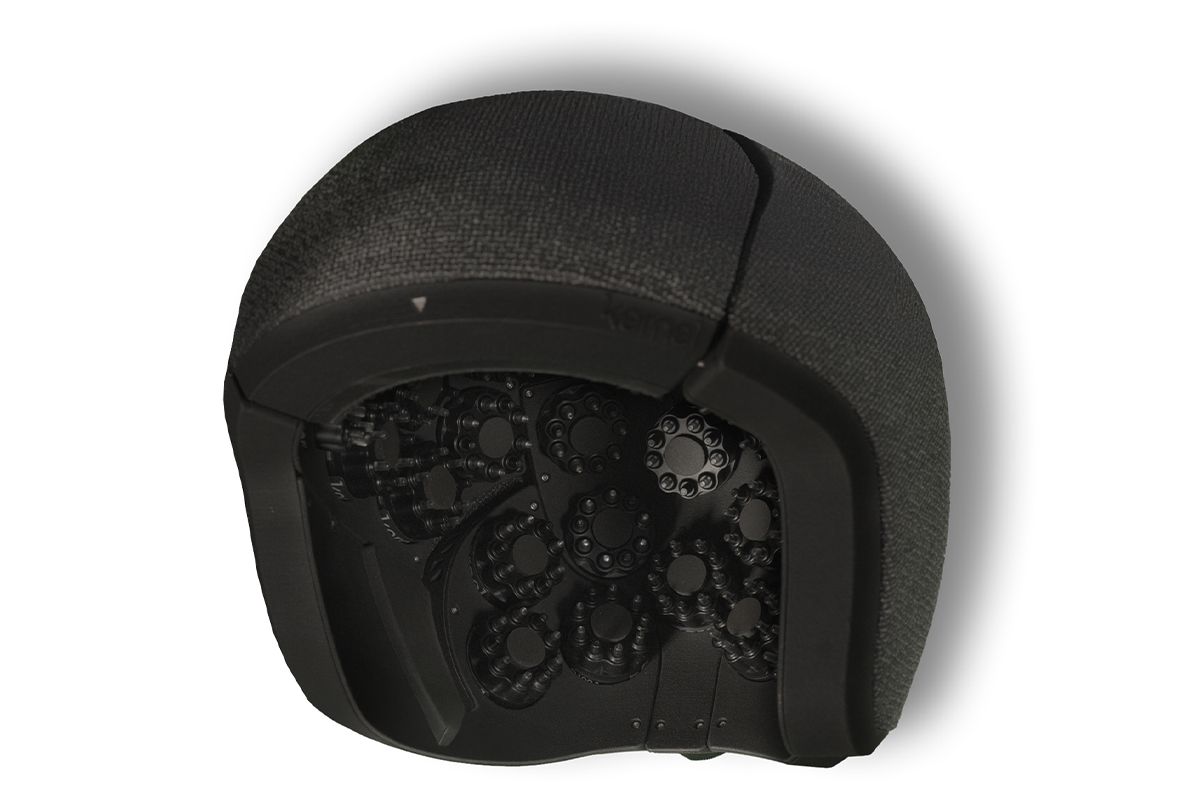
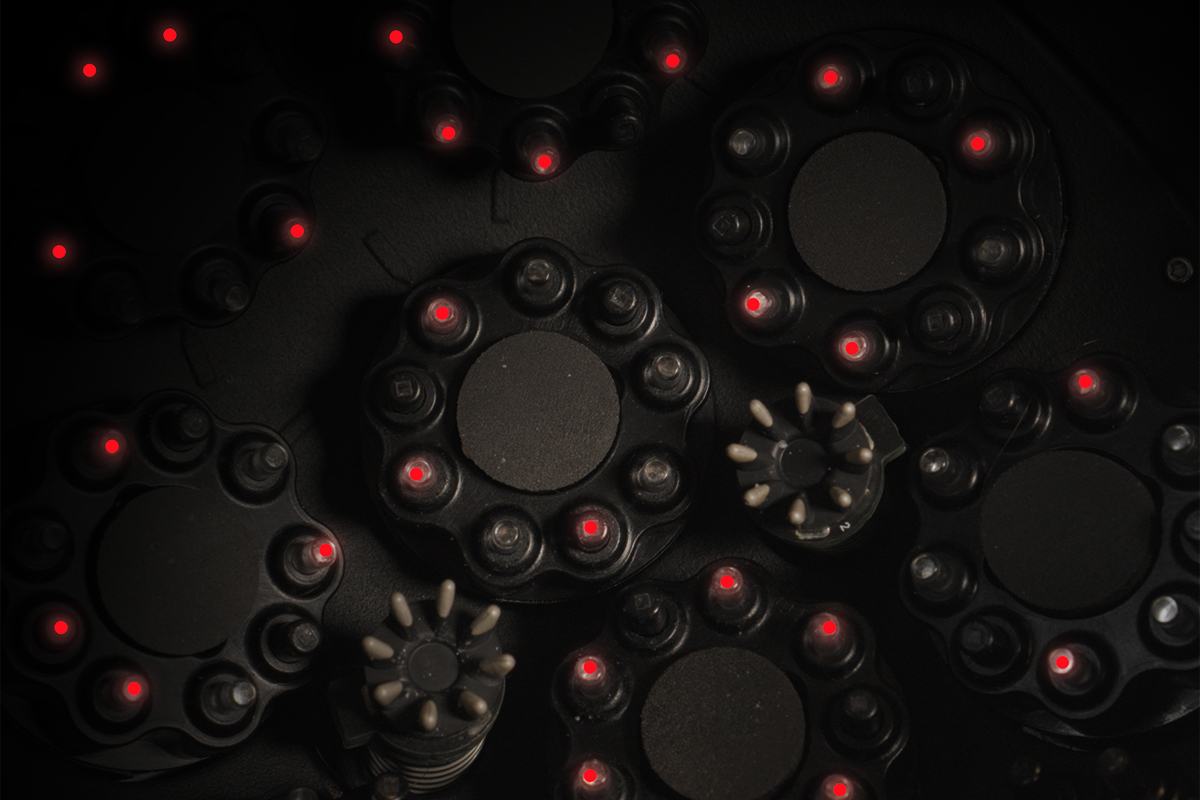
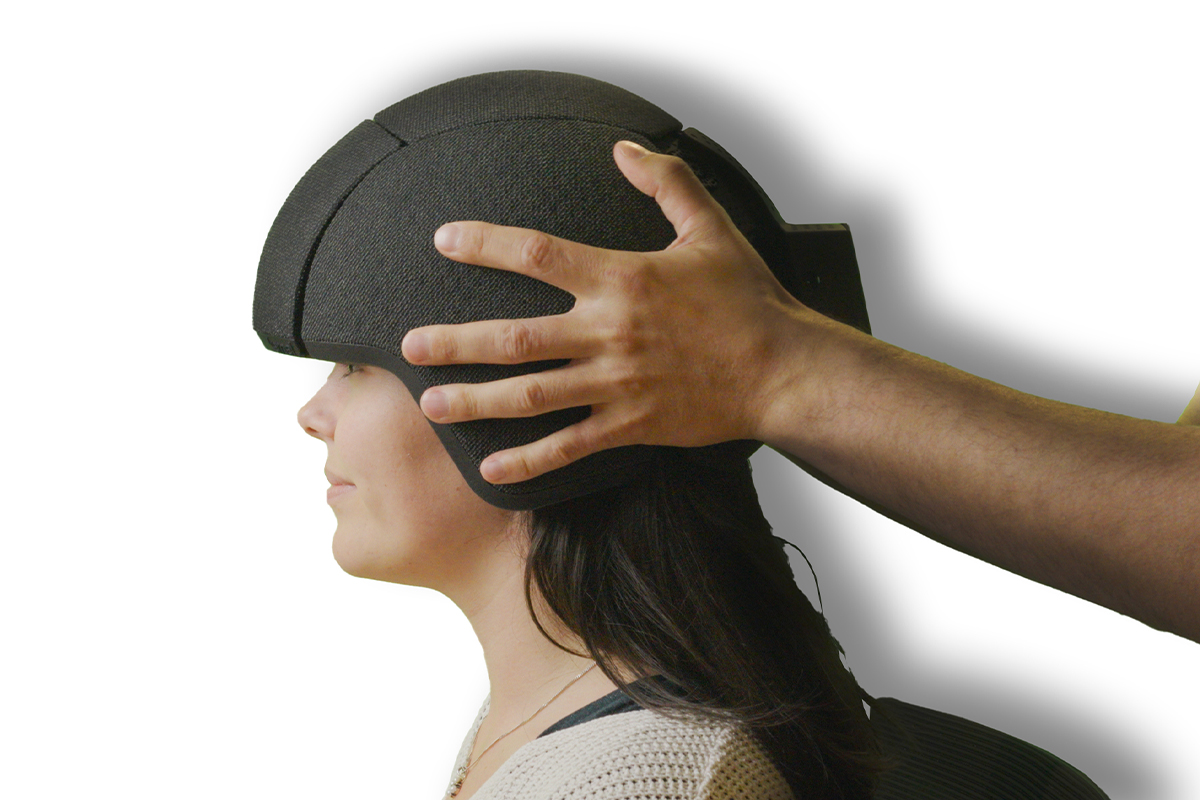
Connectome’s innovations include a system that guides users through a number of standard cognitive assessments in a gamified, digital format. The resulting data from the user’s assessment session is then processed through the company’s proprietary AI pipeline, generating a unique cognitive profile for each individual. According to Scherdel, the approach enables the creation of a personalized “routing architecture” of the brain, revealing how information flows across the cortex and how these patterns shape cognition and mental performance.
“Rather than view the brain as a collection of static ‘lights’, like a Christmas tree, we view it as a dynamic ‘weather system,’ with flows and connections that can be observed and analyzed,” he explains. “We use AI methods giving us higher accuracy, scalability, and the ability to generate comparable biomarkers across individuals.”
While Connectome intends that its platform will one day be used in clinical settings, the company’s initial focus is on the consumer health and wellness market, particularly for individuals interested in their cognitive performance, self-care and healthy aging.
“Our consumer platform will show users the connections in the brain and highlight which regions are interacting – as one of the first to bring this capability to market, we believe it’s a major breakthrough,” says Scherdel. “We also use established research to provide scores that help users understand their brain’s wellbeing and performance, such as measuring how quickly the brain is aging.”
From consumer to clinical
Connectome’s consumer offering focuses on five key performance axes, linking cognitive health to life quality and healthspan.
“Our proprietary metric, ‘attention variability,’ measures fluctuations in focus – essentially, how well you can maintain attention and how often it drifts,” says Scherdel. “We also measure how quickly your brain recovers from strain, cognitive load, memory capacity, and adaptability to new information. Our assessments push and pull the brain to reveal these capabilities, providing actionable feedback.”
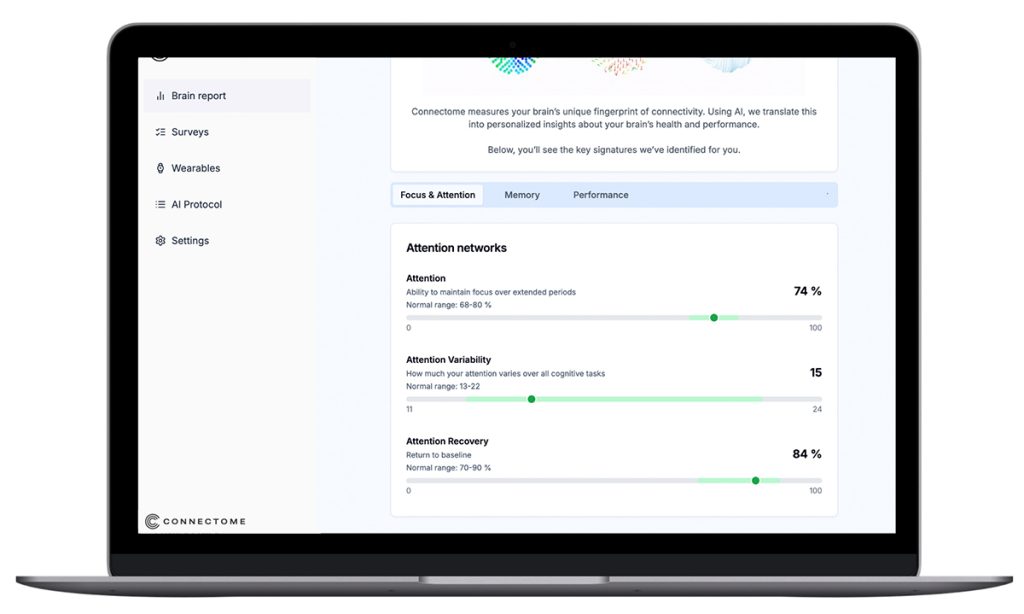
Based on this data, Connectome generates individualized action plans via an accompanying app that provide guidance on improving brain performance. These plans may include strategies for alignment with circadian rhythms, supplement recommendations, activity plans, nutrition, and, in the future, options like brain training, neuromodulation and coaching.
Looking ahead, Scherdel says that Connectome is currently raising a seed funding round which will take the company through the launch of its consumer product this year.
“Over time, we plan to expand into clinical applications and integrate validated biomarkers, without changing the core focus of the product,” he says. “Initially, users receive performance-related insights around cognitive functions like memory, focus, and attention. As the roadmap matures, we’re exploring how these insights could support early detection and prevention of neurological conditions in a non-clinical setting.”
The company’s long-term vision is to develop a system that, in a single 30-minute session, can detect early signals related to a broad range of brain health challenges.
“While our current technology is capable of identifying patterns associated with conditions like brain atrophy, Alzheimer’s, and Parkinson’s, we’re equally focused on cognitive function areas that affect daily life – such as attention regulation, memory performance, and executive function, including those relevant to ADHD,” says Scherdel. “Our aim isn’t to replace clinical diagnosis but to make proactive brain health insights as accessible and normalised as blood tests are today.”

