
New AI-driven platform aims to offer biometric analysis, personalized longevity guidance and seamless wearable integration.
Longr has announced the launch of The Longevity AI, a new, free application available for iOS and Android that leverages machine learning and biometric AI to deliver individualized health insights. The platform processes extensive biometric data, dietary habits and activity patterns to generate tailored longevity recommendations.
“The Longevity AI is a breakthrough in making longevity accessible to all,” said Richard Skaife, CEO and Cofounder of Longr. “For the first time, anyone, anywhere can access precision longevity coaching to address the root causes of their aging without a cost attached. By eliminating costs and barriers, The Longevity AI broadens our user base and drives meaningful engagement. It lays the foundation for our platform at Longr, including for Longevity Direct – ‘Your Longevity Clinic from Home’ – where we combine this real-time analysis and coaching with US physician-prescribed longevity medications and advanced biomarker testing.”
Longevity.Technology: The rise of AI-driven longevity platforms reflects a broader trend in health technology; individuals are increasingly seeking personalized, data-backed insights to better understand their biological health and take proactive steps in improving it. As longevity science advances, the integration of biometric AI and machine learning into everyday health management is likely to become more prevalent, catering to growing demand for precise, real-time interventions, and we sat down with Richard Skaife to find out more.
At the core of The Longevity AI is a system of specialized AI agents trained on peer-reviewed longevity science and proprietary data; these agents analyze data across four key domains: activity, diet, sleep and mindfulness. Longr has designed the app to function as an all-in-one digital health coach, providing guidance equivalent to that of a nutritionist, fitness expert, sleep specialist and mindfulness coach working in tandem.
Skaife explains: “The starting point is establishing a complete and comprehensive view of the individual – everything from medical history, genetic factors, and medication use to daily behaviours like activity, diet, sleep, and mindfulness. We analyze it all.”
He adds the user’s biometric data continually updates a ‘Longevity Pulse’, which allows for day to day progress tracking towards longevity outcomes.

The Longevity AI integrates with a range of wearables, including Longr’s blēo, Apple Watch, Google Pixel, Whoop and Oura, ensuring continual tracking of biometric signals. Among its core features is the ability to measure biological age based on real-time health data and provide individualized recommendations aimed at reducing it. Additionally, the app’s proprietary ML tech Longevity Vision tool uses AI-powered food scanning to assess meal composition and offer nutrition advice aligned with longevity principles.
Skaife explains the platform is fully interoperable, connecting with a range of wearables or a smartphone health app – but the real differentiator is what sits at its core. The Longevity AI is built on a constellation architecture of ten specialized longevity LLM agents, each uniquely trained to analyze specific aspects of health, drawing from thousands of research papers and studies.
“We are biometric first, but recognize how crucial behaviour and lifestyle is – hence the interactive coaching,” Skaife explains. “Your coach will continually extract information and refine its approach to learn from interactions.
“Finally, once again, the challenge with legacy wearables is that it’s an entirely end user first proposition. We’ve opened it up so that all of this can be put into action alongside your medical professional or coach.”
In the coming months, Longr plans to expand the app’s capabilities to include voice-enabled interactions, advanced genetic profiling and AI-driven digital coaching; further enhancements to Longevity Vision will introduce real-time facial health scanning, providing users with additional biometric insights.
“The Longevity AI is designed to extend access and reach as far as possible, building engagement and trust in longevity science,” says Skaife. “From there, as we have already seen, users naturally progress to deeper interventions – whether it’s longevity medications through Longevity Direct or a biometric wearable like blēo.”
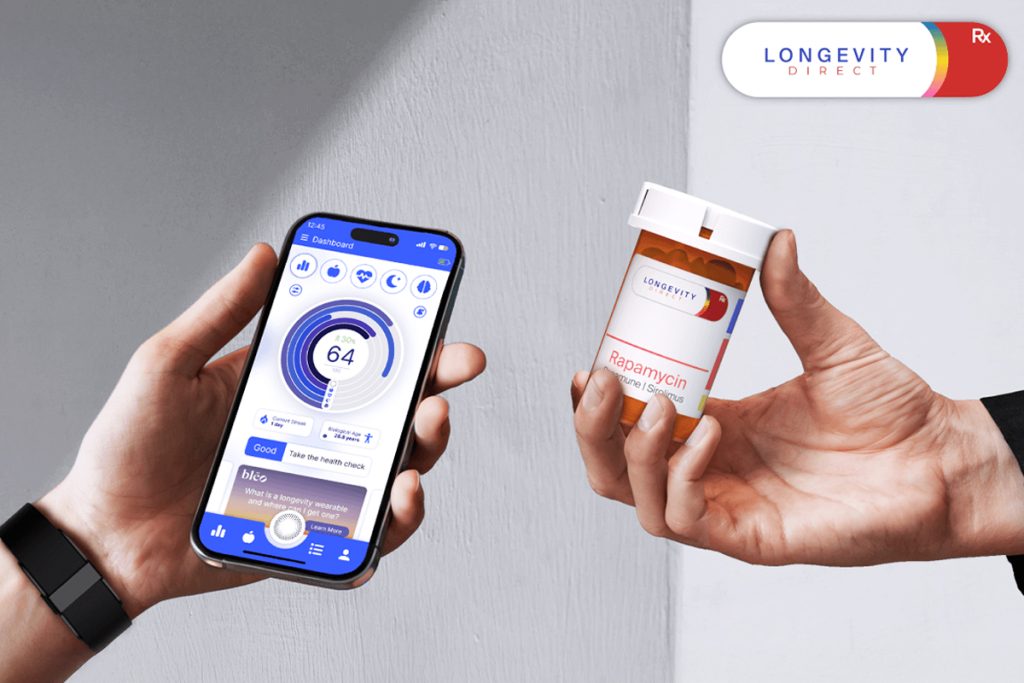
The upcoming Longevity Direct feature includes physician-prescribed medications and Skaife explains that if approved by Longr’s physicians, the initial drugs that can prescribed will be rapamycin, metformin and GLP-1s – specifically semaglutide and tirzepatide, in both injectable and tablet form.
“We believe that the only scalable solution for preventive health is one that’s powered by AI and delivered directly to your home, because everyone should be entitled to equitable access,” Skaife explains. “We set out to offer the most comprehensive, data-backed package on the market, analyzing over 28 million data points per client each year. Our prescribing protocols have been developed in collaboration with leading medical doctors and are always personalized to the individual.
“Results must be measurable, which is why we incorporate continuous coaching feedback, biometrics, lab testing, and genetic testing to track and optimize longevity outcomes over time.”
Many longevity tests rely on molecular biomarkers like DNA methylation, and Skaife says that Longr acknowledges that molecular biomarker testing is the best way to go for biological age estimation – and this is something it encourages people to do.
“Through The Longevity AI, a key goal is to encourage users to get thinking about their biological age, many for the first time, educating them and coaching behaviour that leads to positive action which will improve it – it’s a starting point,” he says. “The biological age estimate which you will see is based on lifestyle, behaviour, and medical history, which together can provide a really solid aging profile on the user.”
Skaife explains that key biometric datapoints like VO2 Max and HRV are strong longevity indicators, and depending on the wearable of choice, can be integrated with the coach through the app.
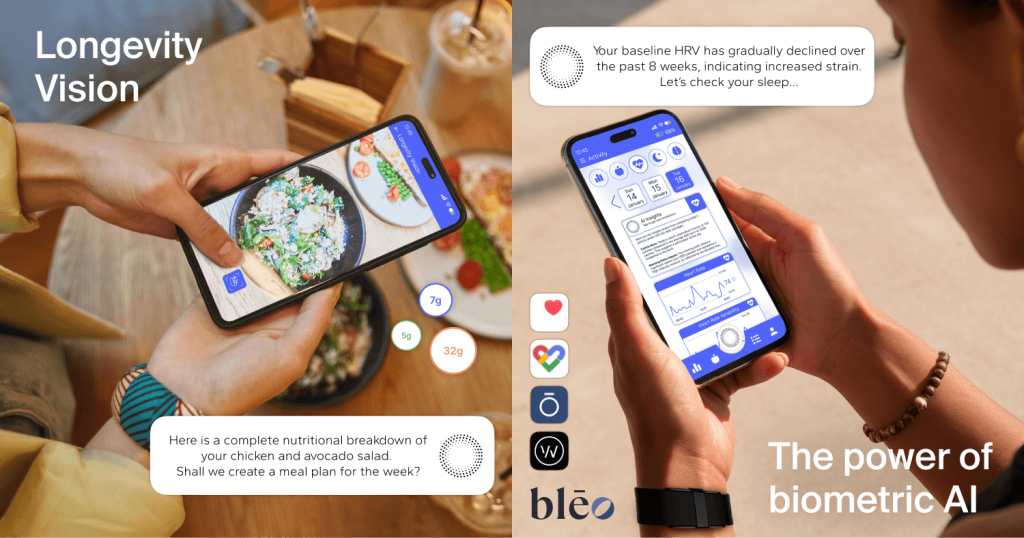
“Your biometrics, including these two, contribute to your Longevity Pulse, which allows for day to day progress tracking towards your longevity outcomes,” he says, adding that for those who seek molecular biomarker testing, such as DNA methylation, Longr provides direct access to this through Longevity Direct. “Equally, you are able to add previous test results to The Longevity AI via conversation with your coach, while we will shortly be adding a dedicated upload portal.”
Longr has also announced plans to establish a partner program, allowing clinics, hospitals and public health organizations to gain permission-based access to anonymized client data for research and healthcare applications.
Skaife tells us that the real power of this model is that healthcare providers get access to a client / patient’s biometric and diet data in a clean, structured way, without any guesswork. When the provider meets with a client or patient, they already have a summary, allowing them to get straight to work. Simply put, they don’t need to ask about sleep, diet or meal timing – they already have that information in front of them.
However, he makes the point that data alone isn’t enough – it’s about what you do with it. “For example, take our own prescribing environment at Longevity Direct. If we were looking at a Rapamycin plan, it’s not just about prescribing a pill; it needs to complement an optimized exercise and dietary plan. The Longevity AI ensures providers have the context to make precise, data-backed decisions from the very first consultation.”
As so often, there is a path to be trodden between research benefits and privacy concerns, as well as communicating to customers the wider value of sharing data for longevity research and clinical applications.
Skaife tells us that Longr data sharing is always permission-based, and anonymization is a core part of its technology stack. “We are both GDPR and HIPAA compliant, and we only work with partners who meet the same high standards,” he explains.
“We’ve already seen just how passionate and committed our user base is, both for their own longevity and broader adoption of preventive health in society,” he says, adding that Longr is shortly to announce a research partnership with a leading global academic institution – and are open to more. “We’re confident that our users will keenly opt into our research studies which analyse biometric and behavioral data in a way that’s scientifically rigorous, contributing to new knowledge, and of course privacy-first.”

