
José Cordeiro and Felix Werth explore how the drive for longevity is shaping new political landscapes in Europe.
Longevity is becoming more and more a major concern around the world, but particularly in Europe which is the continent with the oldest population in the world – and it is aging fast. According to Eurostat, all European countries have comparatively long-life expectancies, with an average of 81.5 years for the continent, from the highest in Spain with 84.0 years to the lowest in Bulgaria with 75.8 years. Just for comparison, among the major countries, with additional United Nations statistics, Japan has the longest life expectancy in the world with 84.95 years, the US with 79.74 years, China with 78.79 and India with 72.03 years. The lowest life expectancy in the world is in Chad with only 53.68 years, and other African countries have also low life expectancies in the 50s and 60s.
Spain as the longevity leader in the European Union
Spain has the longest life expectancy of any country in the European Union, and Madrid is the most longevous capital in the Union. Thus, a new party called Futuro was born in Madrid during the Covid19 pandemic to address the pressing issues of the future, including longevity. During my campaign to the European Parliament, I (José Cordeiro) emphasized that we are not from the left nor from the right – we are from the future. My main worry is Spain with its aged and aging population, and so I made a formal proposal to create the European Anti-Aging Agency in Tenerife, where there are already many services and products for the fast aging population, both local and from Northern European countries, where people migrate to the Canary Islands for retirement.
After collecting the necessary signatures to participate in the European Elections, the campaign was swift. During four weeks we promoted the ideas of longevity, life extension and possible rejuvenation technologies on the horizon. It is estimated that close to 90% of the Spanish population dies of age-related diseases, so aging is the main common enemy of the people in Spain, in particular, and in Europe, in general. Unfortunately, the election was very polarized between left and right – in fact, even between extreme left and extreme right – and the more visionary parties like ours had a hard time competing. Nonetheless, Futuro had almost 6,000 votes in its first European Election, and hopefully will gain even more in the next elections 5 years from now.
Germany: Party for Biomedical Rejuvenation Research
In Germany a single-issue party exists since 2015 – the German Party for Biomedical Rejuvenation Research. It has participated in 23 elections so far, and uses its election campaigns to promote the SENS damage-repair approach and to advocate for more government funding for this field. Its best election results were 0.5 percent of the votes in three of the state elections, although its name was Party for Health Research back then.
In this year’s European Election, the party received about 18,000 votes, measuring up to around 0.05 percent. Even though the number of votes was quite low this time, the participation was still worthwhile because of all the advocacy that was done in the election campaign. Commercials were aired on TV and radio reaching millions of people, and election posters were displayed all over Germany, leading to many social media posts and other appearances. Moreover, there was a lot of media coverage of the party and its concerns, and lots of people became aware of rejuvenation research by the self-explanatory party name. The party also uses its website to inform the public about the field in detail.
More initiatives
Some other European countries, like Belgium and France, for example, have also had advocacy groups promoting longevity, but not yet political parties. Another case was the United Kingdom before Brexit, in 2019, when there was also a candidate who based his campaign in life extension during the last European election where Britain participated. Unfortunately, the candidate was not elected, and Britain left the European Union anyway.
Single issue parties have slowly appeared in the last few decades across the continent – first the green parties, and later the pirate parties, for example. Now is the time for the longevity parties across Europe, and across the whole world. Longevity has finally become a pressing issue, and politics has to address it. As Victor Hugo supposedly said: “There is nothing more powerful than an idea whose time has come.”
About José Cordeiro, PhD

José is an engineer from MIT, member of the World Academy of Art & Science, board director of The Millennium Project, coauthor of the international bestseller The Death of Death, and Spanish candidate to the European Parliament.
About Felix Werth
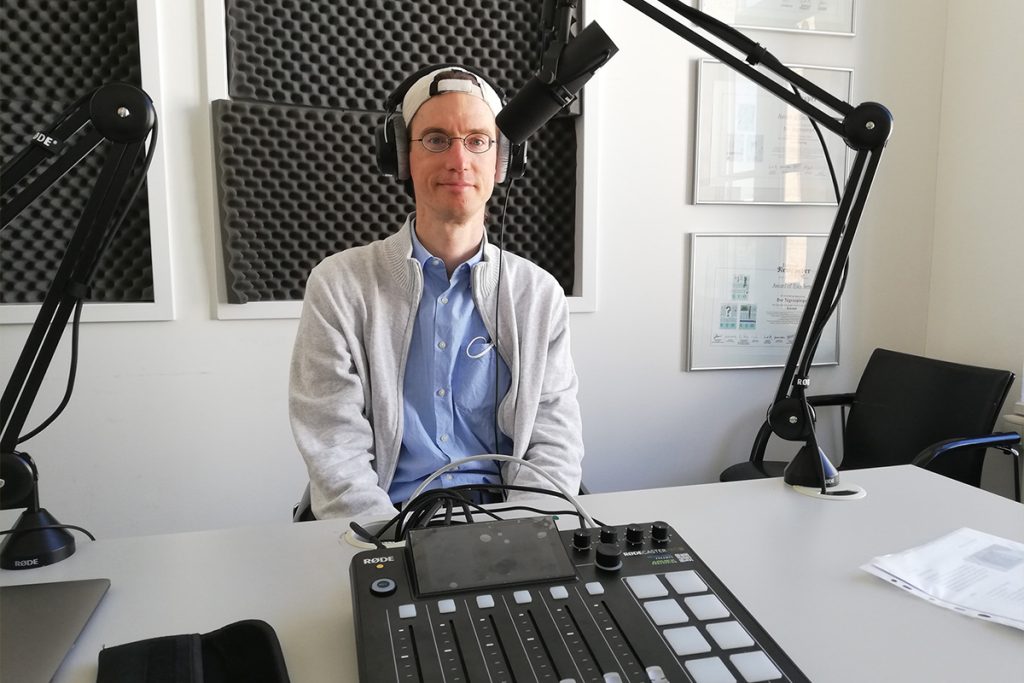
Felix has a Master’s Degree in electrical and computer engineering and a Bachelor’s Degree in biochemistry and is the Chairman of the German Party for Biomedical Rejuvenation Research and German candidate to the European Parliament.

