
New company exits stealth backed by innovative strategy for spinal cord reconstruction aims to transform SCI treatment and enhance longevity.
Lisnom Health, an LA-based biotech and medtech, has exited stealth today, announcing the launch of its patented spinal cord transplant solution in a move that could offer new hope to millions affected by spinal cord injuries (SCI). Coinciding with the publication of a study in CNS Neuroscience & Therapeutics by the company’s Chief Scientific Officer, Dr Xiaoping Ren, the technology promises not only to address immediate symptoms of SCI but also to support long-term recovery – potentially extending healthspan and quality of life for patients worldwide.
Longevity.Technology: Currently, over 15 million people live with SCI globally [1], and there are more than 500,000 new cases each year [2]. Despite the significant impact on individuals and the $7.2 billion spent annually on symptom management – including paralysis, chronic pain, and bowel or bladder dysfunction – there remains no definitive cure [3].
Lisnom Health’s approach involves removing scar tissue from the spinal cord and transplanting healthy nerve tissue, either from the patient or, in the future, donor tissue, to restore neurological function. It is a method that has demonstrated remarkable results in early trials, and Lisnom seem set to pioneer a transformative solution for SCI that has the potential to reshape treatment standards.
This innovative strategy represents a significant shift in SCI treatment; by focusing on spinal cord reconstruction through vascularized allogeneic spinal cord transplantation (vASCT) combined with spinal cord fusion (SCF), the company aims to tackle the root causes of SCI rather than merely managing symptoms. If successfully deployed, this technology could lead to substantial improvements in motor function and pain reduction, thereby enhancing patients’ longevity and overall healthspan.
In Ren’s recent study, 24 dogs underwent vASCT with donor spinal cord grafts and the application of polyethylene glycol (PEG) for spinal cord fusion. The experimental group showed significant improvement in hind limb motor function, with imaging indicating strong survival of the spinal cord grafts and restoration of spinal cord continuity [4]. In contrast, the control group remained paralyzed in the hind limbs, with imaging showing necrosis of the spinal cord grafts and severe defects. Importantly, PEG use during vASCT resulted in the recovery of signal conduction in a spinal cord test for all dogs [4]. These findings suggest that vASCT could be a promising therapeutic approach for treating irreversible spinal cord injuries.
“Our solution is the first to demonstrate that spinal cord allograft and fusion can effectively restore the function of the spinal cord, offering real hope for those with chronic spinal injuries,” said Ren, a spinal cord transplant expert, who has previously pioneered surgical innovations, including the world’s first successful hand transplant and the first successful spinal cord transplants in both dogs and clinical patients.

Lisnom Health was co-founded by LittleDove Rey, PsyD, who became dedicated to finding a cure for SCI following her sister’s injury two years ago. “After witnessing my sister’s journey following her spinal cord injury, I was determined to find a cure – not just for her, but for the millions of people struggling with similar challenges,” said Rey, who is CEO of Lisnom, which translates to hummingbird in Rey’s Native American language, and which is symbol of healing, resilience and revitalization for the Nisenan tribe.
Upon discovering Ren’s work, she recognized its potential and collaborated with him to bring this solution to the global market. “Our technology is rooted in healing and renewal, and we are committed to extending healthy longevity to individuals with spinal cord injuries and other neurological conditions,” she added.
Early trials have shown that patients experienced a 33% improvement in motor function and an 88% reduction in chronic pain. Additionally, there was a 58% improvement in bowel, bladder or sweating functions – key challenges often neglected by current treatments. These patients had chronic injuries with no signs of recovery for years, suggesting the potential for significant advancements in future trials with ongoing surgical and therapeutic developments [5].
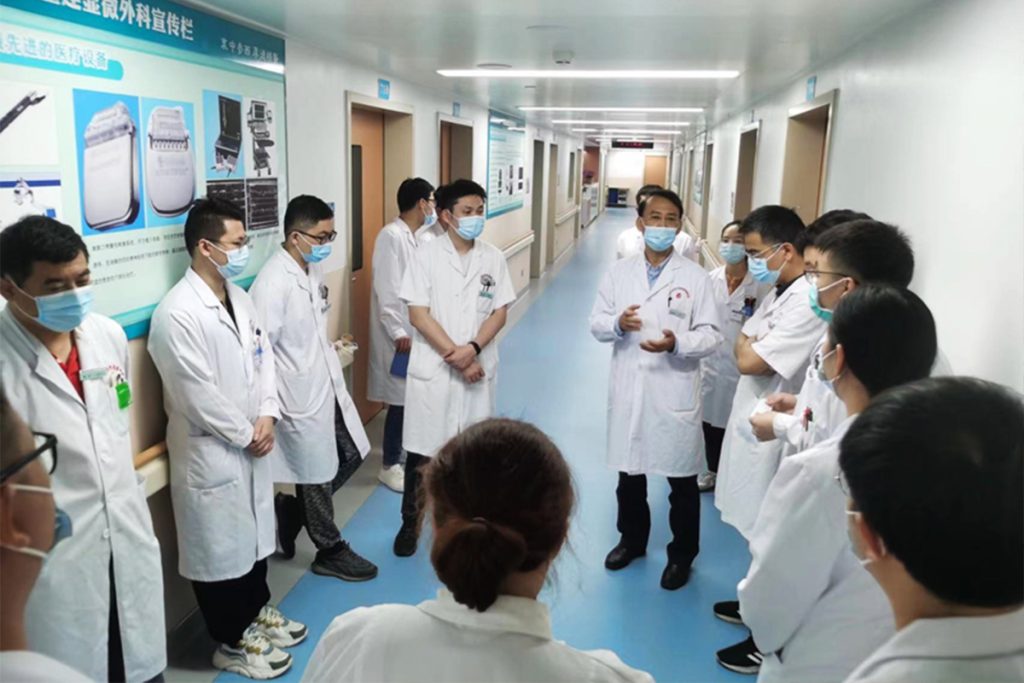
Lisnom Health’s surgical procedure is designed to be completed in a three-hour operation, involving the removal of lesion scars with proprietary devices, harvesting healthy spinal cord or peripheral nerve tissue, and fusing the spinal cord using a proprietary biochemical drug. Patients recover during a one-week hospital stay followed by rehabilitation. The company uses patented specialized devices and a biochemical fusogen to improve patient outcomes in spinal cord transplant surgeries.
The company plans to progress from seed funding to clinical trials within two years, aiming for approval to market in the US and China by 2028. Lisnom Health estimates a total addressable market of $50 billion globally, with an initial market of $12.9 billion in the US and China. Globally, it is estimated that between 15 to 20 million people are living with SCI, with Complete SCI representing a significant portion of these cases [1].
Beyond SCI treatment, Lisnom Health’s technology holds promise for transplanting other body parts, including the eye and brain tissue, with current research being funded by the Advanced Research Projects Agency for Health (ARPA-H). The long-term vision includes the possibility of transplanting the whole body from the neck down – a concept recently envisioned by BrainBridge.

Dr Ren told Longevity.Technology that the new technique holds promise for age-related spinal degeneration conditions such as degenerative disc disease, and could have future potential in treating neurodegenerative conditions such as Parkinson’s, ALS and MS or, longer term, in AMD or glaucoma. While he cautioned that developments in this direction will depend on funding, he said he hoped to see some progress in this area next year.
Looking to the future, he told us the vASCT protocol could be combined with other emerging therapies, such as stem cell treatments or gene editing, to enhance its effectiveness for neurological conditions.
“We’re not just providing a treatment; we’re creating a pathway to extend healthy longevity and well-being,” said Rey. By focusing on healing the nervous system, Lisnom Health aims to establish a foundation for healthier, longer lives, positioning itself as a leader in extending healthspan and quality of life.
[1] https://www.who.int/news-room/fact-sheets/detail/spinal-cord-injury
[2] https://www.ncbi.nlm.nih.gov/books/NBK560721/
[3] https://www.expertmarketresearch.com/reports/spinal-cord-injury-market
[4] https://onlinelibrary.wiley.com/doi/full/10.1111/cns.70020
[5] https://www.frontiersin.org/journals/neuroscience/articles/10.3389/fnins.2022.808983/full

