
Longevity world mourns a pioneer of aging research whose ‘Hayflick Limit’ revolutionized our understanding of cell biology.
Dr Leonard Hayflick, a pioneering microbiologist renowned for his seminal contributions to aging research, passed away on 1st August 2024, at his home in The Sea Ranch, California. Born on May 20, 1928, in Philadelphia, Pennsylvania, Hayflick’s career spanned several decades, during which he significantly advanced the scientific understanding of cellular biology and aging.
One of Hayflick’s most distinguished achievements came in the early 1960s when he challenged the prevailing scientific dogma that normal human cells are immortal. At a time when it was widely believed that cultured cells could proliferate indefinitely, Hayflick discovered that normal human cells, in fact, have a finite capacity for division. This phenomenon, known as cell senescence, has been immortalized as the ‘Hayflick Limit.’ This pivotal finding established that only cancer cells are capable of unlimited replication, whereas normal cells age and eventually cease to divide – a process mirroring the aging of the organisms they make up.
The Hayflick Limit is now a cornerstone in the field of cellular aging. It refers to the maximum number of times a normal human cell can divide before it enters a state of senescence, which is typically around 50 divisions. This discovery has profound implications for understanding human health and longevity, and the concept elucidates why cells lose their ability to proliferate with age, shedding light on the mechanisms underlying age-related diseases and conditions. Further research has revealed that telomeres, the protective caps at the ends of chromosomes, shorten with each cell division and are integral to this limit. Once telomeres become critically short, cells can no longer divide, entering senescence or undergoing programmed cell death.
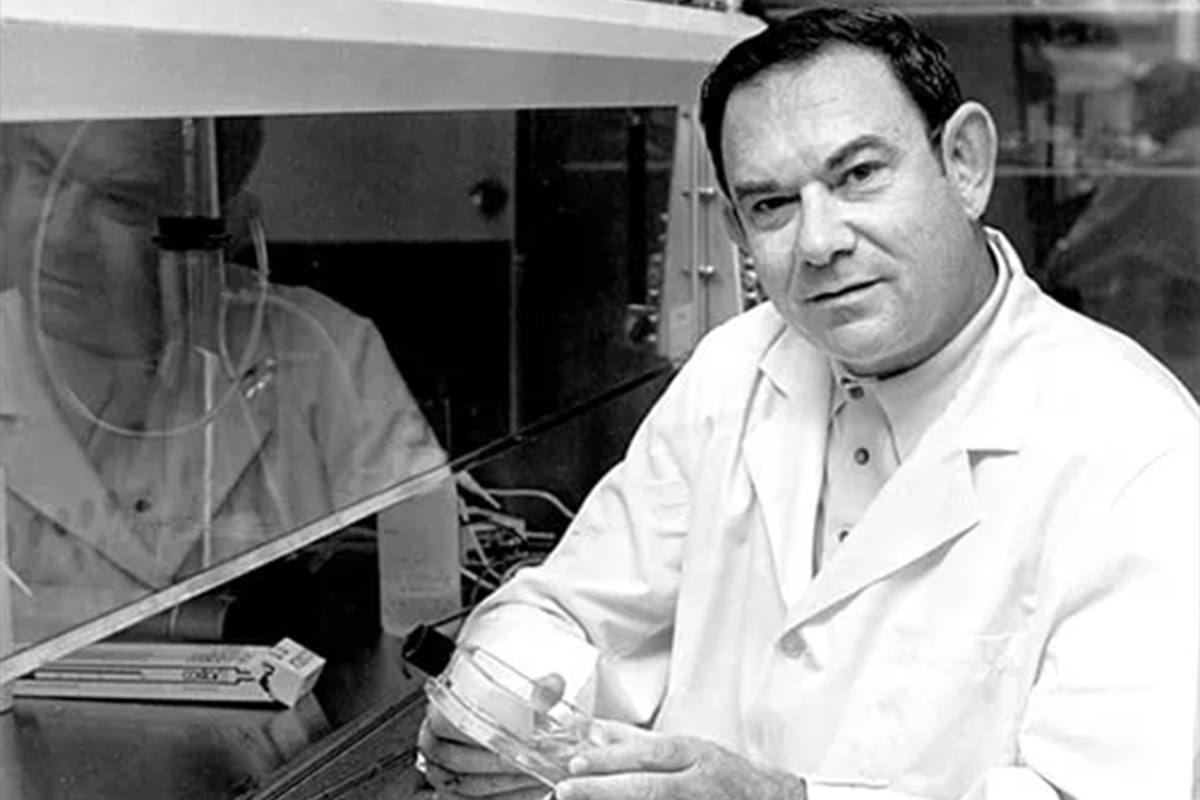
Despite initial skepticism and criticism, Hayflick remained resolute, and his findings were eventually validated and have since become fundamental to gerontology and biomedical research. His work not only paved the way for understanding cellular aging but also spurred investigations into cancer biology, given the contrasting behavior of cancer cells regarding immortality.
“Human efforts to interfere with the aging process have been going on ever since recorded history,” Hayflick told us in an interview. “When I first was in this field, there were no more than five or six people who had the nerve or the chutzpah to even admit that they were working in the field of aging because it has the largest lunatic fringe of virtually any other discipline – with the possible exception of cancer. There was a time when you couldn’t get two people to come to a lecture on aging. Today, the number of people interested in aging has skyrocketed to the point where it has become an industry, with multi-billionaires investing and hundreds of startup companies – all looking at ways to manipulate or interfere or stop or somehow deal with the aging process.”
In addition to his groundbreaking research on cell senescence, Hayflick made significant contributions to vaccine development. He developed the WI-38 cell line from fetal lung tissue, which played a crucial role in producing the first oral polio vaccine and the rubella virus vaccine used throughout the Western Hemisphere. These achievements are testament to his role in improving public health through biotechnology.
Hayflick’s contributions extended beyond the laboratory. He was a passionate advocate for scientific integrity and intellectual property rights. In the 1970s, he established a company to distribute WI-38 cells to pharmaceutical companies, ensuring the availability of these crucial cells for vaccine production while covering the costs of shipping and storage. This initiative, however, led to a protracted legal battle with the National Institutes of Health (NIH), which culminated in a settlement that allowed Hayflick to continue distributing the WI-38 cells and highlighted the complexities surrounding intellectual property and federally funded research. His testimony before Congress in 1980 was instrumental in enabling university researchers to patent inventions derived from publicly funded work, a significant milestone in the biotech field.
Throughout his career, Hayflick held numerous prestigious positions. He served as a professor of anatomy at the University of California from 1986, was Editor-in-Chief of the international journal Experimental Gerontology for 13 years, and was President of the Gerontological Society of America from 1982 to 1983. He was also a founding member of the Council of the National Institute on Aging at the NIH and chaired its executive committee. His involvement in over twenty scientific and professional societies reflected his deep commitment to advancing biomedical research and promoting scientific collaboration.
As might be expected, the loss of Dr Hayflick has been keenly felt by the longevity world.
David Sinclair, Professor at Harvard Medical School said: “I remember him fondly as a kind man who faced much criticism for his radical ideas about aging… Hayflick’s legacy endures in the scientific community and is still inspiring young researchers to understand the role of senescence in aging and how to prevent and even reverse this end state… RIP my inspiration 🙏”
The Alliance for Longevity Initiatives (A4LI) said: “We are extremely grateful to Dr Leonard Hayflick for his passion and perseverance for aging biology. While most known for establishing the Hayflick limit, we applaud Dr Hayflick for creating the biotechnology field… We commemorate Dr Hayflick’s numerous contributions, which have shaped the longevity biotech industry into what it is today.”
The Young International Cell Senescence Association (yISCA) said: “His revolutionary discoveries opened new scientific avenues, and his inspirational story will endure.”
Mate Maus, Group Leader of the Aging and Cancer Lab at VHIO, said: “With boldness, he challenged the dogma of his age that cells are immortal… He left us, but his paradigm shifting thoughts are with us to stay.”
Salvador Macip, Leader of the Mechanisms of Cancer and Ageing Lab at University of Leicester, said: “Without Hayflick, we wouldn’t be where we are right now in the ageing field. A true pioneer. Everything started with him. And this is only a part of his immense legacy. RIP.”
Leonard Hayflick’s legacy is profound and multifaceted. His pioneering work on cell senescence and the Hayflick Limit has fundamentally reshaped our understanding of aging and cellular biology, and his contributions to vaccine development have had a lasting impact on public health. His advocacy for intellectual property rights has influenced the trajectory of biotechnology and scientific research, and as the scientific community mourns his passing, Hayflick’s enduring influence on the fields of gerontology, cell biology, and public health remains a testament to his remarkable career and unwavering dedication to science.

