
Did you know that the worldwide consumption of olive oil has soared to over 3 million metric tons a year [1]?
This remarkable figure highlights the growing global appreciation for this versatile oil, not just for its rich flavor but also for its profound health benefits.
Olive oil, a key component of the Mediterranean diet, is celebrated for promoting heart health and longevity.
This guide ranks five types of olive oil from worst to best, focusing on their health impacts and ideal culinary uses.
Explore which olive oil you should keep in your kitchen to enhance both your dishes and your well-being.
How many types of olive oil are there?
Olive oil is categorized into several types, each distinguished by its production method, flavor profile, and health benefits. The main varieties include:
- Extra virgin olive oil: The highest quality available, made from the first pressing of olives, without chemical treatments, known for its robust flavor and high levels of antioxidants.
- Virgin olive oil: Similar to extra virgin, this oil is also made from the first pressing of olives but has a slightly higher acidity level.
- Pure olive oil: Often labeled simply as “olive oil,” this is a blend of refined and virgin olive oils, offering a milder flavor and lower nutrient content than its unrefined counterparts.
- Olive pomace oil: The lowest grade, produced from the residual oil left in the olive pulp after the initial pressing, used primarily for high-heat cooking.
- Lite olive oil: This oil undergoes considerable refining to remove most of the original color, aroma, and flavor, marketed for its lighter taste.
Each type presents unique benefits and uses, which will be critically evaluated to guide you toward the best choice for health and culinary excellence.
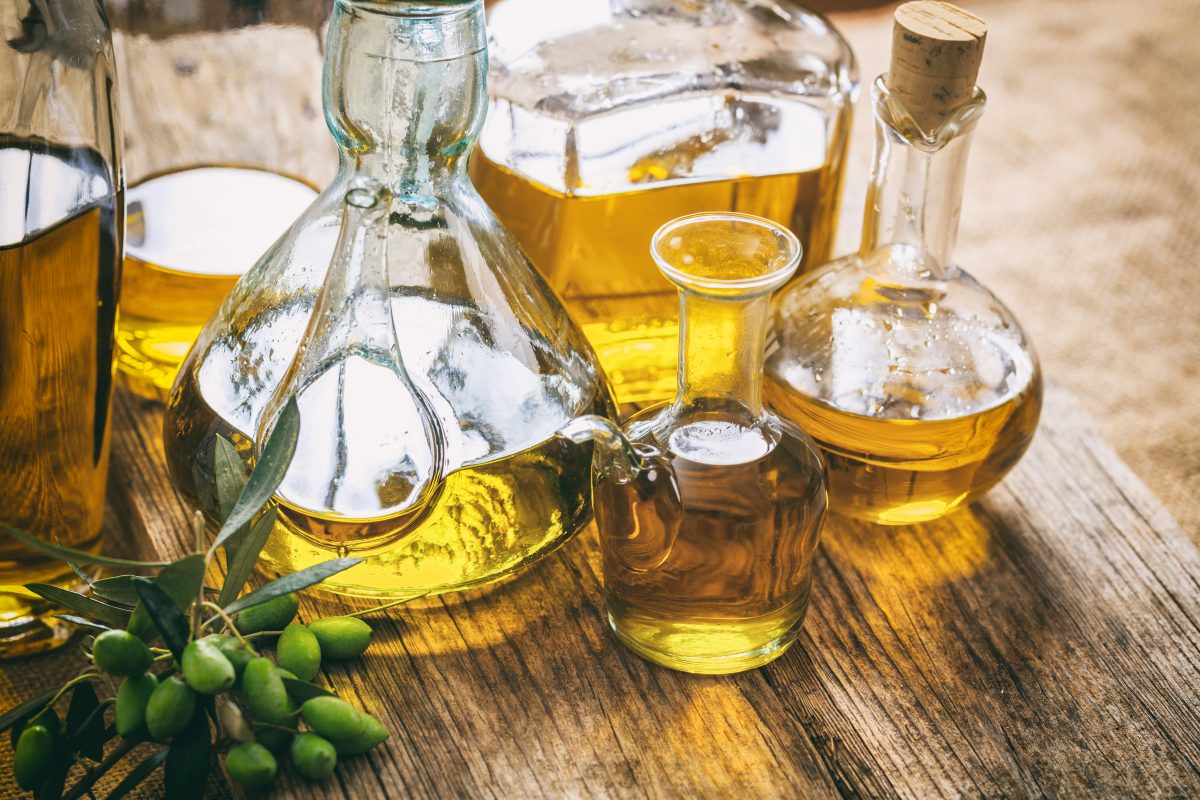
5 Types of olive oil from worst to best
5. Lite or light olive oil
Lite or light olive oil is significantly refined to remove most of the natural characteristics of virgin olive oil.
This process results in an oil with a much lighter color, taste, and aroma, aiming to provide a neutral cooking fat that does not overpower dishes with the distinct flavor of olives.
Pros and cons
The main drawback of lite olive oil is its low content of beneficial antioxidants and polyphenols [2], which are abundant in less processed oils. Its primary advantage lies in its high smoke point, making it suitable for high-temperature cooking.
Ideal use
This oil is best used in baking or other cooking where a neutral flavor is preferred. It’s also ideal for frying and sautéing, where the inherent flavor of olive oil might be deemed too strong.
4. Olive pomace oil
Olive pomace oil is extracted from the olive pulp after the initial oil has been pressed out. Using solvents and heat, this oil is drawn out from what remains of the olives after the first press and is then refined.
Pros and cons
While economical, olive pomace oil offers limited health benefits compared to higher-grade oils.
It contains fewer antioxidants due to the intense processing it undergoes. However, it has a high smoke point, making it suitable for high-heat cooking methods [3].
Ideal use
Its best use is for deep frying or in commercial kitchens where large quantities of oil are required, and the subtle flavors of finer oils would be lost.
3. Pure olive oil
Often labeled simply as “olive oil,” this type is a blend of refined olive oil and virgin olive oils. It undergoes processing to neutralize flaws in the flavor, resulting in a product that has a more uniform taste and a higher smoke point than virgin olive oil.
Pros and cons
Pure olive oil offers a balance between the health benefits of virgin olive oils and the versatility of refined oils. It lacks the higher antioxidant content of extra virgin olive oil but is more heat-stable and suitable for diverse cooking needs.
Ideal use
This oil is a good all-rounder in the kitchen, suitable for roasting, grilling, and sautéing, where its neutral flavor does not interfere with the dish’s taste profile.
2. Virgin olive oil
Virgin olive oil is made from the first pressing of olives, without chemical treatment, retaining more natural flavors and a lower level of oleic acid than more heavily processed oils. It has a more pronounced olive flavor than pure olive oil.
Pros and cons
It boasts a higher content of health-promoting compounds than refined olive oils and a richer, more authentic flavor. However, it has a lower smoke point than some other olive oils, which can limit its use in high-heat cooking.
Ideal use
Perfect for dressings, marinades, and adding a burst of flavor to dishes where the taste of olive can shine, such as pastas and salads.
Extra virgin olive oil is the top-grade olive oil derived from the first cold pressing of the olives, containing no more than 0.8% acidity [4]. It is known for its rich, varied flavors and high concentration of fatty acids and antioxidants.
Pros and cons
Due to its high levels of polyphenols, this oil is prized for its health benefits, including anti-inflammatory properties and heart health support. The only cons might be its cost and its flavor being too strong for some palates.
Ideal use
Extra virgin olive oil is best used in applications where its flavor can be appreciated, such as in dressings, drizzled over cooked dishes, or as a dipping oil. Its lower smoke point makes it less ideal for high-heat cooking.
Here is a table that compares the five types of olive oil based on several key attributes:
| Type of olive oil | Processing | Flavor profile | Antioxidant content | Best uses |
|---|---|---|---|---|
| Extra virgin olive oil | Least processed, cold-pressed | Rich, varied | High | Dressings, drizzling, dipping |
| Virgin olive oil | Cold-pressed, slightly more acidic than extra virgin | Pronounced olive flavor | Moderate to high | Marinades, pastas, salads |
| Pure olive oil | Refined and mixed with some virgin oil | Milder, uniform | Moderate | Roasting, grilling, sautéing |
| Olive pomace oil | Extracted from remaining olive pulp after first press, refined | Mild, neutral | Low | Deep frying, large quantity cooking |
| Lite olive oil | Highly refined, stripped of most olive characteristics | Very mild, neutral | Very low | Baking, high-temperature frying |
What is the grading system for olive oil?
The grading system for olive oil is crucial for standardizing quality and guiding consumer choices, categorizing olive oil into several grades based on chemical composition, sensory characteristics, and extraction methods. The primary categories include extra virgin olive oil, virgin olive oil, refined olive oil, and olive pomace oil.
Extra virgin olive oil, the highest grade, is extracted mechanically at temperatures that do not degrade the oil, with an acidity no more than 0.8%.
It must pass taste tests that confirm its flawless flavor and aroma. Virgin olive oil is similar but allows an acidity of up to 2% [5] and may exhibit slight sensory defects.
Lower grades such as refined olive oil, often labeled as “Olive Oil,” have undergone chemical treatments to neutralize flavors and are usually mixed with virgin oils to improve taste.
Olive pomace oil, the lowest grade, is extracted from leftover olive pulp using solvents and heat.
Grading significantly affects both market value and consumer choice. Higher-grade oils like extra virgin are more expensive due to their quality, rich flavors, and health benefits.
This system not only ensures product integrity but also helps consumers select oils based on their culinary needs and health preferences, balancing flavor, quality, and cost.
How can you tell if olive oil is high quality?
Determining the quality of olive oil involves both sensory evaluations and careful examination of its labeling and certifications. Here’s how you can identify high-quality olive oil [6]:
Sensory indicators
- Aroma: High-quality olive oil should have a fresh, fruity scent reminiscent of fresh-cut grass or ripe olives. This indicates a rich content of health-promoting polyphenols.
- Taste: The flavor should mirror the aroma, with possible notes of bitterness and spiciness characteristic of fresh olives. Avoid oils that taste rancid, musty, or metallic, as these are signs of oxidation or poor handling.
Labeling and certification
- Harvest date: Always check for a harvest date on the bottle, preferring oils with a date within the last year to ensure freshness.
- Best-by date: This helps gauge how long the oil will maintain its optimal quality.
- Certifications: Look for certifications like Protected Designation of Origin (PDO) or Protected Geographical Indication (PGI). These labels confirm the oil’s geographic origin and adherence to stringent production standards, serving as a testament to its quality and authenticity.
Using these guidelines, you can select olive oil that enhances your meals and contributes to your health.
What are two things to look for when buying olive oil?
When purchasing olive oil, focusing on freshness and origin can greatly influence the quality and taste of the oil you select. Here are two critical factors to consider:
Freshness and harvest date
Freshness is paramount for olive oil, as it affects both flavor and nutritional value. Look for the harvest date on the label, which indicates when the olives were picked and pressed.
Freshly harvested olive oil offers a vibrant flavor and higher levels of antioxidants. Ideally, choose oil that is within a year of its harvest to ensure you are getting a product at its peak.
Origin and traceability
The origin of olive oil can tell you a lot about its quality. High-quality olive oils often come from regions with rich olive-growing traditions, such as Italy, Spain, and Greece.
Traceability is also crucial; reputable brands provide clear information about where the olives are grown and how the oil is processed. This transparency helps you verify the oil’s authenticity and adherence to quality standards.
Closing thoughts
Throughout this guide, we have ranked five types of olive oil, from lite olive oil, which offers minimal health benefits, to extra virgin olive oil, known for its superior quality and richness in health-promoting properties.
Each type serves different culinary and health purposes, highlighting the importance of choosing the right olive oil for your needs.
To truly appreciate what each type has to offer, consider experimenting with various olive oils in your cooking.
This exploration can help you discover the perfect olive oil that aligns with both your flavor preferences and health goals, enhancing your meals and well-being.
FAQs
Which olive oil can be used for cooking?
EVOO and regular olive oil are both suitable for cooking, with extra virgin ideal for low to medium heat and regular olive oil for high heat.
Can I use extra virgin olive oil for frying?
Yes, you can use extra virgin olive oil for frying, but it’s best suited for medium heat due to its lower smoke point than other cooking oils.
Is it OK to fry chicken in olive oil?
Yes, it is OK to fry chicken in olive oil, especially using regular or light olive oil, which has a higher smoke point and is suitable for frying.
Is frying in olive oil bad for cholesterol?
Frying in olive oil is not bad for cholesterol; in fact, it can help maintain healthy cholesterol levels due to its high content of heart-healthy monounsaturated fats.
[1] https://www.statista.com/statistics/940491/olive-oil-consumption-worldwide/
[2] https://edis.ifas.ufl.edu/publication/FS282
[3] https://www.oliveoiltimes.com/grades/olive-pomace-oil/6210
[4] https://olivewellnessinstitute.org/article/grades-of-olive-oil/
[5] https://en.wikipedia.org/wiki/Olive_oil_acidity
[6] https://www.californiaoliveranch.com/articles/an-olive-oils-color-wont-tell-you-if-its-good-but-does-tell-you-other-things

