
Erik Jacques on success of annual conference that indicates that real-world clinical impacts of geroscience research are not far behind.
This month, the Biomarkers of Aging Consortium hosted its annual Biomarkers of Aging Conference aimed at providing a holistic view of the biomarkers of aging research and development landscape, bridging critical gaps and driving forward meaningful advancements.
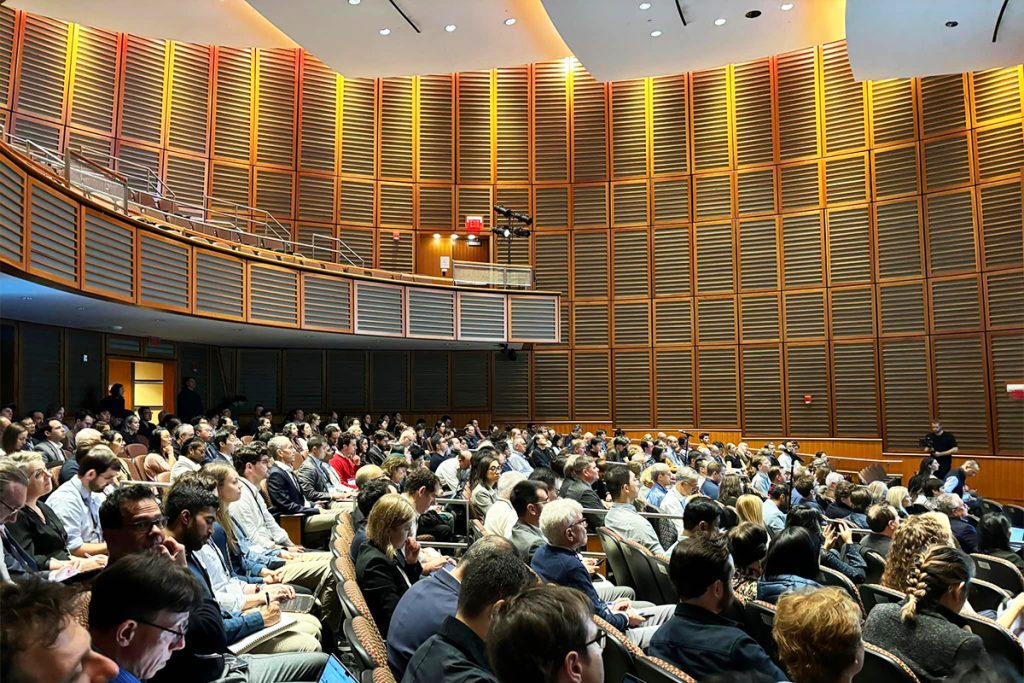
After a successful inaugural symposium in 2023 at the Buck Institute in California which garnered lots of interest, the Core Organizers set on expanding into a multi-day program and increasing the Consortium’s visibility across all sectors of science. Held at the Joseph B Martin Conference Center of Harvard Medical School in Boston, Massachusetts, USA from November 1st-2nd, this year’s conference gathered 450 attendees (with additional hybrid participants), 48 speakers, and an unprecedented group of sponsors and media partners. Action-packed and full of exciting announcements, we now recap these two days for readers to appreciate the trail-blazing work of this research community.
Day 1: Cutting-edge basic science
Focused on showcasing the latest basic science advances on biomarkers of aging, this first day saw talks from leading academics from around the world. After a warm welcome to Boston from Vadim Gladyshev, Professor and one of the Consortium Scientific Chairs, whose enthusiasm for the scientific showing in the crowd invigorated us all, the initial sessions discussed various omics-based biomarkers. For example, blood-based proteomics and the development of organ-specific clocks by Tony Wyss-Coray and his team from Stanford University showed organ aging and organ-specific disease associations reminiscent of blood biochemistry assays.
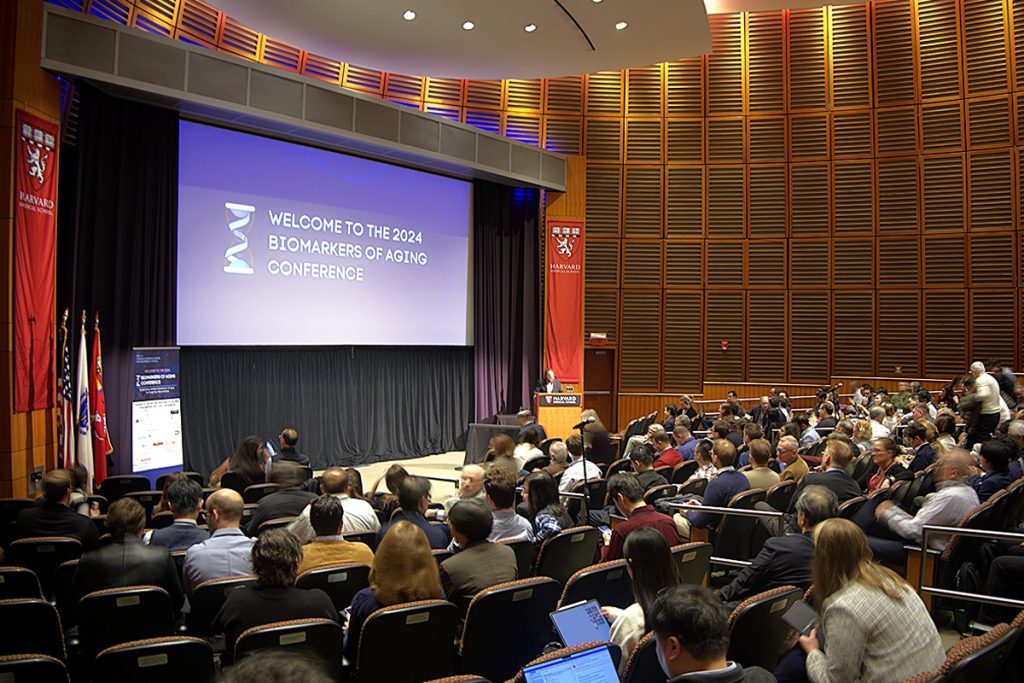
As well, Steve Horvath of Altos Labs reminded us of the immense intrigue of aging signatures captured in DNA methylation data while providing input on managing so many different clock technologies. A talk from Alan Tomusiak describing his PhD work at the Buck Institute characterizing intrinsic versus extrinsic aging in T cells kicked off a recurring theme during the meeting of efforts to monitor the aging immune system, a central component of organismal aging. As a bonus to this thrilling first morning, Mahdi Moqri of Harvard Medical School and Consortium Executive Committee Member then came out to contextualize the Consortium’s current roadmap for validating aging biomarkers, discuss multi-omic biomarkers, and then announce The Longevity Study: a longitudinal multi-omic study for human aging he is directing between Harvard Medical School, Stanford University and the National Institute on Aging. In fact, the pilot study was launched this very day when volunteers gave blood draws for use in molecular profiling.
To kick off the afternoon sessions, moderator Andrea Maier of National University of Singapore made a special shout-out to the Abu Dhabi Department of Health’s recent announcement of the implementation of evidence-based regulatory standards that will establish future healthy longevity centers, signaling a key shift in the operating of healthcare systems in the future. The talks then transitioned to those taking a system biology approach to aging and others focusing on longitudinal cohorts and clinical biomarkers. George Church of Harvard Medical School shared the potential of gene therapies in treating age-related outcomes with a focus on the splicing factor
SRSF1. Jason Buenrostro, also of Harvard Medical School, shared the potential for single-epigenomics and multi-omics to uncover aging at the single-cell level and emphasized the need for mechanistic studies. What’s more, Michael Snyder of Stanford Medical School demonstrated his team’s ability to perform longitudinal profiling of over 100 people to discover nonlinear age-related changes at the molecular level. Luigi Ferrucci of the National Institute on Aging shared his team’s passion for age-induced mitochondrial changes in human skeletal muscle. Also worth highlighting is Sara Hägg of the Karolinska Institutet who gave a sobering talk on the current limitations facing aging biomarkers such as their age-dependent effectiveness which generated nods of agreement and a motivating discussion from the crowd.
Some fine examples of practical biomarker applications in current clinical settings stood-out during this first day as well. Jesse Poganik of Harvard Medical School and Consortium Executive Committee Member shared how his work looking at the relationship between donor organ and transplant recipient age could increase the available organ pool. Raymond Mak, a clinician at Brigham and Women’s Hospital, showed FaceAge, a biological age quantification tool from portrait images, and its use in predicting cancer patient survival and guiding doctor prescribed treatment plans.
Other excellent speakers who regretfully can’t all be mentioned included Jessica Lasky-Su (Harvard Medical School and Brigham & Women’s Hospital), David Sinclair (Harvard University) , Björn Schumacher (University of Cologne), Omar Abudayyeh (Brigham & Women’s Hospital), Jonathan Gootenberg (Beth Israel Deaconess Medical Center), Lewis Lipsitz (Harvard Medical School), Riccardo Marioni (University of Edinburgh), and Viviana Perez (Hevolution Foundation).
Day 2: Translational, clinical & regulatory dimensions
The second day was unique in that it heard from regulators, entrepreneurs, industry scientists and more on how they are growing the field of geroscience and supporting or integrating biomarkers of aging.
The morning focused on regulatory roadmaps and clinical translation. Andrew Brack, program director at ARPA-H, explained their biotech-like approach to supporting aging research programs across sectors. Lynne Cox of the Dynamic Resilience Program from Wellcome Leap shared how they are supporting research into stress recovery in humans to eventually understand the loss of resiliency with age. Andrea Maier was back to detail the precision geromedicine approach from her team and their progress in educating healthcare professionals.
Tina Woods of Collider Health underlined the need to study the human exposome, the measure of all exposure of an individual over a lifetime, since it is largely unmeasured at the individual level yet can explain a great majority of health outcomes. The morning then concluded with an intimate and hilariously narrated anecdote from David Gobel, co-founder of the Methuselah Foundation, about his personal journey into tracking his aging while advocating on behalf of the patients and consumers for user-friendliness and low costs.
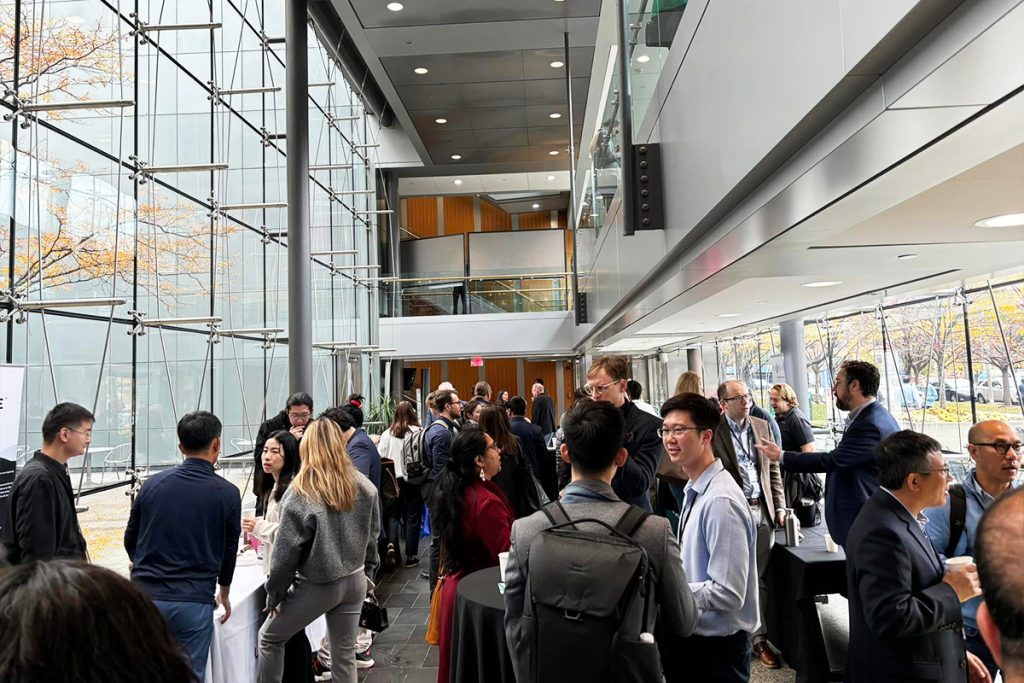
The afternoon aimed at discussing clinical trials and open science. Jamie Justice of XPRIZE Healthspan discussed how to assemble longitudinal aging data with a focus on muscle, immune, and cognitive biomarkers due to their relevance to the quality of life of the elderly. Nir Barzilai of the Einstein Institute suggested using known gerotherapeutics and existing clinical trials to work backwards to develop intervention-responsive biomarkers. Austin Argentieri of the Massachusetts General Hospital advocated for increased population representation in training data and the leveraging of genetic information. The final set of talks revolved around the Biomarkers of Aging Challenge that “aims to stimulate innovation and collaboration in the development of next-generation biomarkers, ultimately allowing for the generation and benchmarking of prediction models…”. The winners of the first two phases of the challenge were announced and shared their lessons learned such as the extent of training data availability and the importance of batch effects.
Other captivating speakers included John Earls (Buck Institute), Eric Morgen (BioAge), David Furman (Stanford School of Medicine), Vittorio Sebastiano (Stanford Medical School), Gordan Lauc (University of Zagreb), Christin Glorioso (NeuroAge), Alexandra Stolzing (Loughborough University), Gavin Zhou (Regenerative Bio), Xiao-Jun Ma (Alamar Biosciences), Chiara Herzog (University College London), John Tsang (Yale University), Raghav Sehgal (Yale University), Dane Gobel (Methuselah Foundation), Julian Reinhard (Evotec), Seth Paulson (Methuselah Foundation), and Kejun Albert Ying (Harvard University)
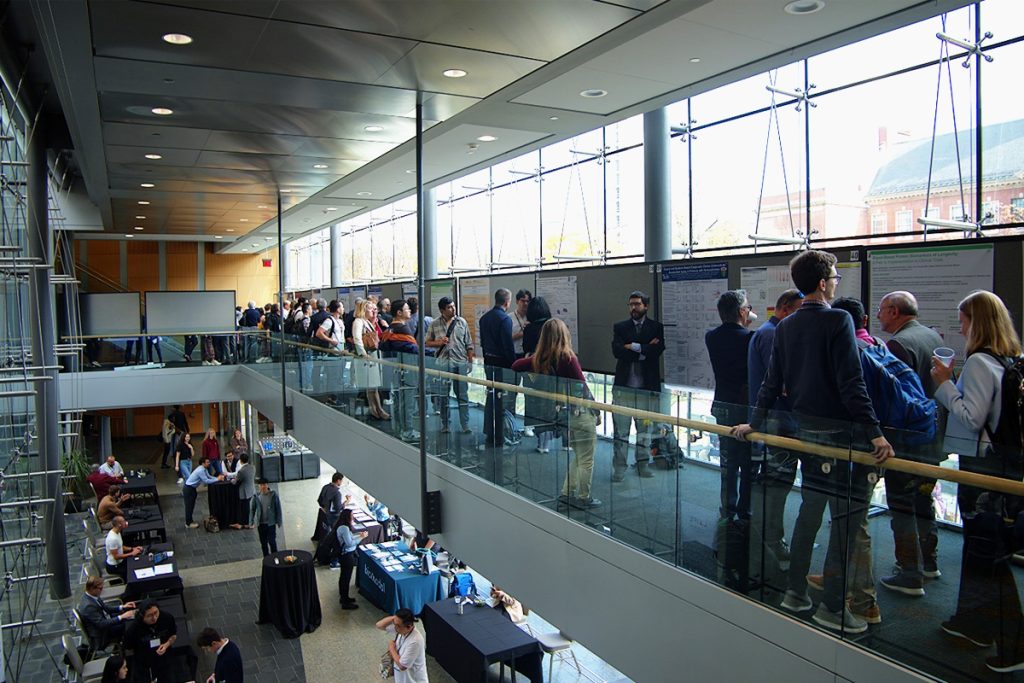
Both days additionally featured flash talks followed by poster sessions from academic and industry scientists alike. Themes varied from multi-modal biomarkers, omics technology platforms, foundational models, therapy testing, and more. Top rated abstracts were also slated for talks. Alexander Tyshkovskiy of Harvard Medical School shared his transcriptomic composite biomarkers for mortality, and Jessica Kasamoto of Yale University discussed the “multiverse of madness” of data pre-processing pipelines and the need for standardization.
Conference takeaways
Biomarkers of aging are in the midst of an exponential growth in research activity. Many are being developed using various modalities (DNA methylation, proteomics, transcriptomics, metabolomics, lipidomics, morphometrics, volatiles, etc.) each with their advantages and disadvantages, and they are finding encouraging specific-use cases. There is a resounding consensus and effort for benchmarking as well. Alternatively, the request for longitudinal cohort data was by far the most repeated message and funding initiatives are leading the way (e.g., Hevolution Alliance for Aging Biomarkers). And while current biomarkers offer insights using population data, translation dictates they must also eventually operate at the individual level.
The conference ended with a palpable buzz of excitement, and in a final message the organizers announced that the Biomarkers of Aging Conference would return in 2025 to Boston once more. We hope to see you all there!
About Erik Jacques
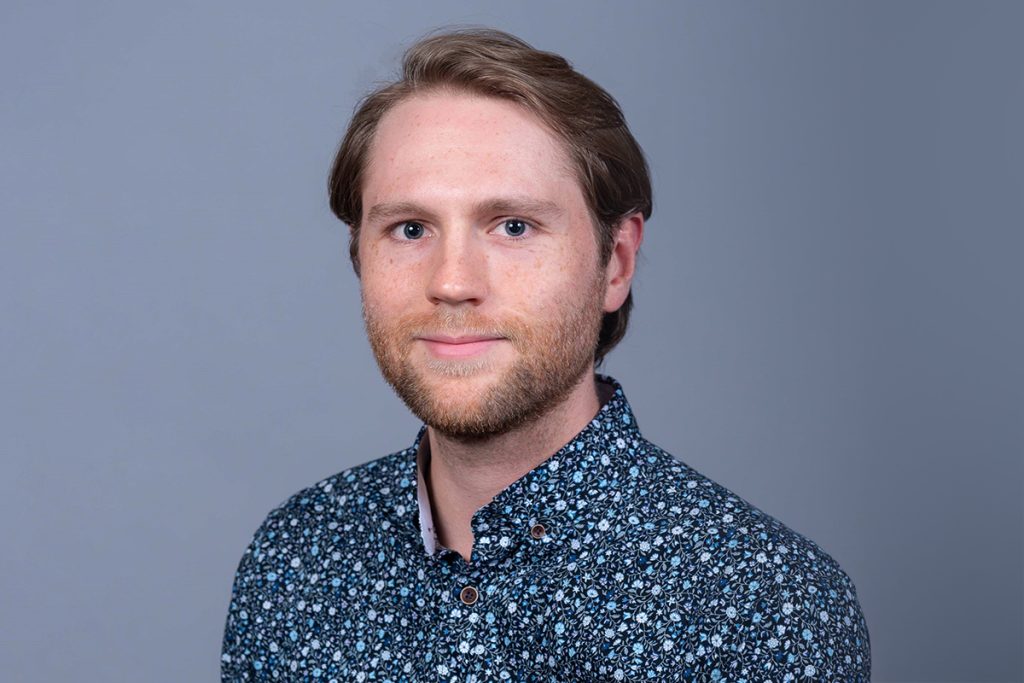
A Canadian scientist trained in stem cell biology and tissue engineering from the University of Toronto, Dr Erik Jacques recently transitioned to the geroscience community, joining Dr Vadim Gladyshev‘s group at the Brigham & Women’s Hospital, Harvard Medical School as a Research Fellow to leverage composite biomarkers for insights into the integrative hallmarks of aging. Though a basic scientist at heart, he looks forward to contributing to the combined efforts of addressing chronic diseases and healthspan extension. Dr Jacques can be found on X or LinkedIn.

