
A promising tool in longevity medicine, pulsed electromagnetic fields may boost cellular energy, vascularization and tissue repair.
Pulsed Electromagnetic Field (PEMF) therapy is gaining attention as a non-invasive, biophysical approach to healthier aging. By delivering controlled electromagnetic pulses that influence the electrical and magnetic balance within cells, PEMF aims to gently steer core processes – cellular energy production, circulation and tissue repair – toward a more resilient state. Long used in medical and physiotherapy settings for bone healing, pain and inflammation, it’s now being revisited through a longevity lens as interest grows in technologies that support functional recovery and extend healthspan. [2].
How it works: the mechanism at work in PEMF
Cells are responsive to changes in their surrounding environment: variation can occur due to mechanical stress, pH variations, oxygen levels and electrical activity. PEMF therapy reproduces part of this natural stimulus without mechanical contact. Through electromagnetic induction, it generates weak electrical currents inside tissues, directly influencing ion channels and membrane potential [2].
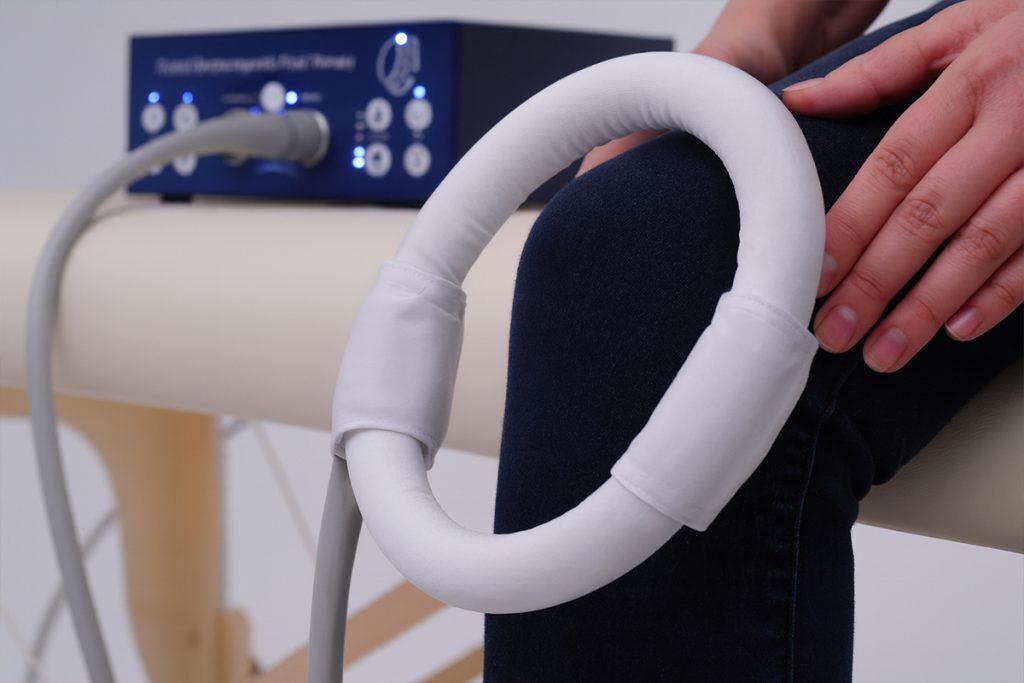
In practical terms, a PEMF device uses a current passing through a coil or a radiant circuit. This current generates a magnetic field that changes over time – it “pulses.” Depending on the device type, the intensity is measured in gauss (G) and the frequency in hertz (Hz) for low-frequency systems, or milliwatts (mW) and megahertz (MHz) for high-frequency systems. The pulses penetrate tissue at predefined intervals and depth, creating small-scale electrical modulations within cells.
There is a number of physiological effects that occur during PEMF that can enhance cellular function and accelerate a healing process:
- Regulation of ion exchange across cell membranes (notably calcium, sodium and potassium.
- Activation of mitochondrial metabolism and increased ATP (adenosine triphosphate) synthesis.
- Improved oxygen diffusion and microcirculation
- Modulation of inflammatory signaling pathways
- Stimulation of fibroblast activity and collagen formation
- Enhanced angiogenesis through increased vascular endothelial growth factor (VEGF) expression [1,2,3,4].
Systematic scientific study of PEMF began in the 1970s, when Bassett and colleagues investigated electromagnetic stimulation for bone regeneration. The US Food and Drug Administration (FDA) approved the therapy in 1979 for the treatment of non-union fractures. Since then, PEMF has been applied clinically in orthopedics, rehabilitation, sports medicine and wound care [1].
Over thirty years of research have demonstrated that biological tissues are sensitive to pulsed magnetic fields. Studies indicate that PEMF may accelerate cellular repair and improve vascularization, though the exact molecular mechanisms remain complex and incompletely defined [3,4,5].
Meta-analyses and reviews show consistent though variable results, largely due to differences in treatment parameters. Frequencies used in clinical settings range from fractions of a hertz to several kilohertz, and intensities vary from microtesla to millitesla levels. Despite this variability, evidence supports PEMF’s potential to aid in bone repair, osteoarthritis management, wound healing and pain reduction.
What can PEMF do for you ?
Given the molecular and cellular effects observed in relation to PEMF, this form of treatment has proven useful in various clinical settings. Pulsed electromagnetic energy helps the body to heal and recover in the following ways:
Pain relief
PEMF therapy provides measurable analgesic effects through modulation of nerve activity and improvement of local circulation. Clinical studies report reduced pain scores in chronic muscular and bone conditions such as osteoarthritis and back pain. The combination of enhanced oxygenation, decreased inflammatory mediators, and normalized cellular ion balance contributes to both acute and long-term pain relief [3,5].
Wound healing
In wound care, PEMF promotes vascularization and fibroblast activity. Studies have shown faster closure of diabetic ulcers and surgical wounds, with reduced pain and scar formation. PEMF appears to synchronize the activity of endothelial and epithelial cells, leading to more orderly healing and less keloid formation [1,3].
Bone healing
PEMF has a well-established record in bone repair. It affects osteoblast and osteoclast activity, stimulates fibrocartilage calcification between bone segments and increases local blood flow. Clinical studies show its ability to improve consolidation in delayed and non-healing fractures. Healing rates of 60–88 % have been reported in prospective studies where treatment was applied for several hours daily over periods of 8–29 weeks [1,3,5].
Improved blood circulation, reduced inflammation and swelling
Obstruction of blood flow and damaged tissue trigger inflammation. Improvements in local circulation can be obtained through PEMF treatment of the affected area. The therapy has been particularly successful in trials addressing osteoarthritis – a disease characterized by the breakdown of cartilage and underlying bone [1,3].
Osteopenia and osteoporosis
Experimental and clinical studies suggest that PEMF can enhance bone mineral density and influence bone-remodeling pathways. It increases serum osteocalcin and collagen I markers, indicating stimulated osteogenesis. Though not yet FDA-approved for this indication, it is viewed as a promising adjunctive therapy in managing low bone density and fracture risk [1,3].
Muscle recovery and tissue regeneration
By increasing mitochondrial activity and circulation, PEMF supports faster recovery of muscles and soft tissue after injury, surgery, or strain. It assists in clearing metabolic waste such as lactic acid, reduces spasms and restores efficient cellular communication within muscle fibers. Patients and athletes frequently report improved mobility and reduced post-exercise or post-operative discomfort [2,4,5].
Regulation of stress and sleep
Low-frequency PEMF influences neuroendocrine balance by promoting parasympathetic activity. By modulating adenosine and endorphin signaling, a molecular and peptide chain responsible for sleep and euphoria, PEMF helps to improve sleep quality and relaxation. Clinical observations suggest that regular exposure to low-intensity pulses can help stabilize circadian rhythms, decrease stress responses and promote restorative rest [5].
Enhanced immune function and detoxification
Improved microcirculation and tissue oxygenation indirectly strengthen immune defenses. PEMF stimulates lymphatic flow, aiding the removal of toxins and cellular waste products. This detoxifying effect contributes to a cleaner internal environment and helps maintain optimal cellular performance across organs and systems [2,3].
Neurological and other uses
PEMF has also been explored in neurological conditions. In transcranial applications, it may improve cerebral circulation and modulate neuroinflammation. Preliminary studies report benefits in sleep quality and mood regulation through effects on adenosine and endorphin signaling [5].
Improvement in overall biological function and quality of life
Through its combined effects on cellular metabolism, vascular function and inflammation control, PEMF therapy supports systemic recovery. Patients frequently describe improved mobility, less fatigue and an enhanced sense of well-being. Over time, these physiological effects contribute to better physical performance and quality of life, particularly in chronic pain and degenerative conditions [2,3,4].
These effects are not instantaneous; clinical improvement typically develops over a course of sessions lasting several weeks [2].
Clinical applications: the treatment protocols
PEMF can be delivered through mats, applicator coils, or localized devices. The patient usually lies or sits comfortably while the magnetic field is applied to the affected area. Treatments are painless; some individuals report a mild tingling or gentle warmth.
Sessions generally last 20 to 40 minutes, depending on the condition. Regularity is essential to achieve cellular and tissue-level changes, so this treatment is cumulative.
In the clinic
In longevity clinics, PEMF is typically folded into broader recovery or performance plans, used to prime tissues before physiotherapy or to support repair in the days following injury or surgery. The experience itself is surprisingly understated: most patients relax into the session, noticing only a gentle rhythmic sense of “activation” or subtle shifts in muscle ease as the pulses cycle beneath them. Because the parameters can be tailored, clinicians adjust settings to match goals – restoring mobility, easing discomfort or supporting post-exercise recovery – while patients appreciate that the therapy feels more like quiet downtime than a medical procedure. As a low-friction, low-burden add-on, PEMF is becoming a practical companion to both conventional rehabilitation and emerging healthspan programs.
Contraindications and safety
PEMF therapy is considered safe when used correctly. The most common contraindications include:
- Pregnancy
- Pacemakers or other implanted electronic devices
- Active malignancies
- Severe cardiac arrhythmias
- Epilepsy
[1] https://www.mdpi.com/2076-3417/14/5/1789
[2] https://www.researchgate.net/profile/Luigi-Cristiano/publication/346945355_Mechanisms_of_Action_And_Effects_of_Pulsed_Electromagnetic_Fields_PEMF_in_Medicine/links/5fd355f8299bf14088fe1fd7/Mechanisms-of-Action-And-Effects-of-Pulsed-Electromagnetic-Fields-PEMF-in-Medicine.pdf
[3] https://www.mdpi.com/1422-0067/24/14/11239
[4] https://www.mdpi.com/1422-0067/26/19/9311
[5] https://www.ncbi.nlm.nih.gov/pmc/articles/PMC10379303/

