
Medra lands $52m to advance drug discovery platform combining AI and robotics to enable continuous experimentation.
San Francisco tech startup Medra has closed a $52 million Series A financing round to accelerate development of what it describes as “the world’s first end-to-end physical AI scientist platform” for drug discovery. The company’s approach is designed to enable “continuous experimentation” by combining AI-driven hypothesis generation with robotic execution in the lab – an approach that has the potential to drive progress in the fight against aging and age-related disease.
Medra is targeting what it claims are two key issues in drug R&D: existing automation often amounts to programmable industrial machinery with limited learning capabilities, while many AI efforts remain computational and still rely on manual bench work to produce training data. Medra’s approach aims to address these challenges by linking AI-generated predictions directly to automated execution by robots and then returning experimental outcomes into the models.
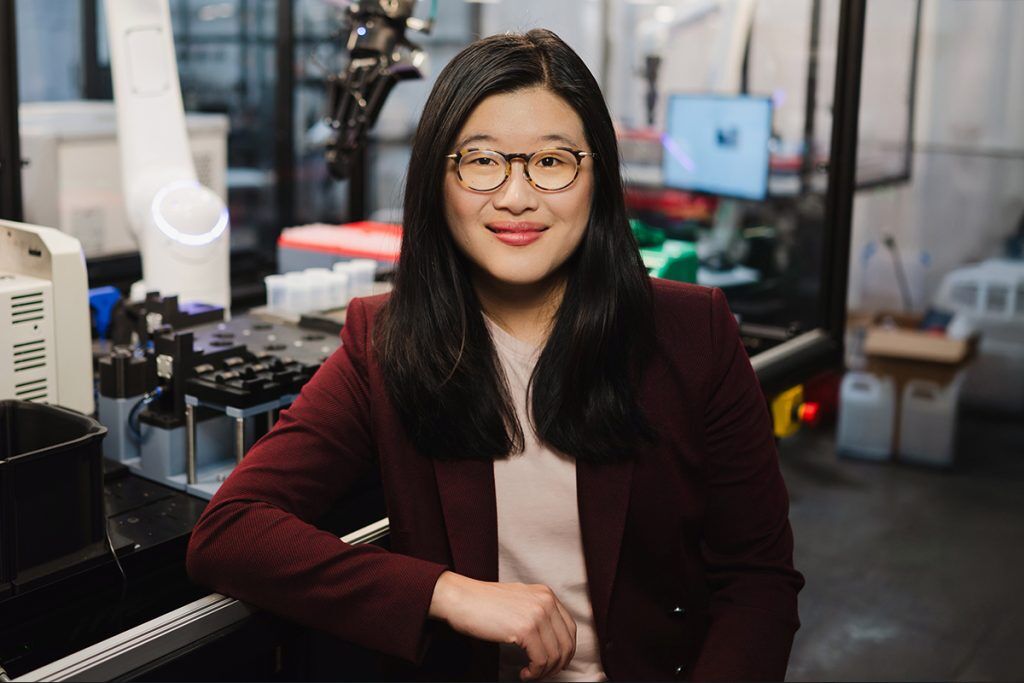
“Pharma runs millions of experiments, but most of that data can’t be reused or fed back into AI,” said Medra founder and CEO Dr Michelle Lee. “We’re closing that loop by tying predictions to outcomes in a continuous, self-improving cycle.”
Rather than running static experiments, the company says its system learns from each result and iterates in real time, allowing researchers to explore large biological search spaces more efficiently.
“To accelerate drug development, we need to link predictions directly to automated execution and feed the results back into the model,” said Lee. “This continuous loop enables drug discovery companies to run far more experiments, iterate faster, and advance therapies with a higher probability of success.”
According to Medra, the company’s approach has significant potential to accelerate aging and age-related disease research.
“Aging and age-related diseases are driven by complex, interacting biological pathways, which has made progress slow using traditional, one-experiment-at-a-time approaches,” Lee told us. “Many potential longevity interventions depend on understanding how pathways such as metabolism, cellular stress response, protein homeostasis, and inflammation work together over time.”
In practice, Lee suggested Medra could allow aging researchers to systematically test combinations of longevity-relevant pathways to identify synergistic effects that would be difficult to detect using conventional methods.
“The same approach could be applied to age-related diseases such as neurodegeneration or fibrosis, where timing, dosage, and biological context play a critical role,” she said. “By accelerating how hypotheses are tested and refined, Medra’s platform has the potential to meaningfully shorten the timelines needed to understand – and eventually intervene in – the biological processes that drive aging and chronic disease.”
At a technical level, Medra couples a “physical AI” layer, where robots can interface with standard laboratory instruments and execute protocols autonomously with its “scientific AI” layer that reasons about data, proposes protocol updates, and recommends next steps in natural language that scientists can adjust. The system is intended to be flexible enough to adopt existing lab tools and to let scientists adapt workflows without having to rewrite low-level automation scripts.
“AI models are generating predictions far faster than we can validate them experimentally,” said UC Berkeley professor Patrick Hsu. “Integrating these tools with traditional lab automation is often too rigid to scale effectively. Medra’s Physical AI Scientist bridges this gap using autonomous, general-purpose robotics. The system learns from every experiment, creating the continuous feedback loop needed to scale data generation and drive breakthroughs in frontier science.”
Partnerships will, of course, be key to Medra’s future and the company revealed it is already working in collaboration with biotech giant Genentech. The project is described as a “lab in a loop”, where Genentech’s models and experimental programs feed and are fed by Medra’s autonomous execution layer, allowing predictions and experimental validation to iterate more rapidly across internal programs.
The Series A raise was led by Human Capital and included participation from Lux Capital, Neo, NFDG, Catalio Capital Management, Menlo Ventures, 776, Fusion Fund and others.
“Medra is creating an entirely new category in biopharma R&D, one where we believe science can continuously learn and scale to create groundbreaking therapeutics with a higher chance of clinical success,” said Human Capital’s Armaan Ali.

