
In recent years, understanding the leading causes of death in the United States has become increasingly crucial for public health.
The COVID-19 pandemic significantly impacted these statistics, introducing new trends and reshuffling the rankings of the most common causes of death.
Let’s explore the top 10 leading causes of death from 2019 to 2023, highlighting the shifts that have occurred during this tumultuous period.
The 10 leading causes of death in the US
1. Heart disease: The persistent threat
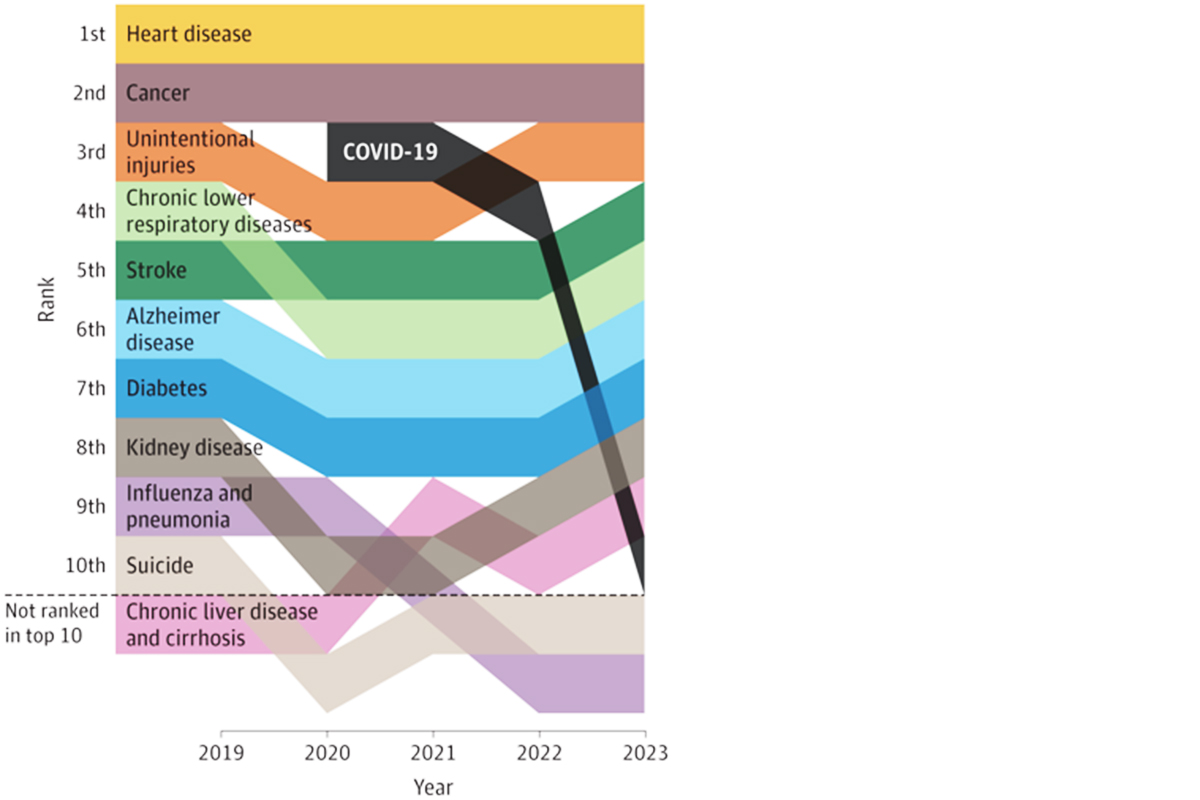
The United States saw heart disease consistently top the list of causes of death from 2019 to 2023. Even with medical technology advancements and public awareness efforts, heart disease has continued to be responsible for more fatalities than any other ailment.
Factors like obesity, sedentary lifestyles, and poor diet contribute significantly to the prevalence of heart disease [1].
2. Cancer: A close second
Cancer is consistently the second most common cause of death in the US. While there has been a slight decrease in cancer mortality rates over time, it continues to pose a significant health challenge.
Advances in early detection and treatment have contributed to these improvements, but the battle against cancer is far from over [1].
3. Unintentional injuries: A rising concern
Unintentional injuries, which include accidents such as car crashes, falls, and drug overdoses, have consistently been among the top three causes of death.
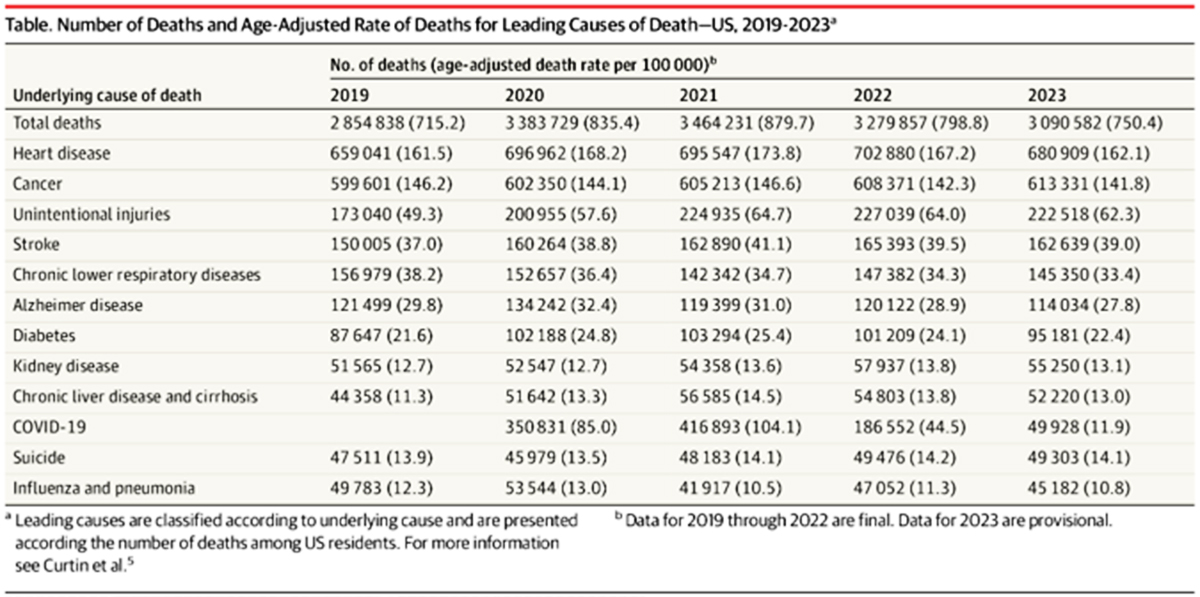
However, the rate of death due to unintentional injuries increased by 26.3% from 2019 to 2023, largely driven by a surge in drug overdose deaths [1].
4. COVID-19: A new entrant
COVID-19 emerged as a significant cause of death in 2020, ranking as the third leading cause.
It maintained a prominent position through 2021 and 2022, though its impact diminished in 2023 as vaccination efforts and natural immunity grew. By 2023, COVID-19 is projected to fall to the 10th spot [1].
5. Chronic lower respiratory disease: Declining but still deadly
Chronic lower respiratory diseases, including chronic obstructive pulmonary disease (COPD) and emphysema, have been a consistent cause of death.
However, the death rate from these diseases decreased by 12.5% from 2019 to 2023, partly due to reduced smoking rates and better disease management [1].
6. Stroke: A major health challenge
Stroke continues to be a leading cause of death, remaining stable in its ranking. Strokes often result from underlying conditions like high blood pressure and diabetes, which are prevalent across the US population [1].
7. Alzheimer’s disease: A growing concern
Alzheimer’s disease, a major cause of death, particularly among the elderly, saw a slight decline in its death rate by 6.9% from 2019 to 2023. However, with an aging population, Alzheimer’s disease remains a significant public health issue [1].
8. Diabetes: A persistent issue
Diabetes has fluctuated in the rankings over the years. Although it dropped to the eighth leading cause during 2020-2022, the number of deaths due to diabetes has steadily increased since 2019.
Managing diabetes remains critical as it can lead to various complications, including heart disease and kidney failure [1].
9. Chronic liver disease and cirrhosis: On the rise
Chronic liver disease and cirrhosis entered the top 10 causes of death in 2021 and are projected to rank ninth by 2023.
This increase, by 15.3% from 2019 to 2023, is partly attributed to rising rates of alcohol consumption and the effects of obesity on liver health [1].
10. Suicide: A complex challenge
In 2019, the 10th leading cause of death was suicide, but it was no longer in the top 10 by 2020. The complexity of mental health issues, combined with the social and economic impacts of the COVID-19 pandemic, may have influenced this shift.
Nonetheless, suicide remains a critical public health issue requiring continuous attention and resources [1].
In the past few years, the leading causes of death have undergone significant changes, reflecting both new threats and the evolving impact of ongoing health issues.
As the impact of COVID-19 lessens, the health outcomes of the population are still being shaped by other issues, including the increase in chronic liver disease and the ongoing presence of heart disease.
These shifts highlight the need for adaptive public health strategies that can address both emerging and long-standing health concerns, ensuring a comprehensive approach to improving overall health and longevity in the coming years.
[1] JAMA Network. Leading Causes of Death in the US, 2019-2023.

