
ALZpath CEO on building a scalable Alzheimer’s test that can support the diagnosis of millions of patients.
With billions being spent on the research and development of potential Alzheimer’s treatments, the recent FDA approval of new drugs designed to slow the progression of the disease (aducanumab and lecanemab) has provided some welcome news for the field. However, these new drugs, along with many other potential treatments in clinical trials, are intended for people who are showing no symptoms or only mild symptoms of the disease. This requires solutions capable of accurately diagnosing Alzheimer’s at an early stage, and on a large scale.
Unfortunately, Alzheimer’s disease has been notoriously challenging to diagnose in its early stages. The analysis of amyloid and tau protein biomarkers from cerebrospinal fluid (CSF) and brain imaging using positron emission tomography (PET) are generally considered to be the most accurate tests of Alzheimer’s pathology. However, these invasive methods are both costly and difficult to administer at the scale that is required to support the next generation of disease-modifying treatments.
In an effort to address these challenges, there has been a significant focus on the development of blood tests designed to detect Alzheimer’s, and progress has been promising. In April, teams at University College London and the University of Oxford announced a study of potential blood tests to generate the evidence needed for them to be offered widely in the UK within five years.
Are we finally witnessing the dawn of a new standard in Alzheimer’s diagnosis?
Longevity.Technology: Earlier this year, a study showed that a proprietary blood test from diagnostics company ALZpath could be as accurate as a lumbar puncture for detection of Alzheimer’s disease. In the study, ALZpath’s blood-based biomarker assay for phosphorylated tau 217 (pTau217) was shown to deliver high diagnostic accuracy and consistency in identifying levels of amyloid and tau protein in the brain (up to 96% and 97% accuracy, respectively). Since then, the company has gone on to ink licensing deals for its technology with the likes of Roche and Beckman Coulter, in addition to previous deals already in place with Alamar Biosciences, among others. ALZpath also launched the ALZpath Dx blood test, offered by Neurocode USA, for clinical use within its facility. To learn more about the company’s approach, we spoke to CEO Chad Holland.
As populations increasingly age in many countries around the world, the prevalence of Alzheimer’s disease continues to grow. The Alzheimer’s Association predicts that, unless a cure is found, the number of Americans living with the disease could rise from 7 million today to around 13 million by 2050 [1]. But Holland is quick to stress that important progress is being made.
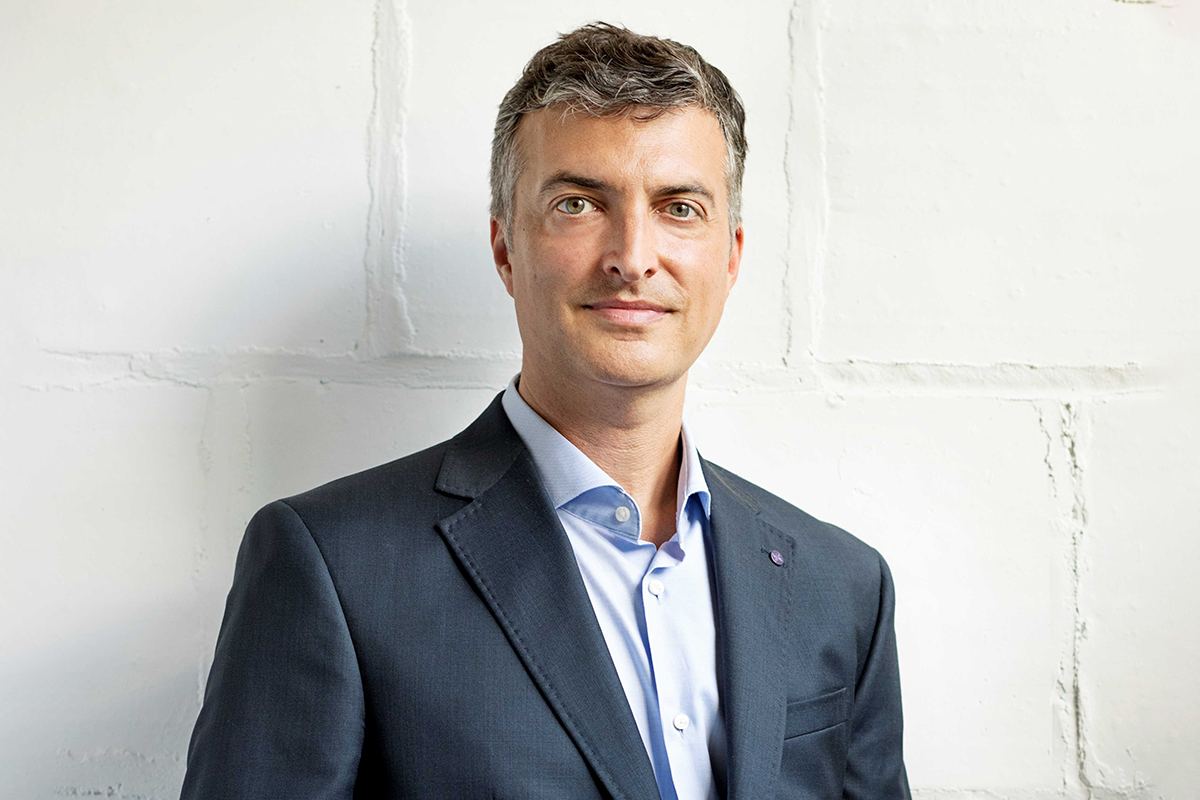
“We’re now at a point where the science and the medicine are converging in a way that hasn’t happened in human history for neurodegenerative diseases at large,” he says. “And what’s really driving the interest in diagnostics is the potential for new treatments and, someday, prevention.”
Setting a new standard
While Holland is positive about the progress that has been made against Alzheimer’s to date, he’s even more excited about what’s next.
“There’s so much more to come – I think we now understand enough to make some really effective treatments happen,” he says. “For those treatments to reach patients, you first have to formally diagnose them with Alzheimer’s in order for them to qualify for the therapy.”
The problem with diagnosing Alzheimer’s is that it has typically required a very complicated workup for those patients willing to go through it.
“The traditional gold standards have been PET scans, which produce radiation, or cerebrospinal fluid collected via painful lumbar punctures, both of which are costly and only available at limited locations,” says Holland. “Using existing standards, there’s just not enough capacity in the world to diagnose all the patients out there who might need treatment. But a blood-based test gives you the capacity to diagnose potentially 150 million patients – or more.”
So how long does Holland think it will be before blood-based testing is the new standard in Alzheimer’s diagnostics?
“I think we’re getting there rather quickly,” he says, citing his experiences at the recent Alzheimer’s Association International Conference in Philadelphia. “My clear impression from the conference is that the era of blood-based biomarkers is here and that pTau217 is playing a prominent role in that. It was very, very clear at that conference that the time has arrived, and it’s just a matter of how to get these tests out to everyone who needs them.”
A unique business model
The road that led to the formation of ALZpath was based on advances made in the development of highly sensitive antibodies for pTau217. While recognized as a hallmark of the disease, only small amounts of the signature pTau217 protein reach the bloodstream. However, the team at ALZpath successfully developed a novel antibody that can detect even the slightest strains of pTau217 in the blood. At the same time, diagnostic companies like Roche and Beckman Coulter began expanding their blood testing platforms to support new disease areas.
“All the pieces were coming together at the same time and so we decided see if we could help move the needle on Alzheimer’s disease by going after blood-based biomarkers that really matter,” says Holland. “That’s why we locked in on pTau217 as our lead program.”
Early on, ALZpath’s founders realized that competing in the well-established diagnostics market would be challenging for an emerging small player, and so the company decided to adopt a different approach.
“We’re perhaps forming a type of company that really hasn’t existed before,” says Holland. “We’re not looking to compete with a Beckman or a Roche – we’re not looking to create a competitive platform or anything like that, those companies would be partners for us in the long term. At this point, we’re aiming to take the best scientific knowledge that’s out there and work on refining the antibody’s sensitivity, accuracy and reliability. From that point, it’s up to our partners to evaluate it on their platform and validate it via regulatory bodies.”
Big players on board
Having already landed several key partnerships, Holland acknowledges that ALZpath’s technology seems to have impressed some of the biggest players in the diagnostics space.
“These companies have rigorous selection processes for this sort of thing,” he says. “Take Beckman, for example, they don’t have any other diagnostic antibody for Alzheimer’s, and they chose ours. And they did that for a reason.”
Interestingly, ALZpath’s partnership model means that it will not seek regulatory approval for its own tests, many of which would need to be classified as in vitro diagnostics (IVDs).
“What’s a bit unique about our model is that it’s up to the end partner to do their validations for IVDs,” says Holland. “We’re essentially an ‘antibody inside’ and our partners are the ones getting approval and validation on their platform, so they’re building out the IVDs. We’ve done that successfully for pTau217, and we hope and expect to be able to do the same for other biomarkers down the road as well.”
In addition to supporting partners developing in vitro tests ALZpath can also support laboratory developed tests, which is what the company is doing with Neurocode.
“Neurocode is a specialized clinical lab that offers world class testing solutions for neurological disorders,” says Holland. “It’s the first US lab to offer our test – physicians across the US can order online, and sample collection kits are provided to facilitate blood collection and shipping to Neurocode by an affiliated phlebotomy site.”
The future and democratization
While ALZpath is currently focused on forging new partnerships for its pTau217 test, the company also has one eye on the future.
“After pTau217, we’re also exploring how to open the aperture and look at other disease states, look at other biomarkers,” says Holland. “Our vision is clear – we believe we can play a significant role in the diagnosis and development of treatments and preventions for neurodegenerative diseases, and you’ll see us head in that direction over the coming months and years.”
Having developed a highly scalable best-in-class biomarker, ALZpath hopes that its approach will ultimately benefit as many people as possible.
“We believe that treatment should be available to all patients, and to do that you need diagnostics that are available to all patients,” says Holland. “That steps on lots of large societal and financial issues, payer issues, lots of complexity in healthcare systems around the world. This is going to be a partnership discussion with governments, payers, and pharmaceutical, biotech and diagnostics companies. And we’d like to be part of that conversation.”
“Think about the development of drugs for rare diseases – there have been clear societal decisions to demonstrate the importance of protecting the most vulnerable patients out there, and everyone deserves a treatment. I personally believe this needs to happen for Alzheimer’s and other neurodegenerative diseases as well.”
[1] https://www.ncbi.nlm.nih.gov/pmc/articles/PMC11095490/

