
Chopra Foundation CEO on why longevity needs to encompass much more than biotechnology and pharmaceutical development.
One of the most eye-catching longevity news stories this summer was the strategic partnership between precision medicine company Human Longevity Inc (HLI) and holistic wellness organization, the Chopra Foundation. The collaboration represents an interesting combination of cutting-edge diagnostics with integrative medicine and mind-body practices, and supports the view that improving our longevity and healthspan is about much more than just biotech and drug development.
Longevity.Technology: This weekend, Harvard University plays host to the Sages & Scientists Symposium, an annual event organized by the Chopra Foundation that brings together thought leaders from various fields to explore topics spanning integrative health, humanity, the cosmos, and consciousness. We caught up with CEO Poonacha Machaiah to learn more about the foundation’s work and its relevance to longevity.
Speaking about the upcoming symposium, Machaiah says: “It’s a good example of how we are spreading knowledge. We want to curate the best thought leaders in the world, talking about CRISPR, talking about mental health, talking about social connection, and really spreading that knowledge.”
“Our body of work at the foundation has always been about the intersection of traditional medicine, complementary medicine, and lifestyle medicine – and how to integrate all three so you can look at the person as a whole. And we’ve been doing research and raising education awareness globally for four decades.”
Longevity is nothing new
Founded by integrative medicine pioneer Dr Deepak Chopra, the Chopra Foundation focuses on the seven key pillars of health: sleep, meditation, physical movement, emotional regulation, nutrition, community and self-awareness. Much of what the foundation has been working on over the years is fully aligned with the principles that underpin the growing longevity sector.
“Longevity is a buzzword right now,” says Machaiah. “Everybody is talking about it like it’s something new, but it has been around in wisdom traditions for a very long time. We call it ‘the wisdom of age and the vitality of youth’. I’m 54, and I want to be 54 – I just want the vitality of when I was 34.”
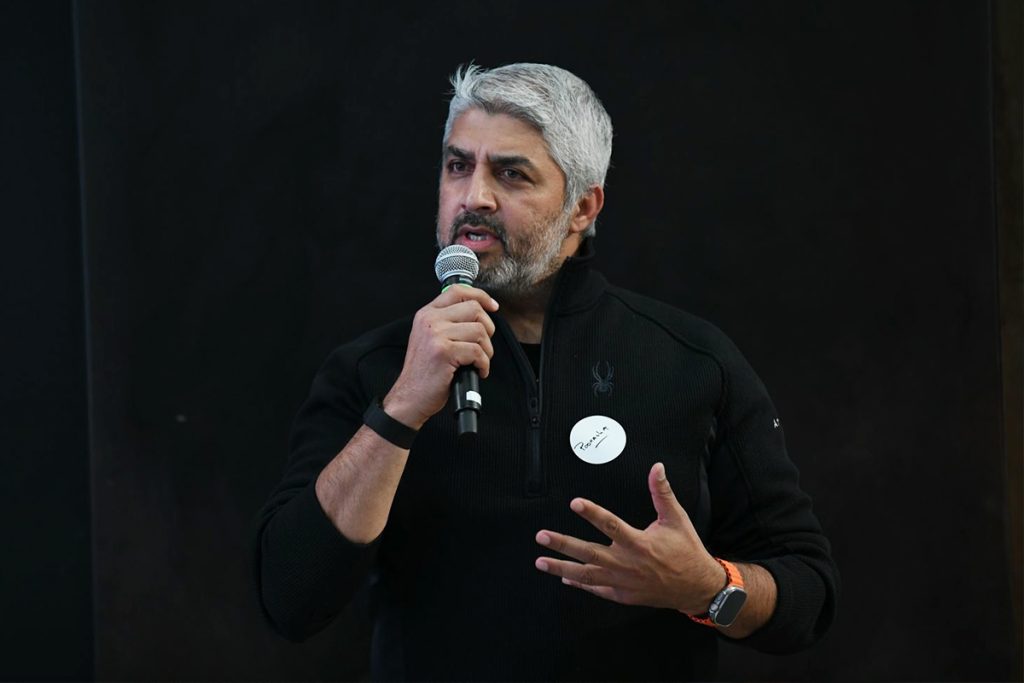
While health research often focuses on unravelling the mysteries of the genome, epigenome and microbiome, Machaiah says the exposome, the impact of your environment on your health and wellness, is just as important.
“At one end of the spectrum you have ‘don’t die’, which is Bryan Johnson and his quest to be the most measured man,” he says. “But on the other side you also have questions like, what is life, what is love, and what is purpose? With modern science, it’s possible you may live to 125, if you don’t die of something stupid. The question is, will you live better?”
This is the key question that The Chopra Foundation seeks to answer. The foundation conducts a wide range of research into areas such as stress management, and the impact of community on healthspan. Machaiah cites Harvard professor Robert Waldinger, who claims that the number one predictor of longevity is the quality of our social connections.
“Today, we are super connected, but very lonely – I live in New York, one of the loneliest cities in the world,” says Machaiah. “So, how do you create social connection? We must try to understand and bring together things like intimacy, social connection, and these are conversations which should go hand in hand with living longer, living better. I think knowing who you are as is as important an aspect of health and longevity as any other.”
Chronic inflammation is key
Another area of keen interest for the Chopra Foundation is chronic inflammation, which is linked to a host of health issues, including cardiovascular disease, cancer and neurodegenerative disorders. Longevity circles abound with discussion around “inflammaging” – the chronic low-grade inflammation that accompanies aging and leads to the development and progression of age-related diseases.
Machaiah says that poor global nutrition and high stress levels are some of the root causes of this inflammation.
“The world is collectively stressed, and I think our food system has completely been destroyed,” he says. “We’re all 99% the same genetically, but we have 99% diversity in our gut microbiome, so we’re looking very much at nutrition in our research. Our food is inflammatory, and it’s creating an inflammatory response in our guts, our brains, and contributing to higher stress levels and poor sleep. Inflamed gut leads to inflamed brain, leads to inflamed society.”
According to Machaiah, if each of us could do a better job of managing our nutrition, stress and sleep, then we could all bring down the level of inflammation in our bodies.
“There are seven things you can do, nourish the body, move the body, manage stress, and then have some kind of mind body practice, sleep, connection with community, and connection with nature,” he says, citing Chopra’s seven pillars. “By doing these things, the body returns to homeostasis, and you reduce chronic low-grade inflammation. Reduce inflammation in the body and the body heals itself.”
From baseline to transformation
While Machaiah says the exact details of the collaboration with HLI are still being worked on, he does share some insights into the direction of travel.
“It is clear that HLI will focus on the diagnosis, the analytics, and the high-end care from a physician perspective,” he says. “Where we will come in is on the integrative medicine, lifestyle, and the inspiration of content based on the seven pillars of wellbeing.”
“Let’s say HLI determines you have metabolic syndrome – prediabetes. They will assign an endocrinologist to work with you, but we can also support that diagnosis with nutrition, movement and stress management plans. We can look at you as an individual and prescribe the lifestyle changes that will help you make progress against that diagnosis.”
Machaiah explains the value of being able to set a baseline against which to measure.
“In order to get somewhere, you first need to know where you are, and HLI does an incredible job of giving you that information – the full body MRI, the DEXA, the CT, the blood biomarkers, the Galleri test, and everything else,” he says. “We want to help people understand what do with that information – awareness is the key to transformation.”
“Let’s say you have the APOE4 gene, what do you do? Well, one thing you probably want to do is lead a less inflammatory life. And we’re looking at different modalities to help people lead a better quality of life.”
Of course, getting people to lead a better quality of life isn’t as easy as it sounds, and Machaiah talks about the five ‘Ps’ that can help achieve it: predict, personalize, process, platform and participate.
“Once you can predict something, you’ve got to personalize it for the individual, and to do that you need a process and a platform,” he says. “But the most important one of all is participation – if people don’t participate, then nothing happens. What we want to do is help people answer questions like ‘Now what do I do?’ and ‘Where should I start?’”
Leveraging AI to unravel longevity
Having worked in machine learning as far back as the 1990s, Machaiah is a keen proponent of AI, and is convinced that the technology has a huge part to play in enabling this “participation” in human longevity. Especially when it comes to making sense of the vast amounts of health data now available to us.
“On the days you slept less than four hours, do you know what happened?” he asks. “Sure, your Whoop or your Ultrahuman tells you how long you slept, but if I ask you why you slept less than four hours and what you should do about it, you probably have no idea. This is where AI can help bring this all together – what kinds of meetings and social interactions you had, how much time you spent on the road, what was the temperature, UV index and so on. We can’t take a one-size-fits-all approach anymore, this will only work when it’s truly personalized.”
By working with companies like HLI and Ultrahuman, the Chopra Foundation aims to help bring a level of personalized guidance to encourage more people to participate in longevity.
“We’re working on a digital companion, an initiative called Cyberhuman.ai, which is really an AI assistant designed to help democratize access to wellbeing,” says Machaiah, pointing to the development of Digital Deepak, a so-called “AI twin” based on Chopra himself.
“Let’s say you get a diagnosis of cancer, or you get a diagnosis of obesity, or you get a diagnosis of whatever inflammatory disease, you still need to take care of the seven pillars,” he adds. “You still need to manage your nutrition and movement and so on.”
According to Machaiah, the question really comes down to how to make the subtle changes that can help you change or augment your lifestyle today.
“The fundamentals are always going to be the same, but I think we’re going to use AI and technology more and more to assist you in the transformation process,” he says. “That’s going to be our contribution to the healthspan space.”
Looking to the future, Machaiah says there is still much work to be done to understand many of the mysteries of life and longevity: Why do we do what we do? What is the meaning of existence? What is the nature of consciousness?
“We have made the most incredible technological advances, yet still we grapple with these age-old questions,” he says. “I think we will have an opportunity to address some of these things as we go forward. And I think answering these questions is going to become an important aspect in healthspan and longevity as we start to live longer and better than ever before.”

