
Longevity.Technology System users:
To discover how understanding skin glycation with age can help you maintain youthful, resilient skin while effectively managing the aging process:
- Download the LT System app on your Android or Apple smartphone.
- Open the LT System app and select ‘Health Insights.’
- Under ‘Skin Health,’ scroll down and find ‘Skin Glycation With Age.’
- Now, scroll down to find your results and recommendations.
Not a user yet?
That’s OK; you can sign up for your Epigenetic & DNA test here.
Have you ever wondered how glycation impacts your skin as you age? This natural process, while lesser known, plays a significant role in the visible signs of aging.
Sugar can stick to proteins and fats in your body, making bad things called advanced glycation end-products (AGEs). AGEs can build up on your skin and hurt important proteins like collagen and elastin, which keep your skin looking young and tight.
As a result, glycation accelerates the aging process, contributing to wrinkles, loss of elasticity, and a dull complexion. Understanding how glycation affects your skin is crucial for developing strategies to maintain a healthy, youthful appearance as you age.
What is glycation?
Glycation, or non-enzymatic glycosylation, is a biochemical process where glucose or other sugars bind to proteins or lipids without enzymes [1]. This process is a spontaneous reaction and can lead to the formation of AGEs.
These AGEs accumulate in the body over time, particularly in long-lived proteins such as collagen, leading to structural changes that compromise their function.
The accumulation of AGEs is a significant contributor to various aging-related conditions, including skin aging, where they can cause stiffness, loss of elasticity, and the development of wrinkles.
Sugar damages the skin by sticking to proteins like collagen and elastin. This makes the skin less firm and stretchy. Let’s see how this happens:
- Collagen cross-linking: Glycation causes collagen fibers to become cross-linked [2], making them stiffer and less flexible. This loss of flexibility reduces the skin’s ability to bounce back, forming fine lines and wrinkles.
- Loss of elasticity: Elastin, another vital protein in the skin, also undergoes glycation. The resulting damage reduces the skin’s elasticity, contributing to sagging and an overall aged appearance.
- Decreased skin resilience: Collagen cross-linking stiffens the skin and makes it more prone to tearing and damage. This decreased resilience can lead to a more fragile skin barrier.
- Dull and uneven skin tone: Glycation can interfere with the skin’s natural renewal process, leading to a buildup of damaged proteins. This accumulation can result in a dull, uneven skin tone and contribute to the formation of age spots.
- Impaired wound healing: Glycation impairs the skin’s ability to repair itself efficiently [3]. This can lead to slower wound healing, increasing the risk of infections and long-term scarring.
Glycation compromises these fundamental aspects of skin structure and accelerates the visible signs of aging, making it a critical factor to consider in skincare and anti-aging strategies.
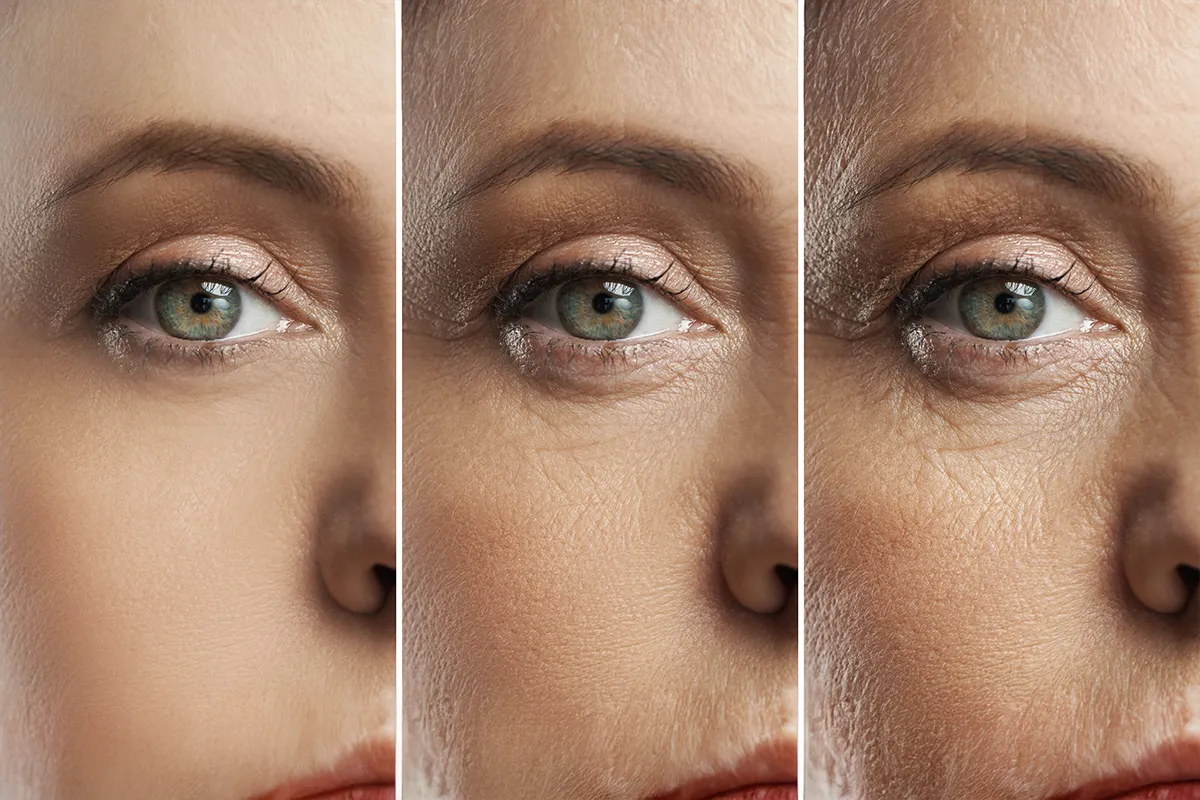
How does glycation lead to skin aging?
Glycation is pivotal in accelerating the skin’s aging process, leading to the development of several visible signs associated with aging. As AGEs accumulate in the skin over time, their impact becomes increasingly apparent.
1. Formation of wrinkles and fine lines
Glycation stiffens collagen and elastin fibers, reducing the skin’s ability to maintain its structure and firmness. This leads to the early formation of wrinkles and fine lines, particularly in the most expressive areas of the face, like around the eyes and mouth.
2. Loss of skin elasticity
As glycation progresses, the skin’s elasticity diminishes, causing it to sag and lose its youthful tightness. This is particularly noticeable in areas such as the cheeks and jawline, where the skin begins to droop.
3. Increased skin fragility
Sugar can damage your skin in a few ways. First, it makes the skin weaker and more easily damaged by things like the sun and pollution. Second, it makes the skin more fragile, which can lead to dryness, irritation, and infections.
4. Dullness and discoloration
As we age, our skin can look dull and uneven [4]. This is because damaged proteins and dead skin cells build up, and our skin can’t renew itself as well as it used to. This can also make some areas of our skin look darker than others.
5. Reduced skin hydration
Glycation can impair the skin’s ability to retain moisture, leading to dryness and dehydration. This lack of hydration further exacerbates the appearance of fine lines and wrinkles, making the skin look older than it actually is.
6. Delayed skin repair and recovery
The presence of AGEs can slow down the skin’s natural repair mechanisms, making it harder for the skin to recover from damage and heal wounds. This delay increases the risk of long-term scarring and contributes to the overall aging appearance of the skin.
Is skin glycation reversible?
Reversing glycation damage is a complex challenge, but with the right strategies, it is possible to mitigate its effects and improve the appearance of your skin.
While glycation is a process that naturally occurs over time, there are several ways to address and reduce the damage it causes:
- Antioxidant-rich diet: Eating lots of fruits, veggies, nuts, and seeds is like giving our skin a superhero cape. These foods contain antioxidants, which are like tiny warriors fighting off the bad stuff that causes glycation.
- Topical treatments: We can also use special skincare products. Think of them as a spa day for your skin. They have ingredients like vitamin C, retinoids, and niacinamide that help repair the damage and make your skin look younger.
- Advanced skincare ingredients: Some skincare products are specifically formulated to target glycation. Ingredients such as carnosine and aminoguanidine have been shown to inhibit the formation of AGEs [5] and break down existing ones. Incorporating these products into your skincare routine can help minimize glycation-related damage.
- Laser and light-based therapies: If you really want to go all out, there are fancy treatments like laser and light therapy. They work like magic on your skin, smoothing out wrinkles and making it look brighter.
- Lifestyle changes: Reducing sugar intake and maintaining a balanced diet low in processed foods can slow down glycation. Regular exercise also helps improve circulation and promotes healthy skin, which can aid in the repair of glycation damage.
- Supplements: Some supplements, like alpha-lipoic acid and benfotiamine, have been studied for their potential to reduce glycation [6], [7]. These supplements reduce blood sugar levels and inhibit the formation of AGEs, which can help prevent further damage and support skin health.
While completely reversing glycation damage is unlikely, these strategies can significantly reduce its effects and improve the appearance of your skin. Combining dietary changes, targeted skincare, and advanced treatments can slow down the glycation process and maintain a healthier, more youthful complexion.
Understand glycation better with insights from Longevity.Technology Epigenetic & DNA Test
The Longevity.Technology Epigenetic & DNA Test offers valuable insights to help you better understand and manage glycation as you age. Here’s how this test can benefit you:
- Personalized glycation risk assessment: Discover your susceptibility to glycation and how it may impact your skin’s aging process.
- Tailored dietary recommendations: Receive customized advice on dietary choices that can help reduce glycation, keeping your skin healthier and more youthful.
- Skincare guidance: Based on your unique genetic profile, get specific recommendations for skincare products and routines that are best suited to combat glycation.
- Lifestyle insights: Learn which lifestyle factors may be accelerating glycation in your body, and receive tips on how to make adjustments that promote better skin health.
- Ongoing monitoring: Use the test’s results to track your progress over time, ensuring that your efforts to minimize glycation are effective and aligned with your long-term skin health goals.
By understanding glycation through the personalized insights provided by the Longevity.Technology Epigenetic & DNA Test, you can take proactive steps to protect your skin and slow aging.
Closing thoughts
Glycation is a natural process that can significantly impact the appearance and health of your skin as you age. While it is inevitable, understanding how glycation affects your skin and taking proactive steps to combat its effects can help you maintain a more youthful and vibrant complexion.
By incorporating practices into your daily routine, you can slow down the visible signs of aging and promote healthier, more radiant skin.
Concerned about skin glycation with age? The Longevity.Technology Epigenetic & DNA Test offers personalized insights to help you protect your skin’s youthfulness while effectively managing glycation-related aging.
FAQs
Can glycation be completely reversed?
While glycation damage cannot be fully reversed, its effects can be mitigated through a combination of diet, skincare, and lifestyle changes.
Can diet influence glycation?
Yes, a diet low in sugar and rich in antioxidants can help reduce the formation of AGEs and protect the skin from glycation damage.
Does glycation only affect older individuals?
Glycation can occur at any age, but its effects on the skin become more noticeable as you get older due to the accumulation of AGEs.
What are advanced glycation end-products (AGEs)?
AGEs are harmful compounds formed when proteins or lipids become glycated, contributing to skin aging and other health issues.
[1] ScienceDirect. Glycation
[2] ScienceDirect. Collagen Cross-Link
[3] Aging and Disease. Glycation Damage: A Possible Hub for Major Pathophysiological Disorders and Aging
[4] MedlinePlus. Aging changes in skin
[5] Applied and Environmental Microbiology. Antiglycation Effects of Carnosine and Other Compounds on the Long-Term Survival of Escherichia coli
[6] Nutrients. Alpha-Lipoic Acid and Glucose Metabolism: A Comprehensive Update on Biochemical and Therapeutic Features
[7] ScienceDirect. Benfotiamine

