
Company to receive $10m for menopause-targeting therapies based on cell engineering platform developed in collaboration with George Church.
Women’s health biotech Gameto has been selected by the US Government’s Advanced Research Projects Agency for Health (ARPA-H) initiative to be part of its Sprint for Women’s Health initiative. The company will receive $10 million over the next two years to further develop its therapeutic development program for menopause, Ameno.
The new $110 million ARPA-H initiative seeks to address critical unmet challenges in women’s health by supporting innovative health solutions, particularly those that uniquely or disproportionately affect women. The funding will help Gameto advance its Ameno program, currently in its preclinical stages, toward human clinical trials.

By 2025, menopause is expected to affect over a billion women globally, and its associated symptoms can lead to serious health conditions such as osteoporosis, cardiovascular disease and dementia.
“Ovaries lose function earlier than the rest of the body, leading to many women spending two thirds of their lives dealing with a degree of infertility, and one third of their lives in a stage of poor health post-menopause,” said Dina Radenkovic, co-founder and CEO of Gameto, who leads the company alongside Chairman Martin Varsavsky, founder of North America’s largest fertility network, Prelude Fertility.
Based on the belief that menopause is not an unavoidable biological process, Gameto is working to disassociate the unwanted effects of menopause from the loss of fertility. The company’s cell therapy approach, developed in collaboration with Harvard Medical School professor and renowned geneticist George Church, aims to target menopause at its root cause.
Gameto’s Ameno program aims to alleviate the debilitating effects of menopause via a cell-based therapy designed to restore hormonal balance. The therapy is intended to tune hormone levels to individual needs by responding to signals from the brain and ovaries, helping to mitigate the long-term health risks associated with post-menopausal conditions.
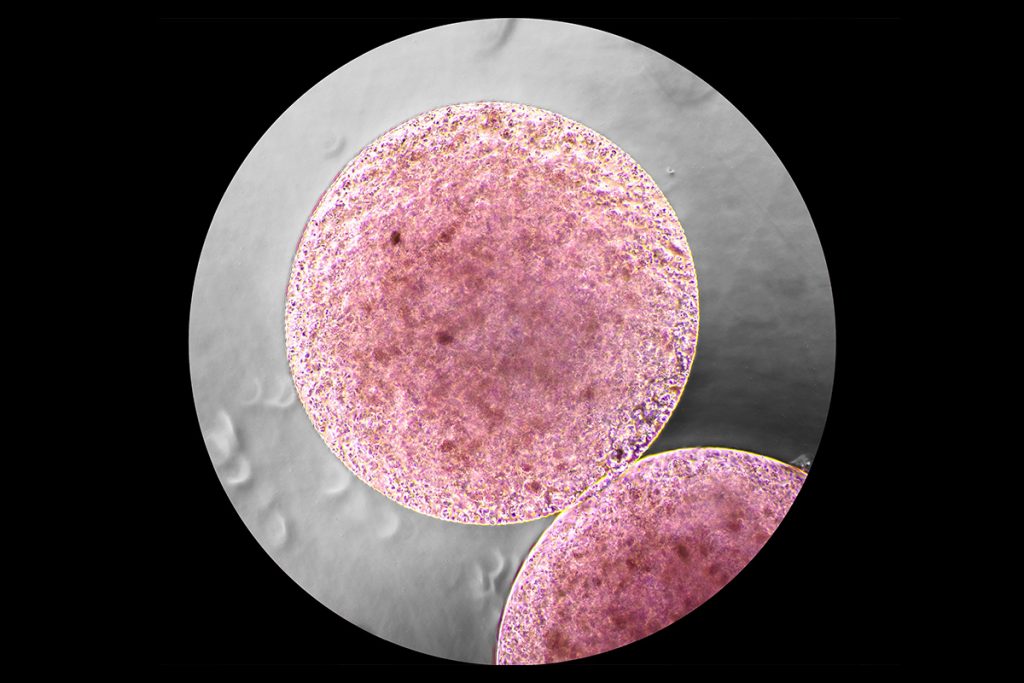
While Gameto’s lead program, Fertilo, aims to address infertility, the ARPA-H funding means the company is now officially expanding its focus into menopause with its Ameno program. The company will receive milestone-based payments over the next two years as the company achieves research and development goals.
“With this award, we have sufficient resources to further apply our cell engineering technology and bring forward a program for women going through menopause, an area with even fewer treatment options,” added Radenkovic.
Earlier this year, Gameto successfully closed a $33 million Series B financing round, led by Two Sigma Ventures and RA Capital, to advance its reproductive health programs, bringing its total funding to $73 million. The company also secured a $20 million Series A round in 2022.
Last year, Gameto revealed it had licensed technology developed in Church’s lab that enabled the development a living, fully human ovarian organoid that supports egg cell maturation, develops follicles and secretes sex hormones.

