
Inbrain CEO explains how new advances in BCI technology have the potential to diagnose and treat multiple brain conditions in real-time.
The brain-computer-interface investment market is officially hot. Bloomberg reported yesterday that US BCI Precision Neuroscience has raised $93 million at a valuation of around $500 million, while last week we brought you news of Spain’s Inbrain Neuroelectronics, which raised $50 million, with additional funding from Merck, to advance its graphene implant-based approach.
And, with Blackrock Neurotech landing $200 million earlier this year, and Elon Musk’s Neuralink raising a cool $280 million last August, it’s clear that investors are buying into the promise of combining man and machine to benefit human health. But where is the technology today, and where is it going to take us?
Longevity.Technology: A recent report from Morgan Stanley has suggested that the total addressable BCI market in the US is worth around $400 billion, a staggering figure that surprised a few, even Carolina Aguilar, the CEO of Inbrain. Whatever the numbers say, one thing is for sure: the range of potential applications is huge, from the treatment of degenerative diseases like Parkinson’s to devastating neurological conditions such as depression. We caught up with Aguilar to learn more about her company’s approach and where the technology is headed.
Aguilar says that Barcelona-based Inbrain, which recently implanted its graphene-based BCI for the first time in a human being, is primarily on a mission to “decode” the complexities of the human brain.
“We know so little about the brain,” she says. “Ok, we know a lot about the brain of a zebra fish, which is about 100,000 neurons, but the human brain has almost 100 billion neurons.”

Decoding the human brain
By using its technology to decode the human neural system and understand the specific patterns of neural activity, Inbrain aims to enable more effective treatments for a host of conditions.
“In some ways, the brain communicates a little bit like a radio with frequency bands, and these frequency bands mean different things in relation to things like movement, cognition and speech and much more,” says Aguilar. “There are anatomical areas that are connected to certain cells that fire at a certain frequency and trigger effects – both in healthy and pathological brains.”
Using Parkinson’s disease as an example, Aguilar says that understanding how and where certain effects are triggered is key. By identifying the specific neural patterns and activity associated with different brain functions and dysfunctions, Inbrain’s technology can precisely decode the origins of symptoms. This allows the company to deliver targeted therapeutic interventions to treat the underlying neural issues.
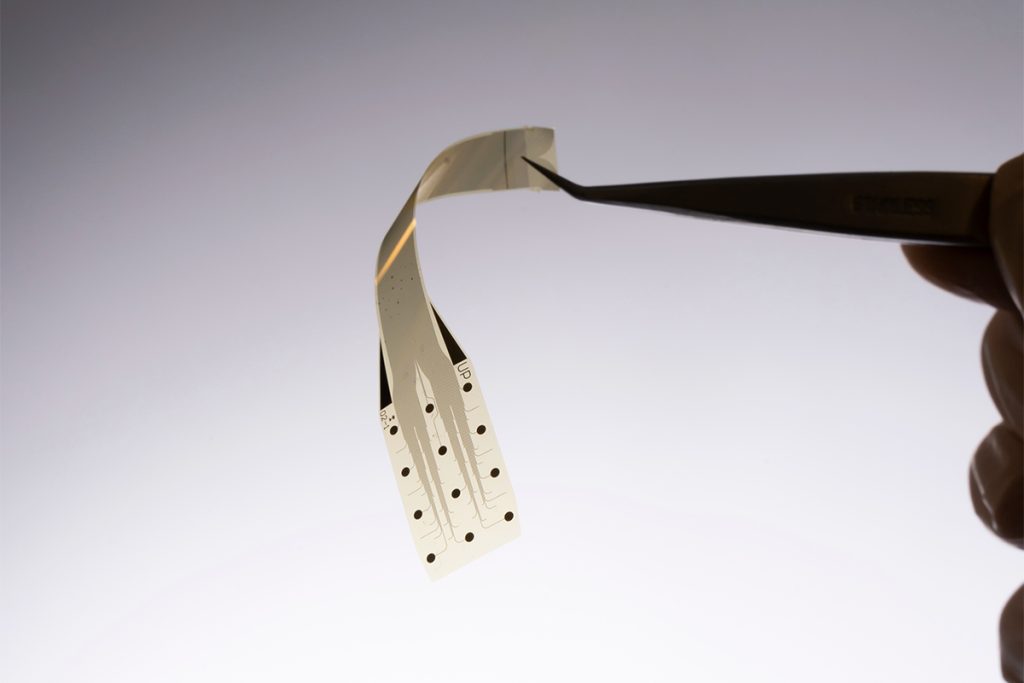
“If we can understand where symptoms are originated, and which cells are producing them, then by decoding where this is all happening, we can actually treat it,” says Aguilar, who explains that this ability to both diagnose and treat is key to Inbrain’s approach.
“We are both decoding and treating in high resolution and with micrometric precision. Think of it as real time, precision neurology – like having a mini neurologist in your brain who is decoding what’s happening but is also treating you at the same time.”
Harnessing graphene’s potential
Inbrain’s use of graphene, the thinnest 2D material in the world, in its implants is an equally important part of the company’s story. Aguilar explains that most current commercial neuromodulation devices use metals like platinum and iridium, and have “millimetric sized” interfaces, which can only fit a limited number of contacts within a target neural structure. With these approaches, many patients experience speech and gait issues due to the broad stimulation being applied to large areas of the brain.
In contrast, Inbrain’s graphene-based interfaces are a thousand times smaller, offering “micrometric precision” and allowing them to target specific neural circuits rather than just large nuclei.
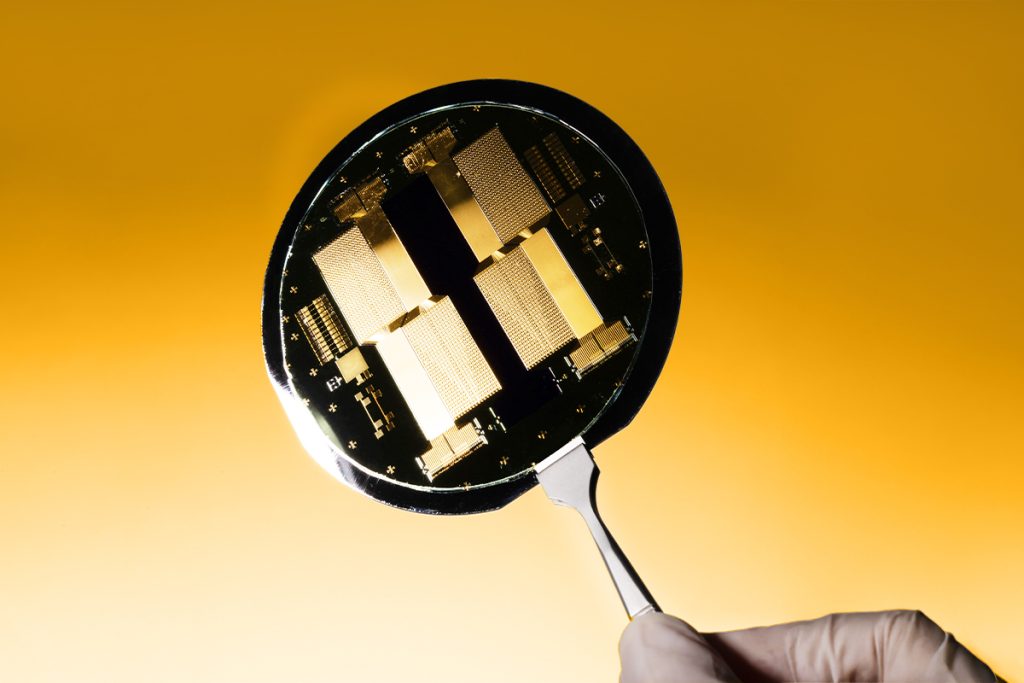
“By doing this at very high resolution and micrometric size, we are essentially operating at the cellular level,” says Aguilar. “So we are both decoding very precisely, but also delivering the stimulation, the treatment, at a micrometric level, which improves effectiveness, but also decreases the side effects.”
Targeting quality of life
Inbrain’s recent first human implant was essentially a “safety proof” for its technology, and the company is now focused on demonstrating long-term reliability and safety. Aguilar says that that the recent funding will allow the company to “continue and finalize those clinical trials” while supporting the commercialization of the first products based on its graphene-based technology. The funding will also support the work of the company’s subsidiary, Innervia Bioelectronics, which is working on expanding the technology to address peripheral nerve and systemic diseases.
While Parkinson’s will clearly be a key focus for Inbrain going forward, Aguilar points to several other areas where she believes the company’s technology will play a role, including “decoding” areas such a speech, sleep, epilepsy and stroke, as well as depression and obsessive-compulsive disorder.
“Sleep decoding is interesting to us because many of these diseases, including Parkinson’s, disrupt sleep patterns, which results in decreased quality of life,” she says. “We are interested in the function of all these interrelations, so we can help people achieve the highest possible quality of life.”

