
Rubedo’s new CEO discusses the potential for senolytics in aging and healthspan as company gears up for clinical trials.
This week, senotherapeutics biopharma Rubedo Life Sciences announced the appointment of Dr Frederick Beddingfield as its new CEO. The biopharma industry veteran, most recently of longevity focused investment firm Apollo Health Ventures, takes over from Rubedo founder Dr Marco Quarta, who becomes the company’s Chief Scientific Officer.
Rubedo is on a mission to keep people “biologically young” by developing senotherapeutic therapies that target the aged and dysfunctional cells that accumulate in our bodies over time, releasing harmful substances that contribute to chronic inflammation, fibrosis and tissue degeneration. Based in California, the company leverages AI to identify specific druggable targets as it aims to selectively target these pathological “senescent” cells in various chronic conditions, helping to slow disease progression and improve overall health.
Following a $40 million Series A funding round in April, Beddingfield joins the company with its lead candidate expected to enter Phase 1 studies in dermatological conditions next year.
Longevity.Technology: There are clear synergies between Rubedo’s strategy and the experience of its new CEO. A dermatologist by training, Beddingfield has also served as president and CEO of Sienna Biopharmaceuticals, taking the company public in 2017, and was Chief Medical Officer at Kythera Biopharmaceuticals, which was acquired by Allergan for $2.1 billion. While at Allergan he held multiple senior positions and spearheaded the development and approval of numerous globally recognized products from medical dermatology to metabolic therapies. We recently sat down with Beddingfield to learn more about his plans for Rubedo.
With so many relevant areas of mutual interest, Beddingfield admits that the opportunity to join the company was something of a no-brainer.
“I was actually shocked by all the things that lined up – at first, I almost thought, this can’t really be true,” he recalls. “Here is a company interested in treating the diseases of aging, which I’ve been involved in through my work at Apollo, and it’s got a lead indication that’s first in dermatology. And I’m a dermatologist, I’ve spent most of my life making skin look better, so an opportunity to make skin actually be better, be younger, was fantastic.”
Senolytics’ potential in aging
When it comes to Rubedo’s focus on cellular senescence, Beddingfield says he has been “fascinated for years” by the potential of senolytics.
“The inflammatory milieu and the damage that they do in multiple organs, which can lead to age related diseases, neurodegenerative diseases, metabolic diseases, cardiovascular diseases, also cancer – all the hallmarks of things that cause us to age and have a reduced healthspan,” he adds. “I am confident that senescent cells are very important in diseases of aging, but choosing the right drug and the right indications is really important, and that’s where there may have been maybe some missteps by others in past.”
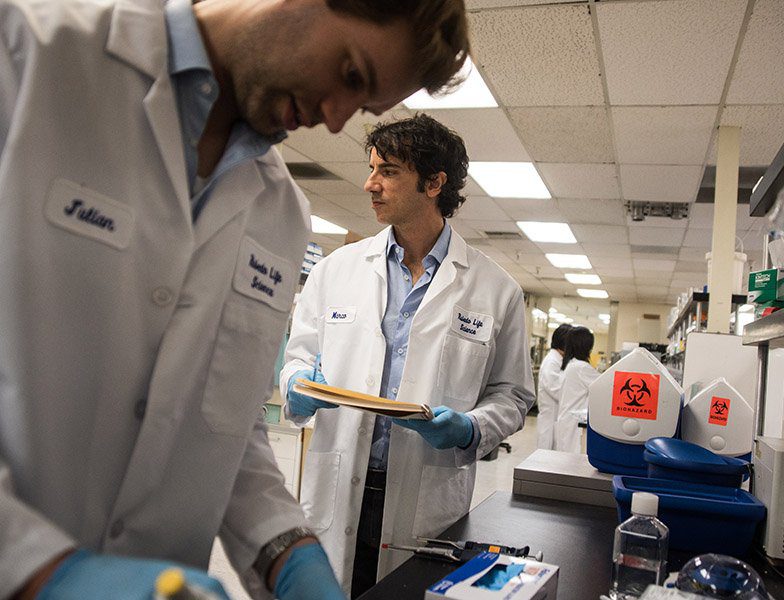
Beddingfield acknowledges that the challenges facing senolytic therapeutic developers are considerable.
“The key is to figure out in humans, in which diseases are those senescent cells really pathologic and contributing significantly, and where do you treat those diseases at a state where this is reversible.” he says. “Because a lot of times in these age-related diseases, you end up in fibrotic states, and the bar is a bit higher once you enter that sclerotic fibrotic state. So that’s something we’re thinking a lot about, and our preclinical data is certainly guiding us and helping us on that.”
Despite the complexity of the challenges, Beddingfield is confident that Rubedo has all the ingredients to succeed in the field.
“I think this company has best approach I’ve seen in terms of trying to get the right drugs to treat the right conditions and have a better chance of success,” he says. “From the cutting-edge science coming out of Stanford, to this AI-enabled approach to drug discovery in conjunction with RNA sequencing. We’ve got some stunning preclinical data from our lead compound and our second compound, and we’re really looking forward to seeing that play out.”
Initial focus on skin conditions
That lead compound, RLS-1496, is expected to enter trials in Q1 2025 in in chronic atopic dermatitis and chronic psoriasis, and Beddingfield says there are some very good reasons to start out in skin indications.
“The skin is accessible, so you can easily see the results of what you’re doing, typically in a fairly short time,” he explains. “There are also well-known biomarkers of aging in the skin that you can look at even in a Phase 1 trial, and you can also look for the impact on senescent cells. So dermatology is a great place to start.”
In addition to his experiences in biopharma, Beddingfield’s believes his work as a physician will also benefit Rubedo as the company moves into its first clinical trials.
“I’ve been treating patients since I finished my residency in the 2003, so very much working in that space where you’re going into human trials,” he says. “From dealing with the FDA, and looking for the best strategic indications to pursue, to how you design those trials in the best way for success and get a drug approved and commercialized – that’s really my sweet spot.”
To support the upcoming trial, which will take place in Europe, Rubedo recently announced it has established its European headquarters and clinical operations in Milan, Italy. But Beddingfield says the company’s future extends far beyond skin.
“In the long run, our ambitions are really more in the systemic therapies and treating the biggest causes of reduced lifespan and healthspan,” he says. “For example, we are also evaluating a systemic candidate for RLS-1496, and the topical trial in dermatology will be great for helping us understand the safety profile. Is this a drug that can go forward into a systemic candidate?”
Next up: chronic, age-related diseases
When it comes to its preclinical pipeline, Rubedo also has a number of other platform candidates, including some that Beddingfield says haven’t even been formally announced yet.
“The are mostly all looking at some form of systemic therapy,” he says, suggesting that the company is one to one-and-a-half years from its first human trials in those candidates. “For example, we have preclinical data on some really interesting activity in the realm of metabolic and liver disease, neurodegenerative disease – two of the biggest areas out there that cause us to age prematurely, and lead to morbidity, and often mortality.”
Acknowledging the growing excitement and interest around the potential for therapeutics for longevity and healthspan, Beddingfield tempers expectations a little.
“It excites us too, but at the end of the day, we’re first trying to prevent, and in some cases, treat, the things that cause premature morbidity and mortality – and that’s something the FDA can get their head around very easily,” he says. “Think about Botox – that drug wasn’t first approved for cosmetic use, it was approved for things like strabismus and neuromuscular disorders of the head and neck. Once you treat a specific disease and the FDA can wrap their head around it, they’re much more willing to talk to you about additional things.”
“We do see some changes in the FDA and their willingness to accept longevity-like indications, starting in the animal realm, so I think there’s hope for that in the long run. But in the first instance, we’ll target age related diseases, and the biggest causes of age-related morbidity and mortality.”

