
Neurotech seeks to accelerate commercialization of BCI technology that enables operation of digital devices via thought alone.
US neurotech company Precision Neuroscience has secured $102 million in Series C funding round to advance its brain–computer interface (BCI) technology towards commercialization. The new capital, which makes Precision second only to Elon Musk’s Neuralink in terms of overall funding, will accelerate the development of the company’s AI-powered brain implant, which is designed to empower individuals with severe paralysis to operate digital devices using their thoughts.
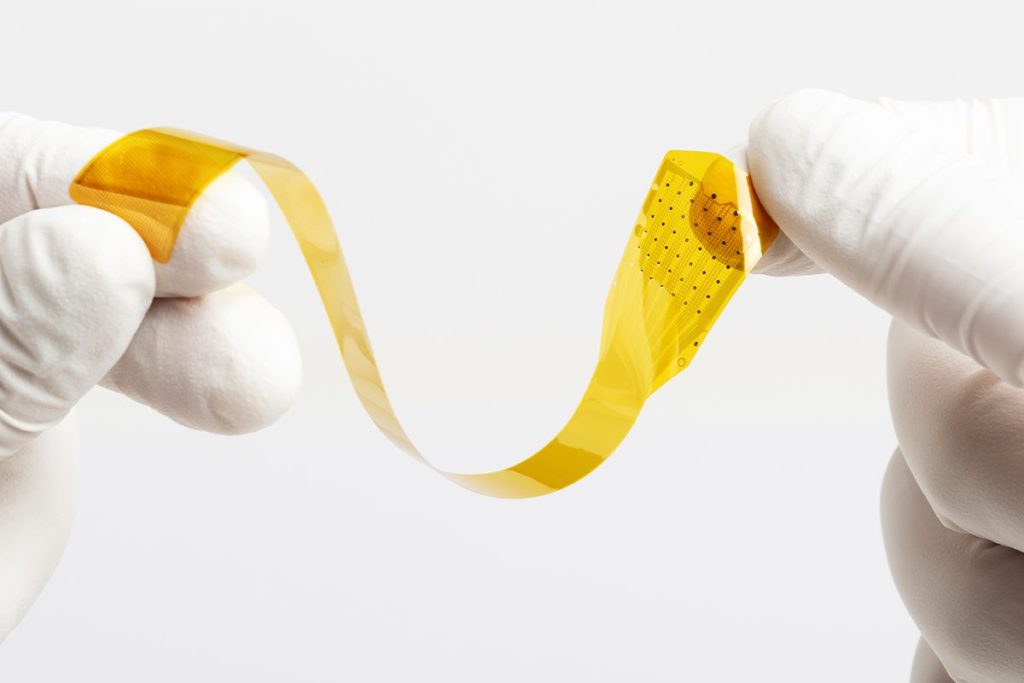
Founded in 2021, Precision was co-founded by Michael Mager and Ben Rapoport, a neurosurgeon-engineer and former Neuralink co-founder, who envisioned creating a BCI system that would provide a safe, minimally invasive alternative to traditional penetrating electrodes. The company’s proprietary technology, the Layer 7 Cortical Interface, is a thin-film microelectrode array is engineered to conform to the brain’s surface without causing tissue damage. It incorporates a cranial micro-slit insertion technique that allows for fast, reversible implantation.
Precision’s approach leverages high-bandwidth neural data processing to translate brain activity into machine-readable code. The device’s modular system allows for the deployment of multiple flexible electrode arrays, offering comprehensive coverage of the brain’s surface. Each array features a density 600 times greater than standard cortical arrays, with the ability to both record and stimulate neural activity, providing a bidirectional communication pathway between the brain and external devices. These features open doors for broader applications, including stroke rehabilitation and treatments for refractory depression, in addition to its initial focus on aiding individuals with motor paralysis.
“We’re beginning by addressing some of the most debilitating disorders – severe spinal cord injury, stroke, ALS – and our goal is to develop a product that is safe enough, and scalable enough, to treat a broad range of neurological conditions,” said Mager, the company’s CEO. “This funding brings us one step closer to that vision.”
The new funds will be directed towards expanding Precision’s workforce, refining the design and functionality of its cortical interface and broadening its clinical testing initiatives. Thus far, the company has conducted testing in 27 patients through partnerships with institutions including Mount Sinai Health System, the Perelman School of Medicine at the University of Pennsylvania and West Virginia University’s Rockefeller Neuroscience Institute.
The round, which brings the total capital raised by Precision to $155 million, was led by General Equity Holdings, with participation from notable investors like B Capital, Stanley F Druckenmiller’s Duquesne Family Office and Steadview Capital.
“BCI technology is truly at an inflection point. Advances in both hardware and software are unlocking ways to connect with the brain that were previously unimaginable,” said General Equity’s Andrew Bellas. “Over the coming years, BCI’s impact is likely to be massive, both in medicine and beyond.”
Since being founded, Precision has also secured FDA Breakthrough Device designation, acquired a state-of-the-art manufacturing facility in Texas and brought on key leadership figures, including Brian Otis, a former Verily co-founder, as Chief Technology Officer.

