
Prestigious list acknowledges Sehgal’s work in advancing aging biomarkers, epigenetic research and longevity interventions.
Raghav Sehgal, PhD, Scientific Principal at LongevityTech.fund and Director of Bioinformatics at Healthy Longevity Clinic, has been named to the prestigious Forbes 30 Under 30 list for 2025. This recognition highlights Sehgal’s significant contributions to aging research and the application of computational biomedicine in addressing the global challenges of aging and longevity.
Longevity.Technology: Sehgal’s work focuses on developing advanced biomarkers for aging and human health; his research integrates epigenetics, AI and geroscience to uncover insights into the biological mechanisms of aging. One of his notable projects, Systems Age, predicts biological aging across 11 distinct physiological systems and organs. This innovative tool, which has been licensed to TruDiagnostics, is already advancing personalized medicine and longevity science under the product name SYMPHONYAge.
Sehgal is also spearheading the 51 Longevity Interventions Study – a comprehensive analysis of 51 longevity intervention studies, encompassing pharmacological treatments, lifestyle interventions and supplements, and their impacts on over 100 epigenetic aging biomarkers – and developing foundational models for epigenetic aging, such as CpGPT, a transformer-based approach designed to improve the interpretability of epigenetic data.
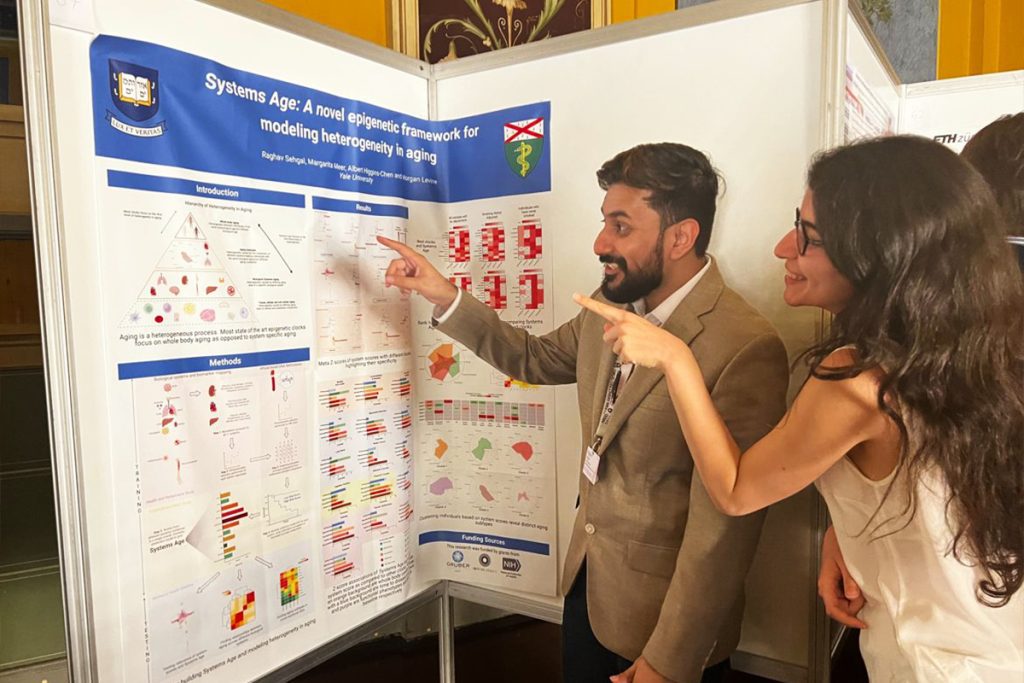
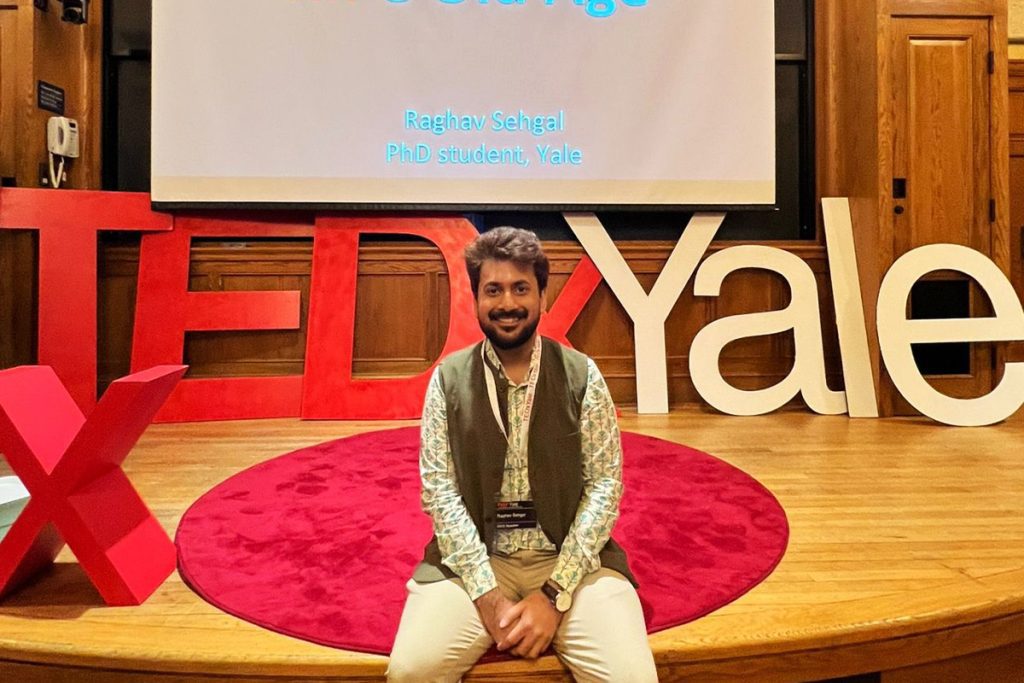
Additionally, he has been honored with an Impetus Aging Grant, Gruber Science Fellowship and recognized as Best Speaker at the Biomarkers of Aging Symposium held at Harvard Medical School, as well as TEDx Yale speaker 2023. In addition to Sehgal’s academic research, he collaborates with VC funds, advising on investments in longevity and geroscience startups, and consults on bioinformatics solutions to advance the field of aging. His work reflects the potential of interdisciplinary approaches in solving some of the most pressing challenges in medicine and healthcare.
Sehgal told Longevity.Technology that inclusion in Forbes 30 Under 30 is not just a personal honor but a testament to the incredible support and mentorship he has received from the longevity community. “It also reflects the revolutionary breakthroughs on the horizon in aging research and the growing recognition of longevity science as a transformative force shaping the future of healthcare,” he added.
Sehgal told us the work he is engaged in aims to transform the paradigm of medicine from reactive to preventive, with a focus on integrating geroscience into clinical practice.
“At its core, this involves slowing aging to mitigate the onset of chronic diseases,” he explained. “SYMPHONYAge functions as a critical tool for physicians, serving as a biomarker that pinpoints which systems are aging the fastest in an individual, providing actionable insights for organ-specific care. The 51 Interventions Study offers clinicians evidence-based guidance on which interventions effectively decrease biological age, their magnitude of impact, and the biomarkers most responsive to longevity therapies.”
Meanwhile, CpGPT is advancing the frontier of biomarker development by delivering deeper mechanistic insights that enable the creation of more effective therapeutics.
“Together, these efforts are paving the way for a transformative era of medicine – one that precisely quantifies aging, empowers physicians and patients with validated longevity interventions, and enables longer, healthier lives,” Sehgal explained.
Other people making the Forbes 30 Under 30 cut for 2025 include:
- Nadia Ansari and Kamran Ansari – cofounders of FluxWear, the Ansaris have developed a wearable cap that serves as a neuromodulation device. While their primary focus is on neuromodulation, such technologies can have implications for brain health and potentially influence aspects related to aging and cognitive longevity.
- Rob Baldoni – cofounder of Dannce.ai, Baldoni has developed deep learning software to analyze patient movements for neurological evaluations. While primarily focused on creating digital movement-based biomarkers, these technologies could have implications for diagnosing and monitoring age-related conditions like Parkinson’s disease and other neurodegenerative disorders.
- Giulio Deangeli – cofounder of Oxbridge Clinical, Deangeli is advancing diagnostic technology to identify microorganisms at the point of care. While primarily targeting infectious diseases, these advancements could benefit aging populations who are more susceptible to infections and their complications.
- Sidney Collin – cofounder of De Oro Devices, she has developed NexStride, a mobility device for neurological conditions. While her primary focus is mobility aid, such innovations could significantly enhance the quality of life for older adults with conditions like Parkinson’s disease.
- Yue Clare Lou – cofounder of Sift Biosciences, a startup leveraging artificial intelligence and high-throughput screening to develop next-generation immune boosters. Based on Lou’s PhD research, the company was launched through UC Berkeley’s Women in Enterprising Science program with a $1 million grant.
- Kevin Mekulu – Mekulu aims to revolutionize cognitive impairment screening with DementiAnalytics, an AI-powered technology. By analyzing speech, eye tracking and vitals, his tool provides a comprehensive cognitive assessment in under five minutes, replacing the traditional 30-minute paper-based test.
- Smriti Pandey – Pandey has advanced genome editing with her innovations in prime editing and a novel technology called eePASSIGE, capable of inserting large genes at precise locations. Her breakthroughs are paving the way for clinical applications, transforming genetic medicine.
- Matthew Park – Park’s research, published in Science, highlights how aging immune systems suppress cancer-fighting cells. His work bridges cancer and aging research, and he has contributed to five major clinical trials exploring repurposed drugs for cancer therapy.
- Kanishka Rao – Rao cofounded Carenostics with his father to address undiagnosed chronic conditions. With $5.5 million in funding, their AI-powered platform aids physicians in early detection and intervention for diseases like chronic kidney disease and asthma, improving patient outcomes.
- Dániel Barabási – Barabási explores neuroevolutionary principles to design self-creating neural networks and studies brain connectivity. His groundbreaking experiments challenge the nature vs nurture debate, and his “neuronal legos” could one day restore brain function in damaged tissues.
- Anis Barmada – Barmada focuses on early detection and prevention of chronic diseases. His innovations include smart contact lenses and mRNA-based technologies, offering a proactive approach to fighting diseases and advancing the field of preventative medicine.
- Yifan Dai – Dai designs synthetic biology-based therapeutics for neurodegenerative diseases like ALS and Alzheimer’s. By engineering cell organization and studying electrochemistry, his work opens new avenues for understanding cellular processes and creating future treatments.
- Jenna DiRito – DiRito cofounded Revalia Bio to repurpose rejected human organs for medical research, including drug testing. With $14 million in funding and projected revenue exceeding $2 million in 2024, the company is setting new standards for organ-based scientific studies.
- Parinaz Fathi – Fathi created VIPER, a tool that predicts survival outcomes by identifying critical biomarkers in traumatic injuries. Her work now focuses on understanding immune system malfunctions, with the aim of developing targeted therapies for cancer and autoimmune diseases.
- Vishruth Girish – Girish led research using CRISPR tools to uncover cancer’s dependence on extra chromosomes, providing a new therapeutic target. Featured in Science, his work lays the foundation for personalized cancer treatments that exploit this vulnerability.
- Rishi Goel – Goel’s research on immune system adaptation has led to breakthroughs in immunotherapy. As a physician-scientist, he identifies unique immune fingerprints to match patients with the most effective treatments for various diseases.
- Nan Li – Li is developing implantable devices that attach to tissues without stitches or glue, offering high-resolution monitoring of bodily functions. His innovative design, published in Science, represents a significant leap forward in medical technology.
- Jiuyun Shi – Shi combines living cells with electronics to create bio-integrated platforms for disease management. His groundbreaking approach has shown promise in managing autoimmune conditions, blending biology and technology in unprecedented ways.
- Alexander Ballatori and Shane Shahrestani – Ballatori and Shahrestani’s StrokeDx offer portable imaging devices that diagnose stroke type within minutes, addressing a critical gap in stroke care. Backed by $7 million in funding, their technology has life-saving potential for rapid intervention.
- Brianna Vickerman – Vickerman co-invented a light-based technology for targeted therapeutic delivery. Her platform ensures precise dosing and timing, and with $2 million in funding, she is set to commercialize this innovation, transforming drug administration.
- Sai Zhou – Zhou developed the first wearable ultrasound device capable of 3D brain imaging, enabling early detection of cerebrovascular diseases like stroke. He is commercializing this groundbreaking research through a startup, where he will serve as CEO post-graduation.

