
Virax Biolabs on innovative approaches to monitoring cytokines, T cell dysfunction and oxidative stress for better healthspan management.
Virax Biolabs is a company at the forefront of revolutionizing immune diagnostics and longevity science. By focusing on the intricate relationship between the immune system and the aging process, Virax tackles two of the most pressing challenges in modern healthcare: chronic inflammation and immune dysfunction. These issues are not only key drivers of aging but also major contributors to age-related diseases such as cardiovascular conditions, neurodegenerative disorders, and metabolic syndromes. Virax’s mission is to provide innovative tools and insights that empower individuals to take control of their healthspan and address these critical areas proactively.
Longevity.Technology: At the heart of Virax’s advancements lies its innovative immune platform, which is redefining how we detect and analyze the adaptive immune response. This platform offers an unprecedented understanding of oxidative stress, T-cell dysfunction and other key biomarkers linked to immune health. By enabling earlier detection and more precise interventions, Virax’s technology aims to transform the management of aging-related conditions and improve overall quality of life. To find out more about the impact of these innovations and their role in advancing longevity, we sat down with Dr Nigel McCracken, Virax’s Chief Operating Officer.
“We’re very interested in developing diagnostic tests and solutions to monitor the immune system,” McCracken explains. “In particular, we’re interested in monitoring cytokines and how they relate to chronic inflammation.”
Cytokines are small proteins that are secreted by various immune cells and they mediate, oversee and regulate the immune as well as the inflammatory response.
“We’re interested in developing diagnostics around that chronic inflammation and T cell dysfunction. T cell exhaustion is one of these things that everybody knows about more from an oncology point of view where a lot of the immuno-oncology drugs are targeting T cell exhaustion markers like PD-1 or LAG-3 or TIGIT. But it’s interesting when you think about something like oncology and the tumor microenvironment – we’re talking about that same environment even when we’re dealing with viruses and dysfunction.”
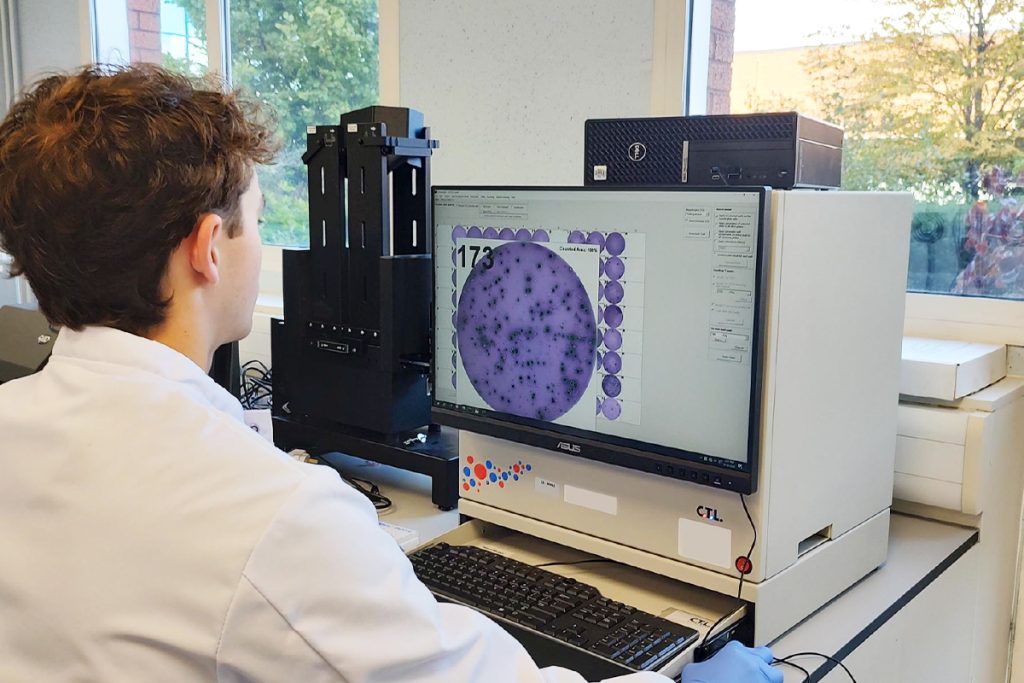
When it comes to understanding oxidative stress and immune system health, McCracken explains that while oxidative stress and cytokines have been measured for years, many tests are insensitive and do not shed much light on the origin of the actual cytokine response.
“That’s where Virax is slightly different because what we use a FluoroSpot,” he explains. “Instead of working with plasma and serum samples, we’re working with PBMCs, which are cellular parts of the blood, and unlike plasma serum, are not full of cytokines and chemokines. With PBMCs [peripheral blood mononuclear cells] you’re starting with nothing, so if you stimulate those T cells, then you’ll get a very specific signal related to, for example, a specific virus. This means that signature is actually quite predictive of actually what’s going on with respect to that sort of virus.”
Virax is also aiming to develop diagnostics around T cell dysfunction associated with what is termed post-acute infection syndrome and encompasses long COVID, chronic fatigue syndrome and some cognitive impairment.
“If you leave these indications long enough, the chronic inflammation associated with them stimulates the T cells which become dysfunctional because, in effect, they’re turned on all the time,” explains McCracken. “These are the ‘cytokine storms’ we heard so much of in COVID coverage. When the body isn’t functioning properly, that causes its own problem through general chronic inflammation.”
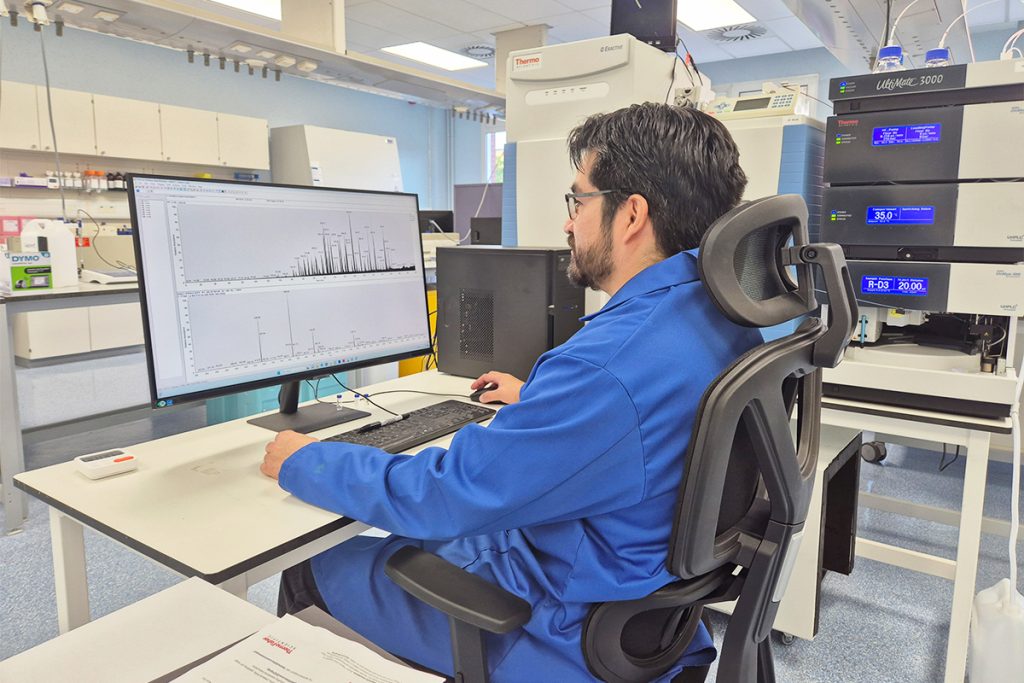
McCracken explains there is a very strong link between oxidative stress, T cell dysfunction and mitochondrial dysfunction.
“Anybody who knows about oxidative stress, is aware of that commonality around the dysfunction of the mitochondria,” he says. “When you think about the mitochondria – our main energy source – you can see how that is related to things like chronic fatigue, and that’s where we’re potentially going with the diagnostic. We are looking at looking at cytokines, as well as some surface markers around T cell exhaustion, to see if there is a way that we can specifically identify T cell dysfunction happening before it gets to that point where it might actually become more of a problem, where it gets more hardwired into your adaptive immune system.”
McCracken explains that when we think about the oxidative stress, we are talking about chronic inflammation – and it’s a double-edged sword.
“Inflammation by itself is a useful thing – if we cut or injure ourselves, or we are exposed to a virus or a bacteria, it’s super important to have that inflammation, because it encourages repair or because it creates a hostile environment, sequestering T cells to kill the virus and get rid of it. But once it’s done its job, you want it to be gone.”
He adds that chronic inflammation by itself is not a good thing – but this is where Virax Biolabs feels that, ultimately, its test can be adapted.
“Most of the immune dysfunction-associated cytokines which we are measuring – pro-inflammatory cytokines – are also associated with oxidative stress,” McCracken explains. “When you think about oxidative stress, all it is is reactive oxygen species at the top and it’s antioxidants at the bottom. We know about exposing ourselves to antioxidants through diet, but can you actually provide a specific test to give some sort of guidance around that oxidative stress?”
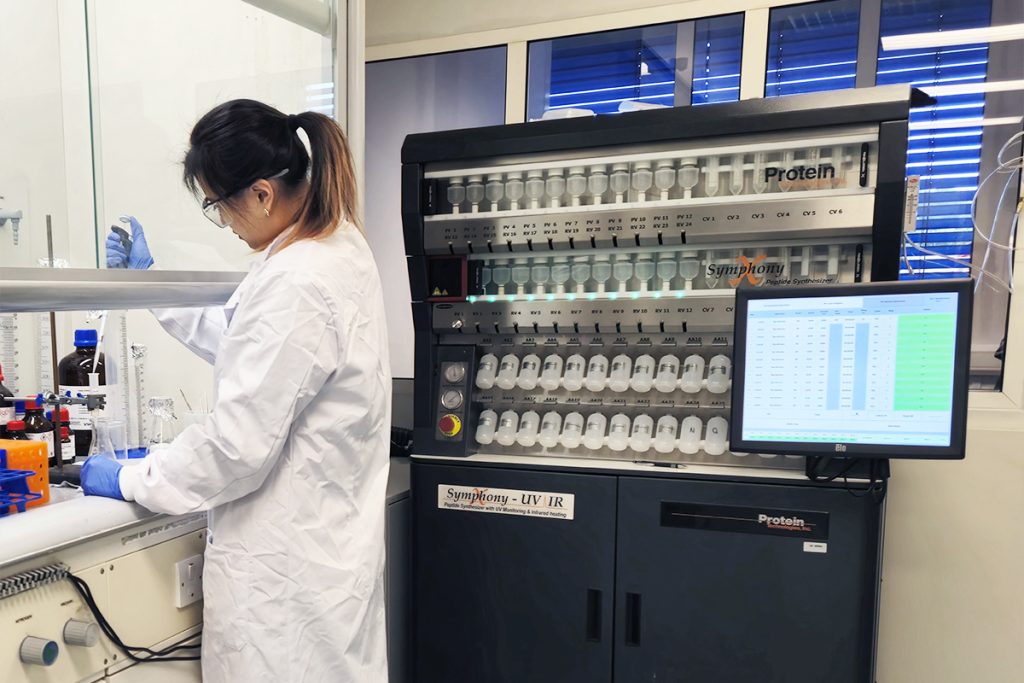
McCracken explains that managing healthspan and longevity needs a test that is accessible and that enables the user to specifically monitor themselves over a period of time using specific cytokines that can be measured easily.
“That could be done through a mobile app or a lifestyle app – and there are lots of lifestyle apps available,” he explains, adding that while it is not complicated to nominate specific cytokines to measure, there are some hurdles to overcomes in terms of including a blood draw in the mix.
In terms of scaling, McCracken notes that incidences of many chronic inflammatory diseases are on the rise.
“People are living with long COVID, chronic fatigue and cognitive impairment – so we need to control chronic inflammation better, have better markers for oxidative stress and give people more control,” he says, explain that Virax Biolabs plans to develop a test, accessible through health practitioners or an app, that monitors chronic inflammation at regular intervals.
“Chronic inflammation can manifest itself in many, many different ways and it’s not a good thing – we need to try to reduce it, but the problem is a lack of sensitive monitoring.”
Chronic inflammation greatly impacts on healthspan and longevity, and the longevity field is one in which Virax is “extremely interested”, says McCracken.
“People want to have more specific knowledge about how their health, and we are seeing the rise of health tracking apps. If we could come up with a in vitro diagnostic that measures the expression of specific cytokines and gives guidance, that would be a good thing,” he explains adding that he suspects that any future test might well link to the microbiome.
“I think there’ll be some sort of link between the tests with what’s going on in the gut – the gut is the main source of a lot of potential problems that people have. And the knowledge is evolving, so we’ll be looking to discuss this with various researchers and experts as I do believe there’s an awful lot of importance and commonality around it, too.”

