
Panel of top investors at GHS2025 investment strategies, regulatory challenges and the need for moonshot investments.
The Global Healthspan Summit 2025 in Riyadh continues to set the stage for critical discussions on the future of longevity science and investment. As healthspan innovation accelerates, investors and industry leaders are sharpening their focus on the opportunities and challenges shaping the market.
One of the summit’s standout sessions was entitled Investment Focus – What Now, What Next; having begun with an illuminating conversation with Hevolution Foundation‘s Chief Investment Officer Dr William Greene, the session expanded to feature a distinguished panel of global investors that explored how today’s investment decisions will shape healthspan breakthroughs for years to come.
Longevity.Technology: The panel explored the evolving investment landscape in longevity, examining how strategic funding can accelerate advancements in biotech, regenerative medicine and interventions for age-related diseases. With insights from investors and institutions such as Hevolution Foundation, KBW Ventures and Juvenescence, the discussion highlighted the challenges of de-risking life sciences, the role of regulatory frameworks, emerging market trends and the critical factors shaping the future of longevity-focused investment.
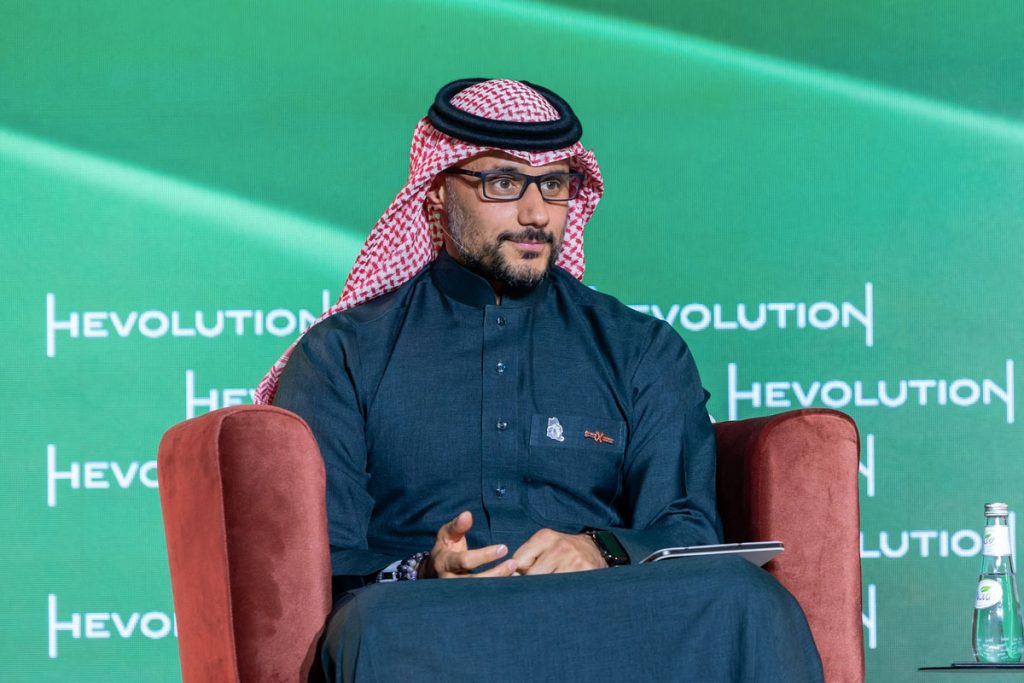
HRH Prince Khaled bin Alwaleed bin Talal AlSaud
Founder & CEO, KBW Ventures
“Regulatory obstacles need to be removed, making sure that we get to invest in moonshot ideas – ten/twenty/thirty moonshot ideas – and keep investing in them. At the end of the day, we’re investing in the first, second and third phases of these companies; they might fail in the first, second or third trial, but the end goal is huge. We’re not talking about lifespan, we’re talking about healthspan – we’re not talking about just getting people to live longer, we’re talking about the quality of life at the end of this stage of their lives.”
Dr Greg Bailey
Executive Chairman & Co-Founder, Juvenescence
“The science is coming of age; very soon we’re going to see a drug that legitimately modifies how cellular age cells age. Right now, I can tell you that we already have our first antiaging drugs – Ozempic and Mounjaro – not because they slow cellular aging, but because they decrease the pathology so people live longer. It’s a preventative medicine that has an astonishing effect and the market is anticipated to be $100 to $150 billion annual sales.
“So as far as taking shots on goal, what I would tell you is your chance of having a successful proof of concept trial ranges from 22% to 54%. An 8 year retrospective study found out that we have a 22 to 54% chance of having a successful phase two. If you have a successful Phase 2, the valuation of your company can go up anywhere from 10 to 30X. I know none of you gamble, but if you did, and there was a table that delivered 20 times your money every third hand, how long would you play? But you can’t play once, because then you have a 66% chance of losing. So that’s how you mitigate the risk. You can skew it the risk, but you need to have a differentiated portfolio.
“Now is the time – Juvenescence has 7 to 10 drugs, and we’re just trying to be right on one, deliver an extraordinary return and hopefully give you, your friends, family and loved ones an extra 10 healthy years.”
Dr Werner Lanthaler
CEO, Wlanholding GmbH & Age X Partners
“It still takes 14 years to bring a drug from discovery to the market, and the average failure rate at phase one entry, is still 50% – going back to the gambling analogy, like a roulette wheel, it’s still red or black.
“Bringing this to an experimental point, I think we always have to ask the questions: ‘Is it true, is it reproducible, is it the correct data that we are investing in?’ The value of death starts when you know that 67% of the data that is published out there, can effectively not be reproduced for drug discovery and drug development purposes; so you have to eradicate that mistake at the beginning to start to invest because otherwise, everything that is happening 14 years down the line will lead to failure, which we have seen so often in Alzheimer’s, in Parkinson’s and other diseases.
“So curing data that we work with is an immensely growing field – and it will be investable. Looking at the right data to start with is where we make money better predictable in its outcome. And that’s why all the prediction technologies and all the curation technologies that we are now using at the beginning will be very interesting.”

Dr Helmut M Schuehsler
Chairman & CEO, TVM Capital Healthcare
How do you translate all the science into reality? That is one of the biggest challenges that I see with this whole discussion about healthspan – and it’s only partly a technological one. One of the stickiest things that we as a society have to deal with is regulatory environment, our business environment and vested interests in the industry, and our own failure to understand what it takes to stay healthy. At least half of you in the audience, if asked, would probably say you don’t want to know what your genome predisposes you to.
“So I believe that the future of this segment is actually not so much in longevity clinics – for the people who can afford it, it’s a necessary step in the development of the process, but I think it’s ultimately a governmental task. It’s about productivity, it’s about governments realising where their investment dollars should go, and to really change the mindset from ‘let’s take care of people when they’re sick’ to ‘let’s make sure they never get sick’.
Jim Scopa
Director, Hevolution US
If you start with something that looks tractable in terms of a clinical trial and endpoints that have been used previously, and then, based on your Phase 1B or your Phase 2 results, you can monitor some of the biomarkers that were relevant to that indication, I think the hope would be that if you could maintain those biomarkers in a range that avoided the disease, in the end, I think that the regulators would accept that. Maybe they wouldn’t take that as the approval endpoint immediately, but I think it would certainly be part of their analysis and that’s where I think people should go to sell the package, if you will, to the regulators. Whether the payers will pay for it is another issue, but we’ve seen a lot of movement at the FDA on endpoints in neurodegenerative disease, and in a way that’s very constructive.”
To watch the Global Healthspan Summit live today and tomorrow, please go to: www.hevolution.com

