
Healthspan Capital’s Sebastian Brunemeier on emerging trends, technological innovations and the investment landscape in LongBio.
In recent years, the field of longevity biotechnology has gained significant momentum, with myriad startups striving to develop therapies aimed at extending healthy human lifespan. Aiming to be at the forefront of this movement is Healthspan Capital, a VC firm dedicated to investing in early-stage longevity biotech – LongBio – and regenerative medicine startups.
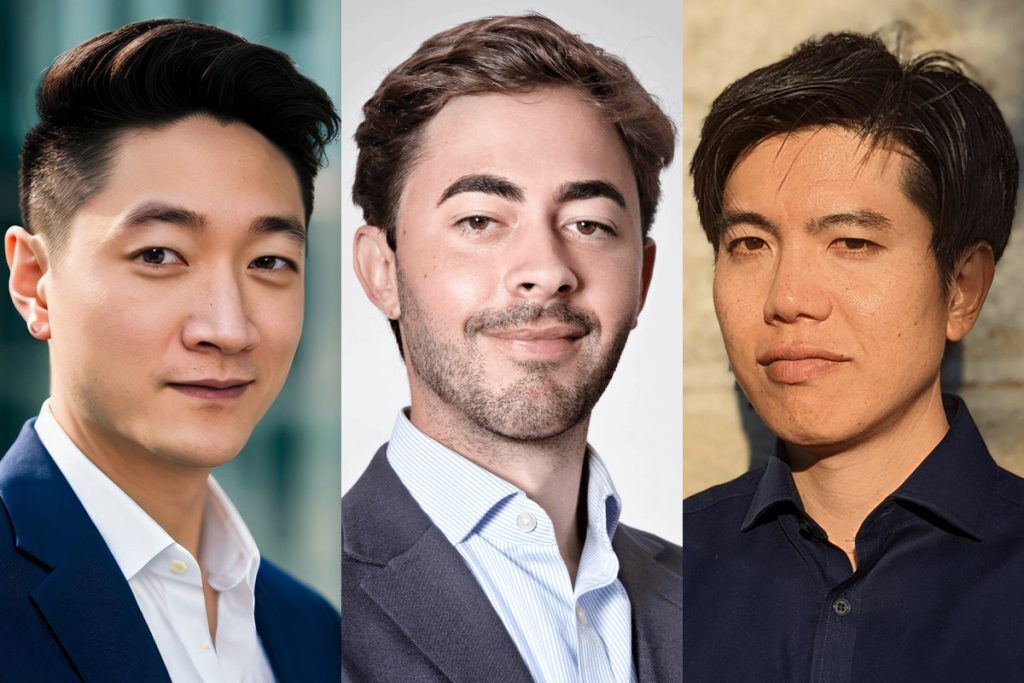
Focused on its mission to support companies that are developing therapeutics targeting aging and extending healthy human lifespan, Healthspan Capital has been one of the most active investors in the LongBio field with a whopping 32 investments in three years. The VC was founded in 2021 by a triumvirate of longevity experience – Sebastian Brunemeier (former principal at Apollo Health Ventures, the largest longevity fund in the world and cofounder at Cambrian Bio, one of the larger companies in the space), Nathan Cheng (co-Founder of the Longevity Biotech Fellowship (LBF), the largest network in the world for LongBio) and Dr Michael Chinen (an AI researcher from Google who leads the firm’s computational diligence); it distinguishes itself through a diversified investment approach, deep expertise in longevity biotech and an extensive network of collaborators, advisors and founders in the field.
By investing in a broad portfolio of companies employing various approaches and modalities, the firm aims to catalyze advancements in rejuvenation biotechnology, which it believes is the future of healthspan medicine. Moreover, Healthspan Capital’s rolling fund structure offers investors a flexible and straightforward way to engage in the longevity sector, making it more accessible to a wider range of stakeholders.
Longevity.Technology: Healthspan Capital’s impact on the longevity sector extends beyond just funding. The firm plays a pivotal role in shaping the future of longevity biotech by not only providing capital but also by leveraging its network of scientific advisors, industry leaders and entrepreneurs to drive innovation. By supporting startups that tackle the biological mechanisms of aging, Healthspan Capital is accelerating the development of therapies that could redefine healthcare – shifting the focus from treating age-related diseases to fundamentally preventing them. This proactive investment strategy not only benefits the companies within its portfolio but also helps build a robust ecosystem where scientific breakthroughs translate into real-world medical solutions.
As mentioned above, one of the key figures behind Healthspan Capital is General Partner Sebastian Brunemeier, a biotech venture capitalist and company builder with a focus on longevity and regenerative medicine. Over the past five years, he has co-founded multiple longevity biotech companies, including Cambrian and Samsara Therapeutics, and we sat down with him to find out more about how Healthspan Capital and its vision is set to serve the need for more capital in the field.
Sebastian Brunemeier on…
Mind the gap
Despite a lot of the excitement around the longevity space, there are huge opportunities that are still, to this day, not really being translated as quickly as we would hope into the clinic and into new medicines. This kind of gap, this mispricing in the market presents an opportunity to investors. It’s almost like being early to Bitcoin or early to investing in internet companies – you can achieve incredible returns if you’re early to this sort of global trend, and we see that unfolding right now in the LongBio field. New drugs that slow the aging process are much more likely to work in the clinic, but traditional pharma relies heavily on contrived animal models of disease that are not recapitulating the human condition, the human disease. It’s getting cheaper and cheaper to get the inputs like omics and to collect data for drug discovery, but Big Pharma is getting worse and worse in terms of R&D efficiency per dollar. Our advisor and friend Jack Scannell coined the term Eroom’s Law to describe the exponentially decreasing R&D efficiency for pharma – so, how do we square the circle? New drugs are getting approved, but they are incremental and often me-too drugs. They don’t have new mechanisms of action, and they don’t meaningfully extend lifespan – we see these market disruptions, these mispricings and these issues as investment opportunities.
From fringe to future
About a dozen years ago when I got into the field, it was fringe, but that’s completely changed in the last decade, which is positive, but the amount of capital that you would expect to come into this field hasn’t really come in yet. Healthspan Capital keeps track of the amount of capital coming in, and on average, it’s only a couple hundred million a year, although there are outliers like Calico and Altos. The field isn’t getting nearly as much capital as you’d expect – for example, the biotech venture field in the United States is between $10 and $20 billion a year, and the longevity space is just getting a small fraction of that and a small fraction of the total NIH budget in terms of geroscience research.
There is a lot of talk about optimizing lifestyle and diet, but to really move the needle needs therapeutics, particularly gene and cell therapy. We believe that gene and cell therapy are the future of medicine; small molecules have had a good run for the last century plus, but they’re inherently limited. We’re going to move into an era of rewriting the code of life with gene therapy and growing organs ex vivo, delivering stem cells and really profound benefit through cell therapies as well – we’ve already seen some of this in the oncology field, for example.
Setting sail for success
The bottleneck for drug discovery is that animal models of disease are not realistic. So in the LongBio field, we actually have a partial solution to this problem, which is instead of testing drugs in an Alzheimer’s model or something contrived, we test drugs in normally aging wild type animals – yeast, worms, flies, fish, mice, &c. If a drug extends lifespan, healthspan and robustness across species that are many millions of years evolutionarily distant, that drug is a lot more likely to work in humans, too. We like to triangulate between a lot of different animal models of disease in addition to wild type aging, and we think that robustness of data package will increase the clinical trial success rate. Even if it increases only by 10%, that will be worth billions to the industry. Once the world realizes this, that we’re basically navigating the stormy waters of drug discovery more efficiently by targeting aging itself, there will be, hopefully, a deluge of capital coming in.
From bear to bull
The last three years have been the worst bear market in biotech history. Biotech’s a relatively new field, and so this has been the worst downturn. There seems to be light at the end of the tunnel with political changes, interest rates supposedly coming down, but it’s been tough. But on a secular basis, we do not see a world in which people and governments become less interested in longevity because there’s this global demographic aging crisis coming, the silver tsunami. Governments don’t have any credible plan to deal with it and we think the best way to intervene in this unfundable global population aging crisis would be to slow aging itself. In the US, healthcare is something like 20% of GDP, and if we could just be healthier, there would be significant dividends paid.
One challenge is dogma and groupthink; false paradigms, false dogmas like the amyloid hypothesis of Alzheimer’s can happen a lot when the scientific capital is concentrated in too few hands. That’s why we like to see more funds getting launched, and democratization of venture to some extent too, which we’re bullish on.
Time to wind back the clock
We firmly believe that longevity biotech – LongBio – is the future of medicine, the apotheosis of medicine. For thousands of years humans have quested after extended healthy lifespan, and it’s always been sort of a pipe dream. But now we can do it in animals and reliably extend healthy lifespan and even, to some extent, turn back the clock a little bit. Most diseases are driven by aging, and we believe that eventually the field is all going to have to converge like a black hole being sucked into the event horizon of longevity and slowing the aging process. We believe the most effective medicines are treating the root cause of disease – and there’s nothing more ‘root’ for most diseases than aging.
It’s going to take probably a little longer than people expect, but it’s not immutable – it all depends on what we do today, whether we can bring capital talent into the field and more capital for the basic research too. That’s what I and my partners at Healthspan Capital, we’ve dedicated ourselves to. We’re not really in this for the money; we’re in this for the healthy lifespan extension. There are a few things that money can’t buy and healthy lifespan extension is currently one of them – we’re hoping to remedy that.
Healthspan Capital has just released The LongBio Report 2025, its report into the leading longevity biotech companies; read the report HERE and check out what we (and the authors) think HERE.

