
Participants saw gains in strength, immune function and metabolic health alongside epigenetic age reductions, according to new research.
A newly published clinical trial evaluating a natural supplement regimen developed by SRW Laboratories has reported statistically significant changes in some biological age clocks and physiological aging measures. The study, conducted by TruDiagnostic and appearing in the journal Aging, assessed the effects of SRW’s Cel System on healthy adults aged 54 to 84 over a 12-month period, using multiple epigenetic clocks, clinical performance tests and body composition measures [1].
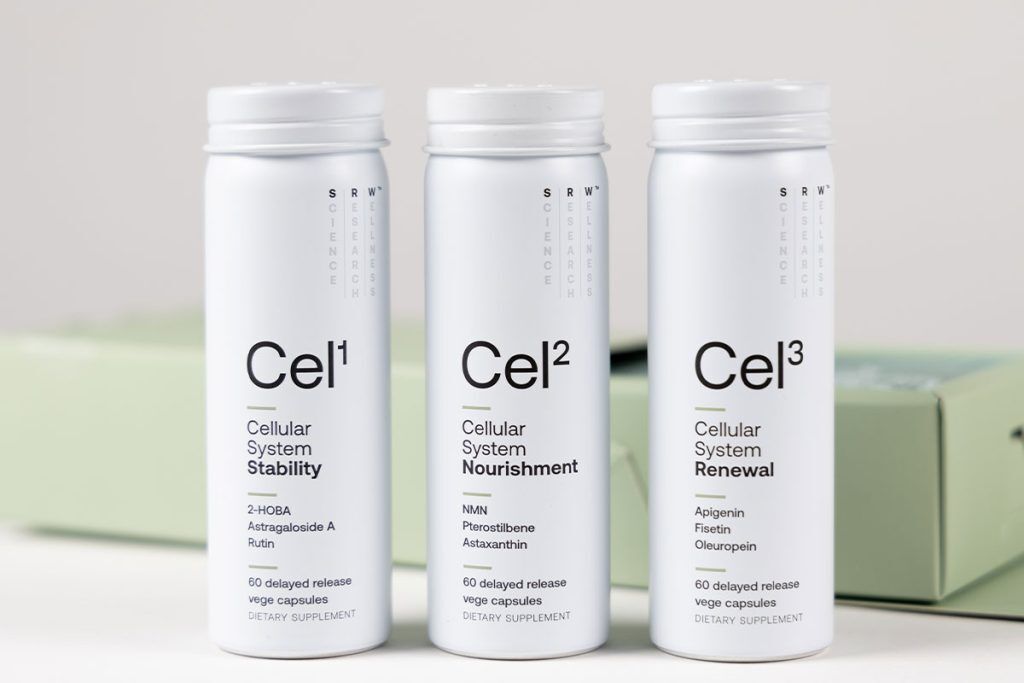
The intervention combined three SRW nutraceutical formulas – Cel1, Cel2 and Cel3 – each containing a blend of vitamins, minerals, polyphenols, antioxidants and other compounds previously associated with cellular health and aging processes. Participants were also encouraged to engage in daily light physical activity and mindfulness practices, but no other lifestyle interventions were introduced during the study period [1].
Longevity.Technology: This study offers a rare multi-dimensional look at how a targeted nutraceutical approach might modulate key biomarkers of aging. By combining epigenetic clock data, physiological outcomes, immune profiling and gene methylation analysis, the authors present a compelling case that based on this preliminary evidence, the Cel System supplement may impact multiple hallmarks of aging. The observed improvements in muscle strength, body composition and reductions in select measures of biological age are particularly noteworthy, given their relevance to healthspan and functional aging.
Yet, as provocative as these findings are, caution is warranted. As the authors note, the study is limited by its single-arm design, lack of placebo control, and relatively small sample size [1]. Without a randomized control group, it is difficult to disentangle the effects of the supplements from confounding factors such as the light exercise and mindfulness practices that were part of the intervention. Additionally, the broad formulation of the Cel System makes it challenging to isolate which ingredients are driving the observed effects – or whether synergistic interactions are essential.
Future research must move toward rigorously designed randomized controlled trials with larger cohorts, ideally including separate arms for individual supplement components. There is also a need for long-term follow-up to assess whether short-term molecular improvements translate into tangible health outcomes such as reduced disease incidence or mortality. Nonetheless, this study offers a bold and methodologically rich foundation for advancing our understanding of how targeted nutraceuticals may reshape the aging process. If validated in future trials, this could mark a pivotal step toward personalized, non-pharmaceutical approaches to enhancing human healthspan.
Study design and key findings
Fifty-one individuals completed the year-long single-arm trial. Biological age was measured through a panel of first-, second- and third-generation epigenetic clocks, including Horvath, GrimAge, OMICmAge and DunedinPACE, as well as organ-specific clocks from the SystemsAge framework.
Across the 12-month period, the mean reduction in biological age as calculated by the SystemsAge clock was 5.71 years, and several other clocks also showed statistically significant deceleration of biological aging. Some measures initially increased at three or six months before returning to baseline or improving by 12 months, suggesting a non-linear response pattern [1]. It is also worth noting that participants began the study with lower biological age acceleration than population-matched cohorts, indicating a relatively healthy baseline profile.
Dr Varun Dwaraka, Director of Bioinformatics and Principal Investigator at TruDiagnostic, emphasized the study’s methodological strengths: “The INiTIATE Trial stands out by demonstrating consistent age optimization across multiple independently developed biomarkers spanning different biological layers, including epigenetic clocks and clinical measures. This level of validation is rare in the supplement industry.”
Epigenetic and immune system changes
In addition to changes in epigenetic clocks, participants demonstrated alterations in immune cell composition. Notably, eosinophil and CD8T cell levels increased significantly by 12 months, while memory B cells, T-regulatory cells and CD4T memory cells showed early declines before stabilizing. Stem cell division rates, estimated via the epiTOC2 model, were also found to decrease, implying reduced cellular turnover and potential lower cumulative stress on proliferative systems [1].
DNA methylation analysis revealed over 1,600 differentially methylated CpG sites between baseline and 12 months, mapping to genes involved in oxidative stress response, protein biosynthesis, mitochondrial function and inflammatory regulation [1].
While the authors observed no statistically significant overall reduction in the inflammatory markers IL-6 or CRP over the 12-month period, they did report a transient spike in CRP at three months before levels returned closer to baseline. Meanwhile, declines in hepatocyte growth factor activator and CCL25 – markers linked to liver and intestinal health – pointed to potential systemic improvements, suggesting the supplement may exert selective benefits beyond classic inflammatory markers.
Functional performance and body composition
Clinical assessments indicated improvements in physical performance, particularly in muscle strength and mobility. Grip strength and chair-stand performance both increased significantly, while the Time Up and Go test returned to baseline values after an initial rise. No changes were observed in balance as measured by the one-leg stand, and flexibility slightly worsened over time.
Body composition measures showed statistically significant reductions in weight, BMI and waist circumference after 12 months of supplementation. These changes were most pronounced in the latter half of the study, with waist circumference decreasing by an average of nearly two inches between six and 12 months [1].
Greg Macpherson, Founder of SRW, expressed enthusiasm for the findings.

“These groundbreaking results underscore the profound impact that targeted nutraceuticals can have on cellular health and ageing, to support healthspan,” he said. “The INiTIATE Trial not only confirms the efficacy of the Cel System but also opens new avenues for enhancing human healthspan.”
Limitations – and next steps
Despite encouraging findings, this study’s design limits the strength of causal conclusions; the inclusion of light exercise and mindfulness also adds potential confounding factors, and the complex formulation of the Cel System makes it difficult to pinpoint which ingredients are responsible for the observed effects.
That said, it is encouraging to see supplement manufacturers applying scientific rigor and publishing detailed results. As the market for longevity supplements expands, well-designed studies help raise the bar – offering consumers better tools to discern what’s truly effective.
Future research should focus on randomized, placebo-controlled trials with ingredient-specific arms and long-term follow-up to determine whether short-term biological changes translate into lasting health benefits.
[1] https://pubmed.ncbi.nlm.nih.gov/40096467/

