
Neurotech firm Somnee secures funding to scale personalized, neuroadaptive sleep aid already piloted by NBA teams.
Somnee, the Berkeley-based neurotechnology company co-founded by sleep scientist Dr Matt Walker, has announced a $10 million seed extension round. The funding – led by Khosla Ventures and joined by TIME Ventures and LEAD VC, among others – will support the launch of Somnee’s second-generation smart sleep headband and its proprietary SmartSleep AI operating system.
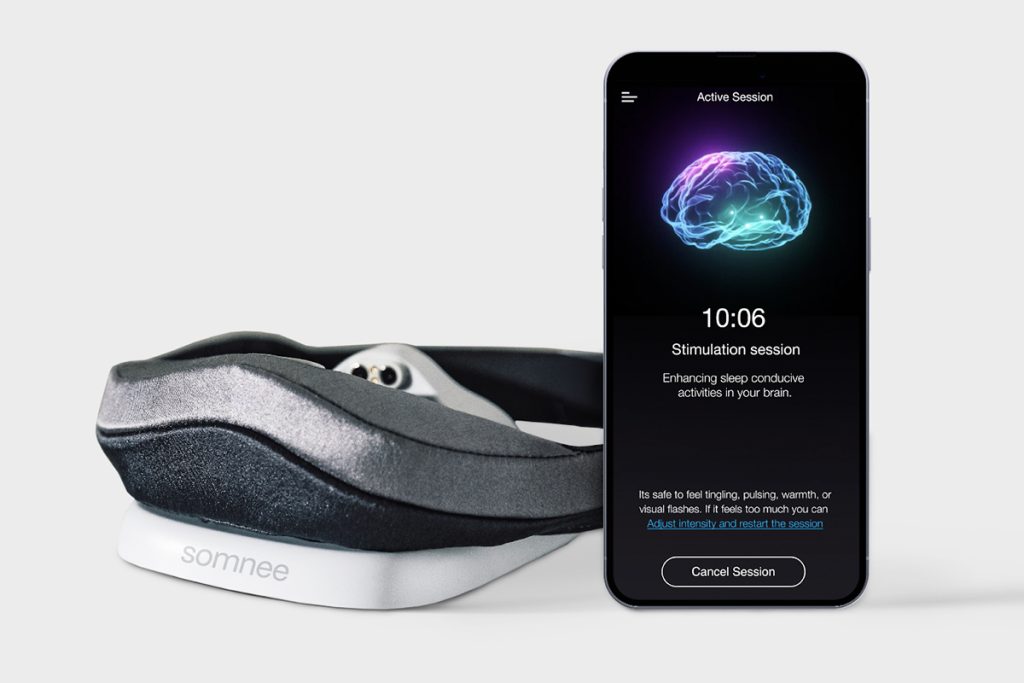
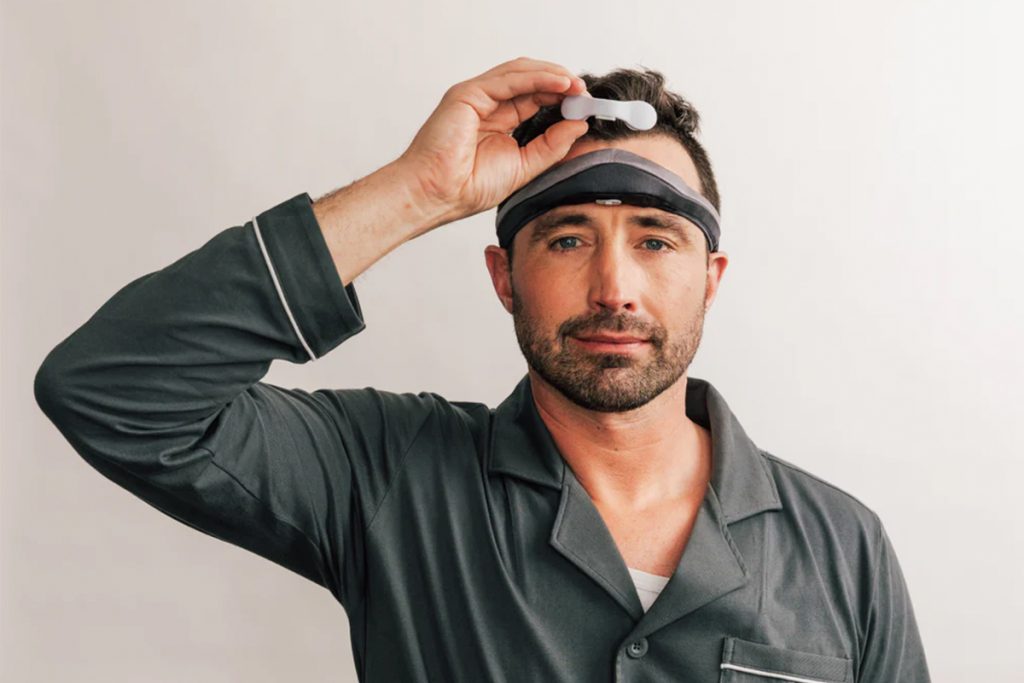
The company, founded in 2022 by Walker and colleagues from UC Berkeley, focuses on enhancing sleep quality through personalized, non-invasive brain stimulation. Its wearable headband uses EEG+ sensors to monitor brainwave activity in real time and delivers tailored pulses to help users fall asleep faster, enter deeper sleep stages more efficiently and remain asleep longer. The system has already been piloted with NBA teams, providing a performance-oriented testbed for the company’s neuroadaptive approach [1].
Longevity.Technology: While nutrition, movement and supplementation have captured the lion’s share of longevity headlines, sleep remains the quiet cornerstone of healthspan – arguably the most overlooked pillar in the optimization stack. We know that quality sleep governs everything from cellular repair and inflammation regulation to cognitive resilience and emotional stability. So it’s refreshing – and timely – to see real neurotechnology applied not to merely track sleep, but to actively improve it. Somnee’s shift from passively observing brainwaves to gently modulating them marks a material evolution: sleep technology is no longer just an informatics problem, but an intervention platform.
That this intervention speaks the brain’s own electrical dialect is not just clever branding – it is a signal of the rising tide of electroceuticals, drug-free therapeutics that offer targeted outcomes without systemic side effects. The fact that this tech is already in pilot use by the NBA is not just a PR flourish – it is a compelling validation that peak human performance is converging with longevity science. Somnee’s SmartSleep AI reflects a broader shift towards responsive, personalized healthtech – an area gaining traction across the longevity ecosystem – and offers a glimpse into what that future could look like: adaptive, intelligent, and grounded in real neuroscience.
Electroceuticals and personalized sleep interventions
Unlike traditional sleep aids that rely on pharmaceutical compounds or generalized behavioral strategies, Somnee’s device engages directly with the electrical signals of the brain. Described by the company as an “electroceutical,” the headband gently stimulates neural pathways to promote the initiation and maintenance of sleep in a way that is both non-pharmacological and personalized.
Walker, whose bestselling book Why We Sleep brought academic sleep research to a mainstream audience, sees this as a natural next step. “We began building this technology to explore a provocative question: could a sleep aid communicate in the same electrical dialect as the brain itself?” he said. “That is, an ‘electroceutical,’ not a pharmaceutical. We’re trying to speak to the brain in its own language – using gentle, precisely timed pulses of electricity, not unlike how a conductor uses subtle hand movements to guide an orchestra into harmony. The goal was to create what I call a ‘blast radius’ of benefit: deeper sleep, more efficient sleep, and a quicker descent into sleep itself by preparing the brain just before sleep, we’re trying to drive more powerful deep-sleep brainwaves, and give you a faster entry into sleep to begin with.”
Elite validation, broader ambition
Somnee’s clinical studies have reported that users fall asleep twice as fast, stay asleep for more than 30 minutes longer and toss and turn one-third less. Compared with leading interventions, it claims effectiveness multiples of four versus melatonin, two versus CBT-i and one-and-a-half versus Ambien [2].
The company’s early validation through partnerships with elite sports teams has helped position its technology as serious, not speculative. “Enhanced sleep can radically improve happiness, energy, and purpose,” said Marc Benioff, founder of TIME Ventures and Chair and CEO of Salesforce. “As such, Somnee isn’t just a health product: it’s a tool for better leadership, deeper compassion, and smarter decisions.”
For lead investor Vinod Khosla, the longevity implications were decisive. “Sleep is the cheapest, most underused longevity drug we have,” he said. “Few factors impact health more critically. Whereas others attempt to track sleep, Somnee’s uniquely non-invasive and drug-free approach tunes it every night with a headband as effortlessly as brushing your teeth. That’s why we backed them from day zero.”
From athletes to everyday
Somnee’s consumer-ready form factor positions it as more than a specialist tool; its ease of use could invite broad adoption, fitting neurotechnology into bedtime routine with the same simplicity as brushing one’s teeth. This scalability could prove critical for enabling population-level impact – a goal that many longevity technologies struggle to achieve. It also opens the door to a significant commercial opportunity: the global sleep aid market, encompassing both pharmacological and non-pharmacological products, is valued at $91.4 billion – a figure that reflects both widespread sleep disruption and growing demand for alternatives to traditional sleep medications [3].
Moreover, improving sleep at scale brings implications beyond individual well-being. With restorative sleep linked to reduced inflammation, improved metabolic health and lower risk of neurodegenerative disease, there is a compelling economic case for sleep optimization – one that appeals not only to insurers and employers, but also to investors looking at the long tail of longevity returns.
Next-gen tech and growing partnerships
The second-generation Somnee headband will integrate more advanced sensing and stimulation, along with a refined SmartSleep AI operating system designed to adapt to nightly variations in neural patterns. The company has already announced collaborations with Equinox Hotels and is exploring new partnerships across the health and wellness ecosystem – including employer wellness programs, clinical research initiatives and healthcare delivery platforms.
A platform for more than rest
Sleep is more than a biological necessity – it’s an active frontier in the pursuit of longevity. As tools like Somnee bring personalised neuroscience into the routines of ordinary users, the idea of sleep as medicine begins to move from metaphor to mechanism. What remains to be seen is how this nightly intervention might evolve into a daily infrastructure for brain health.
Photographs courtesy of Somnee
[1] https://pr.nba.com/nba-launchpad-fourth-cohort/
[2] https://pmc.ncbi.nlm.nih.gov/articles/PMC9872012/
[3] https://www.researchandmarkets.com/report/sleeping-aids

