
Gordian Bio CEO explains how a cutting-edge in vivo testing platform has the potential to transform longevity drug discovery.
One of the most interesting longevity startups to emerge last year was Gordian Biotechnology, which is seeking to transform drug discovery and deliver cures for chronic, age-related diseases. Rather than rely on lab-based screening methods, the San Francisco-based company is leveraging an in vivo platform designed to identify and validate therapies in animal models by mimicking human biology more closely and at scale.
Having only recently launched with $60 million in funding, Gordian is already advancing lead programs in osteoarthritis and obesity, and claims its platform is capable of discovering treatments and cures for a wide range of complex diseases associated with aging.
Longevity.Technology: For decades, most preclinical drug development has adopted a sequential testing strategy, first using ex vivo techniques, which involve studying a drug’s effects in tissues, organs or cells under controlled laboratory conditions, before moving into in vivo testing in animal models. A key challenge with this approach is that ex vivo approaches often struggle with standardization and physiological relevance, compromising their ability to predict how a drug will perform in humans. To find out more about how Gordian intends to address these challenges to accelerate cures for age-related diseases, we caught up with the company’s founder and CEO Francisco LePort.
Back in 2018, Stanford-trained physicist LePort and his co-founder, aging researcher Martin Borch Jensen, saw an opportunity to change the existing drug development paradigm.
“Rather than find targets in an ex vivo system, and then go and test them in vivo, why not just find them and test them in vivo?” LePort explains. “We can’t screen in humans, obviously, but the next best thing is to screen directly in the animals that we have to use before clinical trials anyway. It seemed obvious to us that if you go and find them in the thing that you’re testing them in, then it’s got to be a more effective and more efficient approach.”
Mosaic genetic screening
Central to Gordian’s platform is what it calls “mosaic screening,” a technique that introduces a pooled library of gene therapies into a single animal model. These animals – referred to as “patient avatars” – are selected for their physiological similarity to human disease, and often have acquired the same disease naturally, such as horses with OA and primates with metabolic-associated steatohepatitis (MASH).
Different cells within the animal receive different therapies, creating a cellular mosaic of gene perturbations, and enabling the testing of hundreds, even thousands, of interventions in a single subject. LePort says the approach produces high-resolution efficacy data across a wide array of gene therapy candidates.
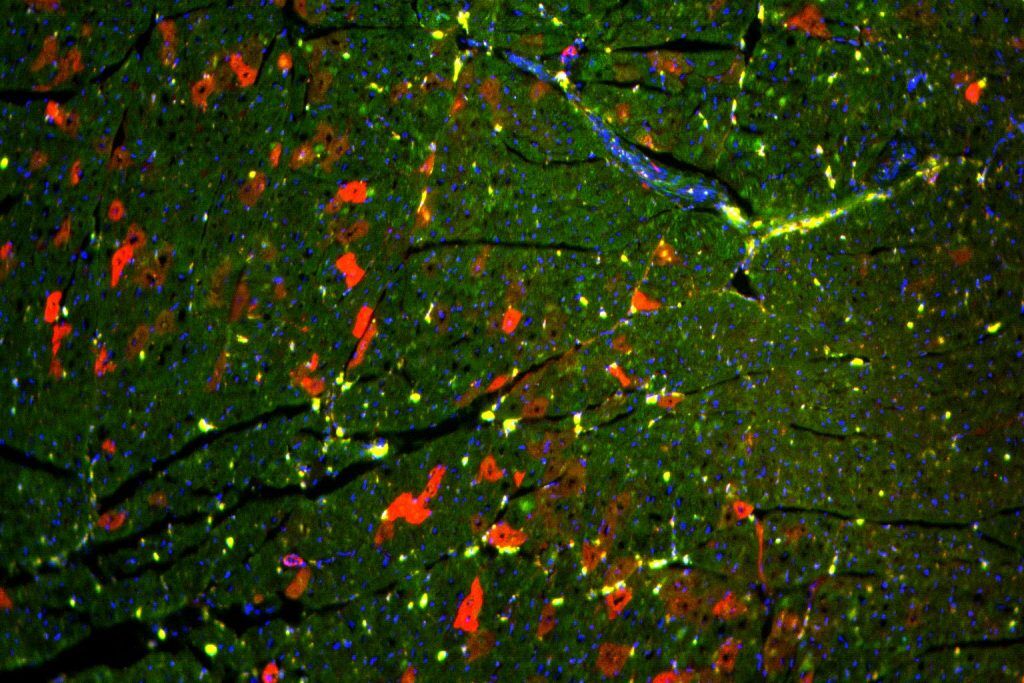
Gordian complements its approach with AI-powered analysis tools to measure how each gene therapy performs in vivo. In proof-of-concept studies, the company claims its screening results have achieved 80% concordance with known preclinical and clinical outcomes in age-related diseases.
“It’s more or less an in vivo version of Perturb-seq,” he explains, referring to a popular method used in lab-based genetic screening. “Instead of altering cells on plastic in a dish, we’re doing it inside a living organism that has the disease.”
Supporting multi-modal therapeutics
Interestingly, although Gordian’s platform is powered by gene therapies, it is not tied exclusively to that modality.
“The platform itself is powered by gene therapy, but we’re modality agnostic,” says LePort. “We think about our platform as, fundamentally, a target discovery technology.”
While gene therapy allows for efficient delivery and testing within the platform, the actual therapeutic candidates that emerge from the screening can be developed as proteins, small molecules, or other formats. LePort says this is important to the Gordian’s strategy, given that many pharmaceutical partners prefer more traditional modalities for prevalent diseases.

“We’re focused heavily on partnerships, particularly in indications such as heart failure and obesity,” he says. “In fact, we had not considered an obesity program until we were actually approached by pharma companies that requested it. We started that in January, and in four months, had it fully up and running. All we have to do is replace the animal model and the tissue that we’re going into, and then we run exactly the same experimental and analytical protocols.”
The company’s lead program in OA works with horses that have naturally developed the condition.
“We have a collaboration with the University of Florida, where we can go directly into large animals that translate much better than the typical mouse models,” explains LePort. “After identifying promising therapies in horses, these are then validated in older mice with spontaneous OA, creating a robust, cross-species confirmation of efficacy.”
According to LePort the company’s approach has already identified a promising candidate with a dual mechanism of action. “It’s both anti-inflammatory and anti-catabolic, addressing both pain and cartilage degradation,” he says.
Beyond OA and obesity, the company has also identified promising candidates for heart failure with preserved ejection fraction (HFpEF) and pulmonary fibrosis. Whether these assets are developed in-house or via collaboration remains an open question.
A focus on cures
LePort is enthusiastic about the transformative potential of Gordian’s platform, particularly for chronic diseases, where existing treatments often focus only on symptom management.
“We’re most interested in developing cures,” he says, using the company’s OA program as an example. “We’ve got a gene therapy candidate that we believe could be a single injection and significantly delay or possibly do away with the need for a total knee replacement.”
Looking ahead, the next 12 months will be focused on deepening partnerships and determining which internal programs to prioritize.
“There’s quite a bit of uncertainty right now in biotech in general, and in particular in the AAV gene therapy space,” the CEO acknowledged. “But whether through gene therapies or other modalities, we are committed to pursuing curative interventions for the chronic diseases that define aging.”
“We’d like to get to that point, when you’re 60 or 70 or 80, that you don’t need to worry about heart failure, or Alzheimer’s, or dementia, or osteoarthritis,” he said. “Finding a cure for these diseases is the North Star for us. That doesn’t mean that there aren’t stepping stones along the way, but that is somewhere we would like to eventually get to.”

