
Leopoldina issues policy paper urging integration of geroscience into national healthcare and research infrastructure.
Germany’s National Academy of Sciences Leopoldina has published a detailed policy paper calling for a profound shift in medical research and practice – one that recognizes aging not merely as a backdrop to disease, but as the central modifiable factor driving most chronic conditions. Framed as both a scientific and societal imperative, the document proposes that healthcare systems should be redesigned around the biology of aging, with preventive geromedicine playing a leading role in tackling the growing burden of multimorbidity in older adults.
The paper, Health-Extending Medicine in an Aging Society – Prospects for Medical Research and Practice, gathers the expertise of thirteen leading researchers and clinicians primarily from Germany, with contributors also based in Singapore, the US and Denmark. It recommends a suite of reforms, including national biobanks, aging biomarker validation, and a coordinated effort to translate research on aging mechanisms into safe, scalable interventions. These proposals are not made in isolation; they reflect what the authors describe as “the imminent challenge” of an aging society in which, by 2035, one in three adults in Germany will be over 65 – and where more than half of that population already experiences multiple chronic conditions.
Longevity.Technology: This report is more than a call for further research – it’s a clarion call to reframe how we think about medicine itself. By positioning aging biology not as an academic subfield but as the foundational framework for 21st-century healthcare, Germany’s National Academy of Sciences is joining others in pushing for a paradigm shift that many in longevity science have long argued is overdue. Geroprotective medicine – the prevention of age-related disease by targeting aging itself – has, until now, largely lived at the translational fringes; this document pushes it center stage, placing it firmly on the policy agenda of a major economy. The report’s authors argue, quite plainly, that treating aging is the only viable response to the looming socioeconomic crisis of multimorbidity. In doing so, they lend the weight of scientific authority to what has too often been dismissed as speculative or “futuristic.”
Yet this is not utopianism – it’s pragmatism, rooted in data and driven by urgency. The Leopoldina team advocates for clinical trials, biomarker integration and national infrastructure on a scale that recalls pandemic-era mobilisation, but directed at chronic disease prevention through the lens of geroscience. Their call to support the repurposing of existing approved drugs, reform regulatory frameworks and train clinicians in geromedicine signals not just new pills, but a new playbook. For longevity biotech and evidence-based interventions, the opportunity is immense: if Germany seizes this momentum, it could not only extend healthspan for millions of its citizens but also define the model that other nations will follow.
From pathology to prevention
Central to the paper’s argument is the need to reallocate medical priorities from disease treatment toward health maintenance and biological resilience. Chronic conditions like cardiovascular disease, dementia and cancer all share aging as a dominant risk factor – often more so than smoking or hypertension – yet conventional medicine continues to treat them in isolation. By contrast, geroscience aims to intervene earlier and more broadly, targeting shared molecular pathways such as DNA damage, senescence and inflammation.
The authors highlight the potential of existing pharmacological tools; GLP-1 receptor agonists and SGLT2 inhibitors, for instance, are already prescribed for diabetes but show promise in reducing risk for multiple age-associated conditions. They also cite ongoing research into senotherapeutics and partial cellular reprogramming as avenues worth advancing – though with careful attention to safety, long-term efficacy and context-specific use [1].
Biobanks, biomarkers and bureaucracy
To bring these tools into clinical use, the paper calls for robust, longitudinal data infrastructure. Aging clocks and other multiomic biomarkers could enable better targeting of geroprotective therapies, as well as clearer assessment of their real-world impact. However, the authors express concern that Germany’s current regulatory framework may hinder progress; national biobanking remains fragmented, and restrictions on animal models risk slowing foundational discovery work.
Public funding, the paper argues, will be essential – not just for new drug development, but for repurposing known compounds whose commercial returns may not justify private sector investment. Education also features prominently in the recommendations; clinicians, policymakers and patients must all understand what geromedicine entails and how it differs from traditional disease-focused care.
International collaboration and a call to action
Dr Andrea Maier, who co-authored the paper and holds the Oon Chiew Seng Professorship in Medicine at the National University of Singapore, welcomed its publication.
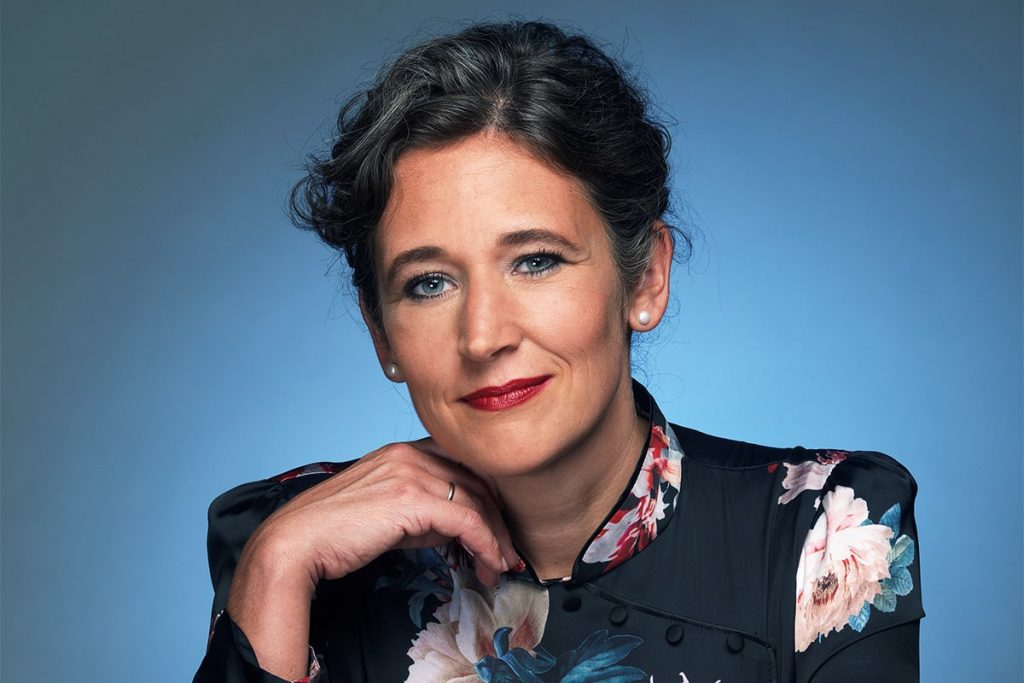
“Today, the German National Academy of Sciences Leopoldina published a powerful discussion paper calling for medicine to address aging itself, rather than waiting to treat age-related diseases like cancer, dementia, or cardiovascular disease,” she wrote in a LinkedIn post. “These steps would transform our ability to maintain health across the lifespan and shift the focus from reactive to preventive and resilience-based care.”
The Leopoldina’s paper situates Germany as a potential leader in the next phase of aging research – not only through its existing scientific strengths, but through its willingness to ask difficult, systemic questions. Whether this leads to reform at the necessary scale remains to be seen; but the framework has been drawn, and the need is no longer theoretical.
A tipping point for global longevity policy?
Germany’s call for geroscience-driven reform does not stand in isolation. Similar momentum is emerging in the US, UK, Singapore and Scandinavia, but the Leopoldina paper marks one of the most detailed roadmaps yet for integrating aging biology into national health policy. What sets this initiative apart is its concrete set of proposals: the creation of a national systems aging consortium to integrate multi-omics data and aging biomarkers; the development of a comprehensive German biobank accessible to researchers; the repurposing of existing drugs with proven safety profiles to accelerate clinical rollout; and the embedding of geromedicine in clinical training and public education to shift the culture of care toward prevention and resilience.
It is a pragmatic vision of what 21st-century healthcare must become – especially as the report warns that half of Germans over 65 already suffer from multimorbidity [1]. The authors argue that public funding should be directed not only toward novel therapeutics but also to safe, scalable interventions such as GLP-1R agonists and SGLT2 inhibitors, whose multi-disease benefits are already evident. Crucially, they emphasize that biological age clocks, if validated and integrated into trials, could become surrogate endpoints for healthspan – a regulatory innovation that could unlock the next generation of preventive therapeutics [1].
For longevity biotech, the opportunity is enormous. Germany is offering more than a policy wish list – it is outlining a translational pipeline that merges basic science, infrastructure, education and clinical trials into a coherent strategy. If implemented, this could serve as the blueprint for other nations facing similar demographic pressures. The longevity field, once seen as speculative, is being recast as essential infrastructure for the future of medicine.

