
Eli Health CEO explains how a new at-home hormone test enables insights that can drive healthspan and longevity improvements.
Last month, US health tech startup Eli Health landed $12 million in funding to launch its hormone monitoring technology, with the goal of building a real-time interface to the human body. The company has developed a device that enables users to instantly test their hormone levels anywhere using a saliva sample analyzed via a smartphone app.
Starting with the infamous stress hormone cortisol, and with tests for progesterone and testosterone soon to follow, Montréal-based Eli is on a mission to make hormone tracking as accessible and routine as checking your heart rate. Following the runaway success of digital wearable health trackers and new innovations like continuous glucose monitors, is hormone monitoring about to become the next big thing in consumer health?
Longevity.Technology: Hormones play a key role in nearly every aspect of human biology, from stress responses, sleep and metabolism, to cognitive performance, reproductive health and even the aging process itself. However, testing for many hormones in a typical “one-off” context fails to capture natural fluctuations and trends, limiting their usefulness in proactive health management. Eli is aiming to change that, giving users the opportunity to continuously track their hormonal patterns over time and intervene early, adapting behaviors based on real biological data. To learn more about the company’s approach, we sat down with co-founder and CEO Marina Pavlovic Rivas.
A data scientist-turned entrepreneur, Pavlovic Rivas says Eli Health, which was founded in 2019, is built with longevity at its heart.
“We believed the future of health would evolve toward a personalized and preventative approach, and that with the right information, you can increase not just how long you live, but how many healthy years you have,” she explains. “To make that possible, people need access to granular health data they can use daily – data that affects how you feel today but also your long-term health outcomes. But this kind of data simply didn’t exist when it came to hormones.

“Take cortisol, often called the ‘stress hormone’ but it’s much more than that – it affects virtually every bodily function. There’s a lot of research showing how cortisol impacts metabolic, cardiovascular, bone, and cognitive health, and even mortality risk. Stress and its downstream effects have a huge impact on both healthspan and lifespan.”
Frequent, affordable, convenient
According to Rivas, the fluctuating nature of many hormones means that testing them once a year doesn’t provide much value in terms of health insight.
“Annual tests are useful for some hormones, but not all,” says Pavlovic Rivas. “Some, like cortisol, fluctuate daily and are highly influenced by lifestyle factors. For these, yearly data isn’t enough to guide meaningful action, just as we don’t measure HRV once a year and consider that sufficient for daily decision-making.”
“Another reason people haven’t been testing hormones frequently is simply because the tools didn’t exist – not because it wasn’t relevant, but because traditional testing was too expensive, too slow, and too inconvenient to be done regularly,” she adds.
What Eli’s founders realized was missing was a way to test hormones frequently, affordably, and conveniently.
“That’s why we built this company,” says Pavlovic Rivas. “We wanted to give people access to their own personalized data, so they can make informed daily decisions and proactively take actions that improve their future health.”
No lab required
Over the past six years, Eli’s team has worked on the hormone testing challenge, coming up with more than a dozen patent-pending inventions on the way. The company’s technology, currently in beta testing, leverages advanced bioassay methods, microfluidics, and AI-powered image analysis to deliver “lab-grade accuracy” within minutes. The system consists of a single-use saliva cartridge that is scanned by a smartphone’s camera, with the Eli app leveraging computer vision algorithms to interpret variations in color intensity and patterns to quantify hormone levels.
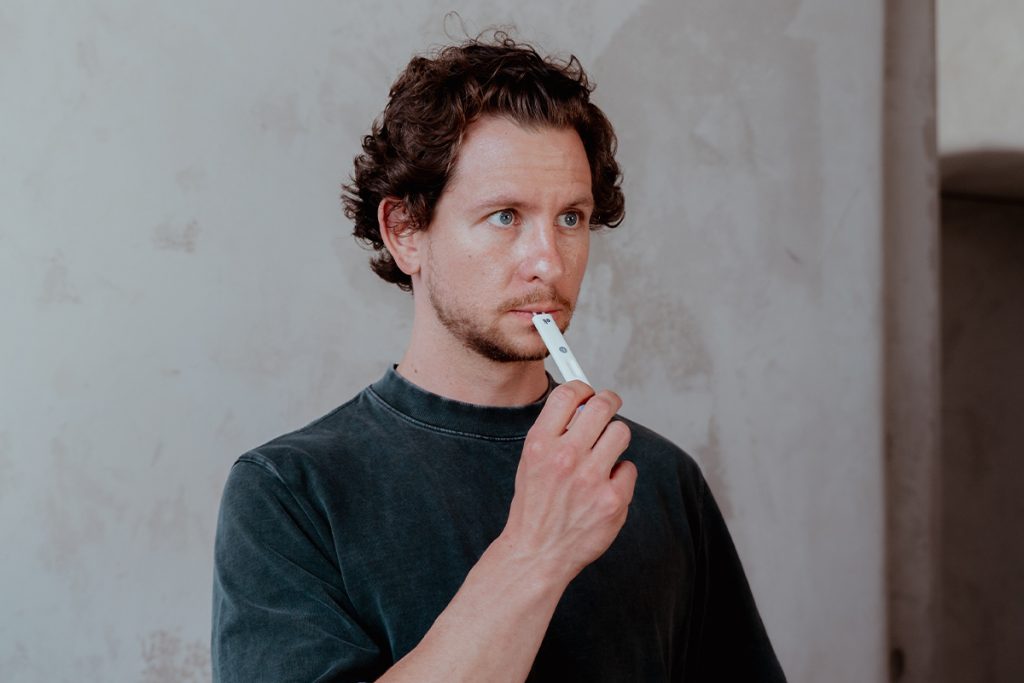
“Measuring hormones like cortisol in saliva isn’t new, but what is new is our ability to use saliva to deliver instant results, without sending samples to a lab,” says Pavlovic Rivas. “The app interprets the results instantly, providing not only hormone levels but also scores and personalized recommendations. We see our product as closer to devices like Oura or WHOOP than traditional lab tests because it gives users actionable data directly in a mobile app, empowering daily decisions.”
The recommendations made by Eli’s app are predominantly focused on behavior changes.
“Lifestyle changes make a huge difference,” says Pavlovic Rivas. “That’s one reason we started with cortisol – it’s critical to many aspects of health, and it responds well to non-pharmaceutical interventions. Studies have shown how cortisol can be modulated through things like time in nature, cold exposure, heat exposure, light exposure at specific times of day, sleep-wake cycles and stress management.”
What is a ‘healthy’ range?
One of the most interesting early questions addressed by Eli relates to the reference ranges to adopt in its tests. The company reviewed all existing research to understand the documented ‘normal’ ranges for cortisol and other hormones.
“For cortisol, the literature suggests a common reference range across age and gender,” says Pavlovic Rivas. “However, in our beta user base, we see a lot of individual variation. Cortisol naturally follows a diurnal curve: high in the morning, low in the evening. If that curve is inverted – low in the morning, high in the evening – it’s often linked to various symptoms. But even if someone’s absolute levels differ from the midpoint of the optimal range, following the correct curve shape can still be considered healthy.”
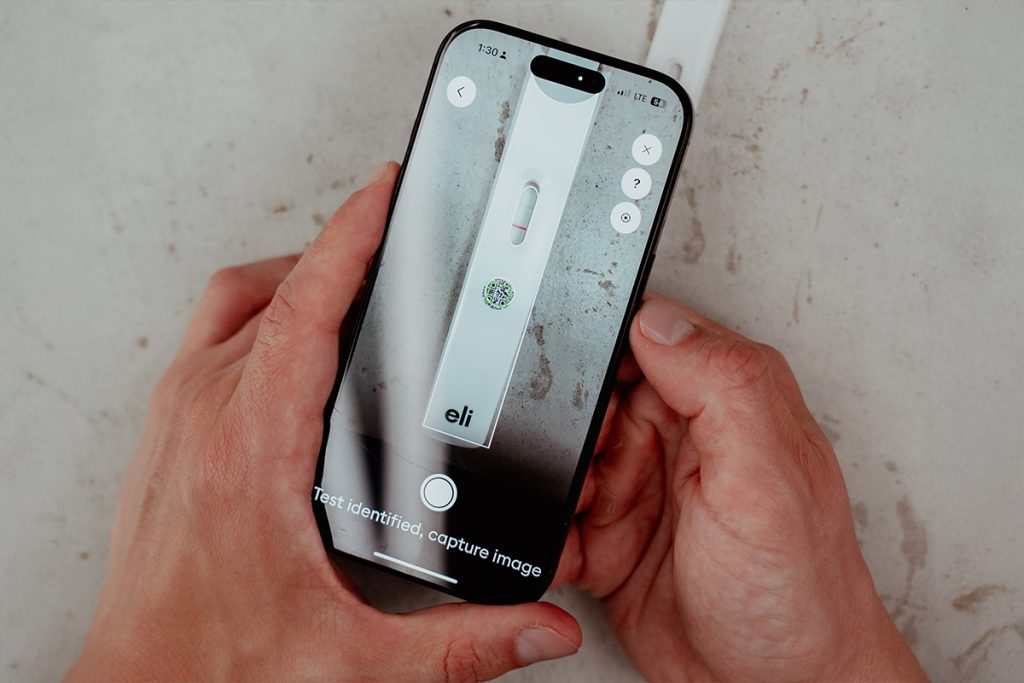
Eli’s app shows users how their levels compare to standard benchmarks and how they fluctuate relative to their own baseline.
“For example, if someone typically measures 2 ng/mL in the morning and one day it’s 4 ng/mL, both may be within the normal range, but the user can still see and understand that variation,” explains Pavlovic Rivas. “Over time, as we build this unique dataset, we may be able to establish more personalized reference ranges – something that has not yet been well explored in the literature.”
The recommendations provided by the Eli app depend on the shape of the individual’s cortisol curve.
“For example, if cortisol is low in the morning and high in the evening, we might recommend avoiding late-day high-intensity exercise,” says Pavlovic Rivas. “With these insights, users can prioritize actions and see which ones actually affect their biology. While existing metrics like sleep score or HRV are useful, cortisol often provides a different perspective.”
How often to test?
In terms of testing frequency, Pavlovic Rivas says the guidance will depend on the hormone being tested.
“For cortisol, we recommend at least four data points per month, with two samples on the same day – morning and evening – to capture the diurnal curve,” she says. “That’s based on biology: cortisol peaks within an hour to 90 minutes of waking, then declines throughout the day, hitting its lowest point in the evening.”
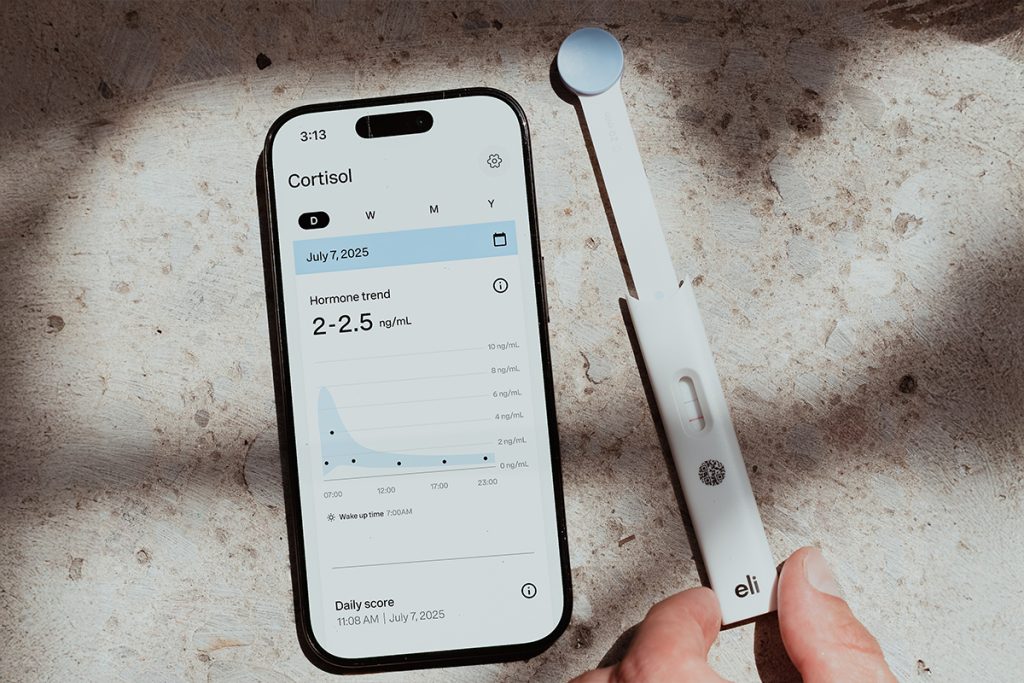
While two days of testing a month provides enough context to establish a baseline and track changes for most people, some users may want to collect more data.
“Some users, like athletes, choose to test much more frequently – sometimes over ten times a day during training or competition periods – to see how their cortisol responds to different stressors,” says Pavlovic Rivas. “So testing frequency is flexible: some are happy with the minimum, while others want more granular insights.”
Each saliva test cartridge currently costs $8, so the minimum recommended four tests per month would cost users around $32 a month on a subscription model. “As we scale, we expect to lower costs even further,” she adds.
New tests incoming
With its new funding in the bank, Eli is now focused on commercializing its technology. The beta product is already available to consumers, and the company plans to officially launch its cortisol test in Q4 this year, with subsequent hormones to follow.
“We are focused on getting this into the hands of millions of people, and developing and launching new hormone tests,” says Pavlovic Rivas. “We expect progesterone to launch this year and testosterone shortly after. Progesterone is particularly relevant to women’s health, although it’s also present and important in men. And while testosterone is often associated with men’s health, it also plays an important role in women’s health, including during perimenopause and for conditions like PCOS and endometriosis.”

Initially, the company plans to offer separate tests for each hormone, but that may change.
“Different hormones have different use cases and testing frequencies, so individual tests makes sense at this point,” says Pavlovic Rivas. “However, from a technological standpoint, combining multiple hormones in one test is possible and something we may offer in the future.”
Continuous monitoring in future?
Looking to the more distant future, Eli also has its eye on the possibility of developing a continuous hormone monitoring technology… a CHM, if you will.
“When we started the company, our original vision was a patch measuring hormones in sweat or interstitial fluid,” says Pavlovic Rivas. “But novel wearable formats introduce layers of biological, regulatory, and manufacturing risk that can take over a decade to solve—and, assuming feasibility, still price most people out. We wanted a product as easy as brushing your teeth and as affordable as a cup of coffee, so we placed a bold bet on saliva.”
“Due to its inherent limitations, continuous hormone monitoring will likely follow a similar adoption curve to CGMs: starting in clinical use, then moving into consumer markets over time. For now, and many years to come, we believe saliva testing offers the best balance of accessibility and affordability for mass adoption.”
While Eli remains fully focused on its consumer offering, Pavlovic Rivas acknowledges that the technology also has potential in clinical settings.
“We see a clear opportunity in clinical markets,” she says. “For example, for managing adrenal conditions like Cushing’s, or monitoring levels those on hormone replacement therapy during perimenopause, want to monitor levels to adjust treatment. That said, clinical applications are something we’ll pursue in the future – our focus right now is consumer health.”

