
Exclusive: Investor Allen Law’s new flagship aims to blend prevention, AI and health coaching as longevity economy expands.
The longevity sector is steadily building not just therapies and technologies, but also the infrastructure through which they can be delivered. In Singapore, Allen Law, entrepreneur and Principal at Seveno Capital, has announced the launch of Morrow, a 38,000 sq ft center that aims to extend healthspan by combining diagnostics, coaching and AI-driven personalization. The flagship sits within an 80,000 sq ft Longevity World development at Coleman Street and is backed by a planned US $156m investment over the next five years, starting with US $15.6m for its set-up and technology.
Law, who has grown Park Hotel Group into a regional hospitality portfolio and co-founded multiple fitness ventures, including MOVE [REPEAT] and REVL Training, is positioning Morrow as part of the US $8 trillion “longevity revolution” [1]. He argues that demographic change demands new approaches. “The World Health Organization estimates that one in six people will be aged over 60 by 2032 [2]. This necessitates a new focus on optimizing lifelong wellbeing and vitality.
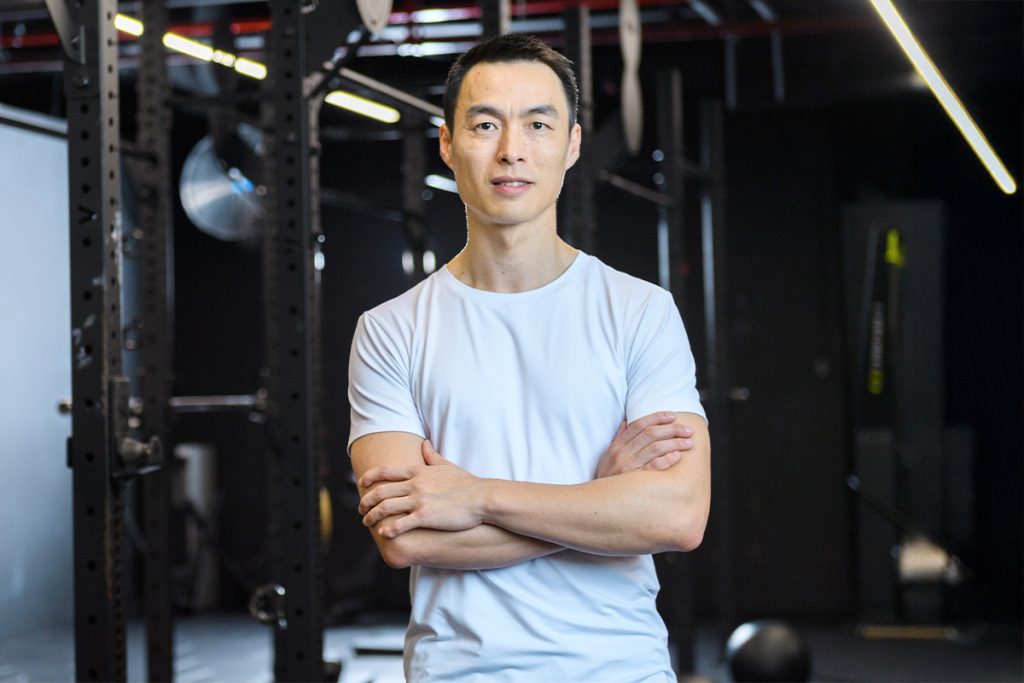
Morrow will promote a model of ‘lifelong health’ – where wellbeing is maintained and restored through science, human connection, and innovation. We’re planning to transform how people live, age, recover, and thrive – no matter their background or starting point.”
Longevity.Technology: The launch of Morrow is a reminder that the longevity economy is not confined to labs, biotechs and investment forecasts; it is also about the infrastructure that will enable people to live better for longer. If geroscience provides the molecules, diagnostics and data, then centers like this propose to deliver the translation into everyday lives – not only by offering hydrotherapy pools and health coaches, but by generating real-world data that might feed back into research. The ambition is clear: to integrate prevention and personalization into daily life, and to do so in a way that broadens access beyond traditional high-end models.
Singapore as the chosen location is telling – a city-state eager to position itself as a hub for longevity and preventive health, yet one with stark inequalities in access to care. Morrow speaks the language of democratization and data, and its success will rest on whether these aspirations are realized in practice. Still, the ambition to link lifestyle interventions with research collaborations deserves attention; longevity science will need not just molecules and mouse models, but also human infrastructure that can capture the messy reality of behavior change and healthspan. If the longevity revolution is indeed an $8 trillion wave, then the challenge is to ensure the tide lifts more than luxury yachts.
Personalization and prevention
Morrow’s model begins with detailed diagnostics to measure the gap between current and optimal health status, before generating a personalized plan powered by data, wearables and AI. Coaches and clinicians will then deliver tailored interventions, with continual monitoring and community support forming part of the offer. The organization also plans to build a research engine through anonymised lifestyle data, working with universities to identify patterns that may inform wider healthspan science.
Dr Miina Öhman MD, PhD, who specializes in cardiometabolic disease and lifestyle interventions, highlights the preventive ambition. “It is essential for the world to transition toward a model of sustainable healthcare, with an emphasis on prevention. This demands that we bring lifestyle interventions and the support for health behavior change to the forefront of care for everybody, not just for the ultra-wealthy.”

Law told Longevity.Technology that Morrow’s prevention model aims to shape the very trajectory of aging, not just short-term wellness.
“A personalized prevention model moves beyond short-term wellness by focusing on the long-term patterns that shape how people age,” he said. “Using individual data can identify risks earlier and then holistic strategies can be tailored to maintain resilience. Unlike generic prevention, it tracks changes over time, building data about how different interventions influence the overall trajectory of life, which creates real-world evidence for science. Ultimately, personalized prevention becomes a pathway to extending the human healthspan – our years of vitality and independence – not just improving daily wellbeing.”
A sector positioning
Morrow’s leadership team spans clinical, coaching and technology expertise, with Chief Technology Officer Yaron Turpaz bringing experience in pharma, genomics and AI-enabled precision health. He is joined by Öhman, a physician-scientist specializing in cardiometabolic disease, Chief Operating Officer Louis Island, a pioneer in integrated care platforms, and Head of Health Coaching Simon Matthews, a global expert in behavior change. The center is also pitched as more than a wellness destination; Law emphasizes scaling internationally and making personalized services available to a broader base of clients. Early bookings open in September 2025, with the Singapore flagship expected to launch in Q4.
Positioning Morrow within the global longevity economy, Law stressed that the center’s value lies in connecting research with everyday health practice.
“Centers like Morrow aren’t competitors to biotech; they’re the commercial and evidence bridge – turning lab advances into repeatable, data-rich care pathways, and feeding back the real-world signals that biotech needs,” he told us. “As the UBS framing suggests, that bridge sits inside a multi-trillion-dollar, cross-sector opportunity that extends well beyond healthcare and into how consumers live, spend, and seek longer, happier lives.”
Longevity infrastructure
As the sector grows, the role of hubs like Morrow will be scrutinized for their contribution to both individual health and the wider research ecosystem. By linking AI-driven personalization, lifestyle interventions and university collaborations, the venture aims to position itself firmly within the longevity economy rather than on its fringes. Its ultimate test will be whether it can bridge aspiration and evidence – helping to extend not only lifespan, but healthspan.
Photographs courtesy of Morrow
[1] https://drive.google.com/file/d/1C1O4YS3HyDGvFXURRTmvSbaFhwfbF1RY/view?usp=sharing
[2] https://www.who.int/news-room/fact-sheets/detail/ageing-and-health

