
Shedding light on how targeted wavelengths stimulate cells, boost repair and support skin, hair, and healing.
Red light therapy is where light meets longevity science. By bathing the body in specific wavelengths of red and near-infrared light, this gentle, non-invasive approach encourages cells to repair, regenerate and perform at their best. Once confined to medical and research settings, it’s now being embraced in clinics and wellness spaces alike for its potential to boost skin health, hair growth and tissue recovery – all by tapping into the body’s own cellular energy systems.
What is red light therapy?
Red light therapy works by exposing the body to specific wavelengths of light that cells can absorb and respond to.
When cells take in these wavelengths, their activity is stimulated, which encourages growth, repair, and in some cases, rejuvenation of tissues. Red light therapy is part of a broader concept known as photobiomodulation, the use of light to positively influence human biology.
In the clinic
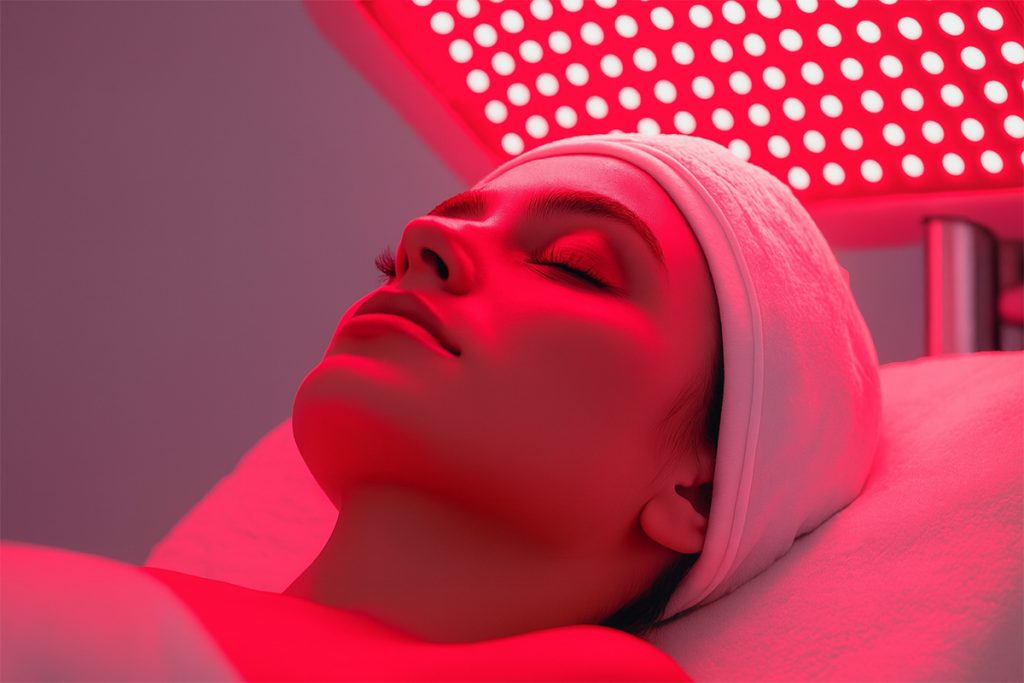
In a clinical setting, red light therapy is a calm, non-invasive treatment designed to harness the body’s own repair systems. Sessions typically take place in a dedicated room where panels or flexible light arrays emit precise red and near-infrared wavelengths across targeted areas of skin. The process is painless and requires no downtime – most people simply relax for 10 to 20 minutes while the light gets to work. Over a series of sessions, cellular activity is gradually enhanced, supporting collagen renewal, circulation and tissue repair. Clinics may tailor wavelength combinations, exposure times and treatment frequencies to individual goals, whether that’s rejuvenating skin, encouraging hair regrowth or promoting recovery after procedures.
What’s the science behind the tech?
Its medical roots go back to cancer research. Early studies combined light exposure with topical drugs, using very precise wavelengths to target cancer cells. The idea was to encourage the cancer cells to die off while leaving room for healthy new cells to grow.
Variations in wavelength allow light to interact with tissues in multiple ways, creating a spectrum of possible effects. Among the most studied and evidence-backed are hair growth and skin health [1].
Relatively shorter red wavelengths are more strongly absorbed near the skin surface and under certain conditions can be used to remove or damage abnormal cells. Relatively longer red and near-infrared wavelengths penetrate more deeply and are better suited for healing, boosting cell growth, and stimulating collagen and other repair molecules.
For skin, one of the key targets of red light therapy is collagen, the protein that gives skin its structure, firmness, and elasticity. Collagen naturally declines with age, leading to wrinkles, fine lines, and sagging. Red light therapy and other phototherapy techniques can stimulate fibroblasts, the cells responsible for producing collagen, promoting new collagen formation without invasive procedures. This process, often referred to as photorejuvenation, can improve skin texture, elasticity, and overall appearance [2].
For hair, studies suggest that red light penetrates shallowly into the skin, stimulating follicles and promoting growth. It also appears to improve blood circulation by widening blood vessels, a process known as vasodilation, which supports follicle activity.
Evidence suggests red light therapy may:
- Stimulate collagen production for stronger, more elastic skin.
- Increase fibroblast activity, the cells responsible for producing collagen.
- Boost blood flow to tissues.
- Reduce inflammation within cells.
What can red light therapy do for you?
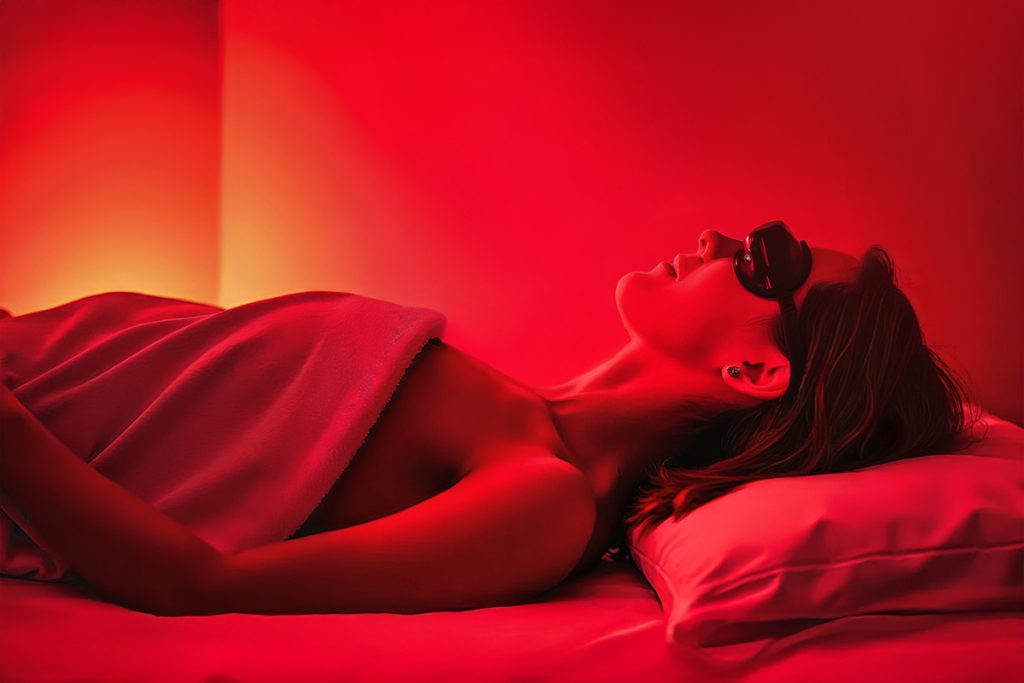
Red light therapy offers a range of promising benefits, particularly for skin, hair, and wound healing. Its effects are most evident when treatments are applied consistently over repeated sessions, as a single exposure is unlikely to produce lasting results [3].
1. Healthier, younger-looking skin
One of the best-supported uses of red light therapy is improving the appearance and function of skin. By activating fibroblasts, red light therapy encourages new collagen formation, improving skin texture, firmness, and overall appearance.
2. Acne and inflammatory skin conditions
Red light therapy is increasingly used as a safe, non-invasive treatment for inflammatory acne. Acne arises when the skin’s microbiome becomes imbalanced, allowing bacteria like Cutibacterium acnes to proliferate, triggering inflammation and excess sebum production. (3). With regular sessions, it can provide help with :
- Reducing acne-causing bacteria.
- Regulating oil production and unclog pores.
- Calming inflammation, reducing redness and swelling.
3. Faster wound healing and improved scars
Red and near-infrared light therapy can accelerate wound healing, including for chronic skin lesions, post-surgical scars, and hypertrophic or keloid scars. PBM supports multiple stages of healing:
- Inflammatory phase: Reduces prolonged inflammation and pro-inflammatory cytokine activity.
- Proliferative phase: Stimulates fibroblasts to produce collagen, elastin, and extracellular matrix components, while enhancing angiogenesis and re-epithelialization.
- Remodeling phase: Supports collagen crosslinking and tissue strength, improving the appearance and resilience of healed tissue.
4. Hair growth
Red light penetrates shallowly into the scalp, stimulating follicles and promoting hair growth. It also enhances blood circulation through vasodilation, providing follicles with nutrients and oxygen necessary for healthy growth. Regular, repeated sessions are key to seeing consistent improvements [4].
5. Emerging applications
Researchers are exploring the use of red light therapy for athletic recovery, radiation dermatitis, and other inflammatory or degenerative conditions. Early trials suggest potential benefits in reducing muscle soreness, supporting tissue repair after radiation, and limiting inflammation, although more evidence is needed to define optimal protocols and outcomes.
Discover clinics offering science-based longevity interventions in our Longevity Clinics Directory – CLICK HERE.
[1] https://med.stanford.edu/news/insights/2025/02/red-light-therapy-skin-hair-medical-clinics.html
[2] https://doi.org/10.3390/ijms25084483
[3] https://doi.org/10.1080/14764170600607731
[4] https://doi.org/10.1080/09546634.2020.1838889

