
Longevity.Technology System users:
To understand how B vitamins benefit your immune system and optimize your overall health:
- Download the LT System app on your Android or Apple smartphone.
- Open the LT System app and select ‘Health Insights.’
- Under ‘Immunity,’ scroll down and find ‘B Vitamins Benefit to Your Immune System.’
- Now, scroll down to find your results and recommendations.
Not a user yet?
That’s OK; you can sign up for your Epigenetic & DNA test here.
Imagine discovering a secret weapon for a stronger immune system—would you take it? B vitamins, often overlooked in our daily diet, are crucial for maintaining robust immunity and overall health.
Essential nutrients work behind the scenes to power your body’s defenses, keeping you energized, healthy, and ready to face any challenge. Here’s why you need to pay more attention to B vitamins and how they can improve your immune health.
Why are B vitamins important in the body?
These powerful nutrients are key in keeping your body’s defenses strong and ready to fight off infections. Let’s explore five compelling reasons you need B vitamins for a stronger immune system:
1. Boosts energy levels
You need B vitamins like thiamine (B1), riboflavin (B2), niacin (B3), pantothenic acid (B5), and pyridoxine (B6) to transform the food you eat into energy that you can use [1]. This energy isn’t just for daily activities; it’s crucial for your immune cells to function effectively.
When your immune cells are energized, they can respond more rapidly and efficiently to threats, keeping you healthier. Include foods high in these B vitamins in your diet, such as legumes, beef, eggs, and whole grains, to help maintain a robust immune system and increase your vitality.
2. Enhances cellular health
Healthy cells are fundamental to a robust immune system. B vitamins like B7 (biotin) and B9 (folate) are crucial for cell growth and repair, ensuring that your body can produce new, healthy cells and fix any damage to existing ones.
This is particularly important for immune cells, which need to be in top condition to fight off infections effectively. A diet rich in B vitamins supports cellular health, helping your immune system respond quickly and efficiently to pathogens.
Incorporate foods such as leafy greens, eggs, nuts, and seeds to ensure you’re getting enough B vitamins for optimal cellular health and a stronger immune defense.

3. Aids DNA synthesis and repair
B vitamins are essential for repairing and building DNA, which is crucial for maintaining healthy cells, including those that fight infection. Vitamins B9 (folate) and B12 (cobalamin) are particularly important for these processes [2].
Proper DNA function ensures that your immune cells can multiply and repair themselves effectively, enhancing their ability to recognize and combat harmful invaders. A diet rich in these B vitamins supports these critical functions, contributing to overall immune strength.
Include foods like leafy greens, meat, dairy products, and fortified cereals to ensure adequate intake of B9 and B12, promoting robust DNA synthesis and repair for a stronger immune system.
4. Reduces inflammation
Chronic inflammation can undermine your immune system, leaving you more vulnerable to illnesses. B6 (pyridoxine) is a key player in regulating inflammation within the body. By reducing inflammation, B6 helps maintain a balanced immune response, ensuring your body can effectively combat infections without overreacting.
Keeping inflammation in check is vital for long-term immune health. To support this, include foods rich in B6, such as chicken, fish, potatoes, bananas, and chickpeas, in your diet. These foods help manage inflammation naturally, boosting your immune system’s resilience and overall health.
5. Supports mental health
A strong mind directly supports a strong immune system. B vitamins, particularly B12 (cobalamin) and B6 (pyridoxine) are crucial in maintaining mental health by regulating mood and reducing stress.
When mental health is optimal, the body’s immune response is more robust, effectively warding off infections. It is important to make sure you are getting enough of these vitamins because chronic stress and poor mental health can damage the immune system.
Incorporate foods like fish, meat, eggs, dairy, and fortified cereals to boost B12 and B6 levels. Keeping your mind healthy through proper nutrition helps maintain a resilient immune system, ready to protect you against illnesses.
How do I get enough vitamin B?
Adequate B vitamin intake is essential for a robust immune system and overall well-being [3]. Here’s how you can ensure you’re getting the right amount of these essential nutrients:
Dietary sources
Ensuring your diet includes a variety of B vitamin-rich foods is essential for maintaining a strong immune system. Here are some excellent dietary sources:
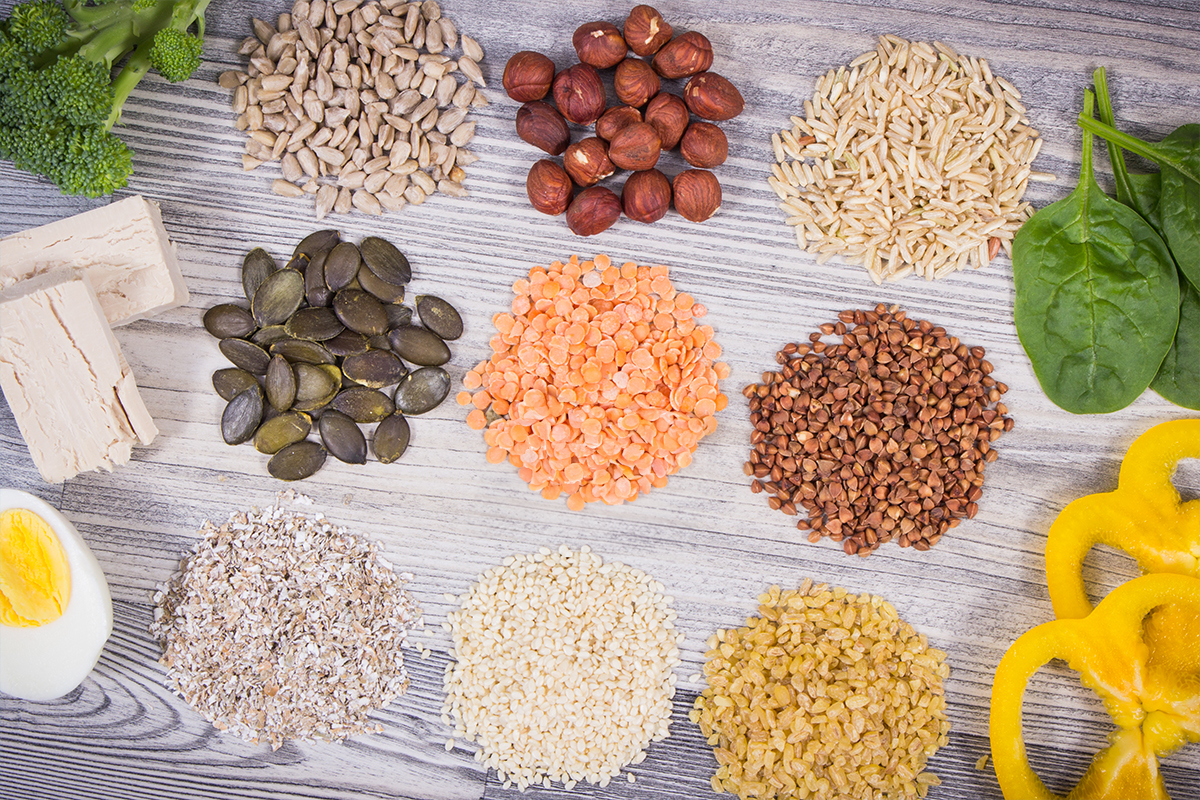
- Whole grains: Brown rice, oatmeal, and whole wheat bread are rich in B1 (thiamine), B2 (riboflavin), B3 (niacin), and B9 (folate).
- Meat: Turkey, beef, and chicken are examples of lean meats that are high in B1, B2, B3, B5 (pantothenic acid), B6 (pyridoxine), and B12 (cobalamin).
- Fish: High-fat seafood, such as salmon and tuna, are excellent providers of B6 and B12.
- Eggs and dairy products: Eggs, milk, cheese, and yogurt supply B2, B5, B7 (biotin), and B12.
- Legumes: Chickpeas, lentils, and beans are rich sources of B1, B2, B3, B5, B6, and B9.
- Nuts and seeds: Almonds, sunflower seeds, and flaxseeds provide B1, B2, B3, B6, and B9.
- Leafy greens: Spinach, kale, and broccoli offer B2, B9, and B7.
- Fortified foods: Many cereals and bread are enriched with B vitamins, particularly B12, which is crucial for vegetarians and vegans.
By including these foods in your diet, you can naturally fulfill your B vitamin needs. A varied diet not only supports immune health but also enhances overall well-being.
Supplementation
It can be challenging to meet daily B vitamin requirements exclusively through food, especially when considering dietary limitations or health concerns. Vitamin B supplementation may be a viable solution.
- Multivitamins: Taking a daily multivitamin can provide a balanced dose of all the B vitamins, ensuring you meet your daily requirements.
- Individual B vitamins: If you need to boost a specific B vitamin, such as B12 or B6, individual supplements can be more effective. This is particularly important for individuals with specific deficiencies or increased needs.
- B-complex supplements: These supplements contain all eight B vitamins in one pill, making it convenient to ensure you’re getting a balanced intake.
Supplementation can be a practical way to support your immune health and overall well-being when dietary intake alone isn’t sufficient.
Balanced diet and healthy habits
Sustaining a healthy overall diet consisting primarily of whole foods and a balanced diet is essential to guaranteeing sufficient consumption of B vitamins. Here are some tips to incorporate these nutrients into your daily routine:
- Include a variety of B vitamin-rich foods such as whole grains, lean meats, fish, eggs, dairy products, legumes, nuts, seeds, and leafy greens.
- Choose nutrient-packed snacks like yogurt, almonds, and sunflower seeds.
- Opt for steaming and grilling to preserve the B vitamins in your food.
- Drinking plenty of water helps with the absorption of water-soluble vitamins like B vitamins [4].
In addition to a balanced diet, healthy habits such as regular exercise, adequate sleep, and stress management are essential for optimal immune function.
These practices not only enhance your intake of B vitamins but also contribute to overall wellness and a stronger immune system.
Get enough B vitamins for immune health with insights from Longevity.Technology Epigenetic & DNA Test
Adequate B vitamin intake is crucial for a strong immune system and overall health. However, determining your specific nutritional requirements and how to fulfill them can be difficult.
The Longevity.Technology Epigenetic & DNA Test analyzes your genetic and epigenetic markers to identify how your body processes and utilizes B vitamins. Going beyond typical nutritional recommendations, this test offers customized dietary plans informed by your specific genetic data.
- Personalized nutritional guidance: The test results highlight your specific needs for various B vitamins, such as B12, B6, and folate.
- Insights into absorption and metabolism: This test helps you make informed decisions about diet and supplements by measuring your body’s efficiency in processing B vitamins.
- Identification of deficiency risks: Certain genetic markers can indicate a higher risk of B vitamin deficiencies. The test identifies these markers, enabling you to take proactive measures.
- Tailored lifestyle recommendations: Beyond dietary advice, the test provides lifestyle recommendations to support your overall health. This includes tips on exercise, stress management, and other factors that can influence your B vitamin levels and immune health.
In closing
Understanding the importance of B vitamins for a stronger immune system is just the beginning. Taking proactive steps to ensure you’re getting enough of these essential nutrients can significantly impact your health and well-being.
Developing healthful routines can also help your immune system. Don’t wait until symptoms of B vitamin deficiency appear. Take action today to improve your diet and consider supplements if necessary.
Your immune system relies on these nutrients to function optimally, protecting you from illness and keeping you energized!
Need to improve your immune health? The Longevity.Technology Epigenetic & DNA Test can detect lifestyle factors impacting your B vitamin levels and provide individualized strategies to fortify your immune defenses.
FAQs
Why are B vitamins important for the immune system?
B vitamins support the immune system by boosting energy levels, enhancing cellular health, and aiding DNA synthesis and repair. They also help reduce inflammation and support mental health, which is crucial for immune function.
Which foods are rich in B vitamins?
Foods rich in B vitamins include whole grains, lean meats, fish, eggs, dairy products, legumes, nuts, seeds, and leafy greens. Fortified cereals and bread also provide a good source of B vitamins.
What are the symptoms of B vitamin deficiency?
Symptoms vary by vitamin but commonly include fatigue, irritability, poor concentration, skin rashes, and anemia. Specific deficiencies can also lead to hair loss, numbness, and memory problems.
Is it safe to take B vitamin supplements?
B vitamin supplements are generally safe when taken as directed. However, excessive intake of certain B vitamins can cause adverse effects, so it’s best to consult a healthcare professional before starting supplements.
[1] The Journal of Nutrition. B Vitamins: Proposed Fortification Levels for Complementary Foods for Young Children
[2] The Permanente Journal. B Vitamins: Functions and Uses in Medicine
[3] SA Pharmaceutical Journal. Vitamin B-complex deficiency, supplementation and management
[4] Colorado State University. Water-Soluble Vitamins

