
Are you over 50 and looking for a beginner-friendly way to stay active? Regular stretching might be the answer you’ve been seeking.
Staying active and maintaining flexibility become even more crucial as we age. Daily activities like bending, reaching, or even walking can start to feel more challenging without proper care.
That’s where a quick, 10-minute stretching routine comes in. Designed specifically for beginners over 50, this routine focuses on key areas that often tighten with age, helping you move with more ease and confidence.
Why is exercise important for over 50s?
Stretching becomes increasingly important as you age, especially after 50. It helps maintain flexibility, making daily movements easier and more fluid [1]. Frequent stretching helps lessen muscle stiffness, which can cause pain and restricted movement.
Additionally, it improves circulation, which supports general health and raises energy levels. Furthermore, stretching keeps your muscles and joints flexible, essential for preventing accidents.
By incorporating a daily stretching exercise, you may enhance your quality of life and maintain your independence and mobility as you age.
How do I start stretching at 50?
Starting a stretching routine at 50 might seem daunting, but it’s easier. Begin with simple, gentle stretches that target key areas like your neck, shoulders, and legs. With just a few minutes each day, you can enhance your flexibility and feel more comfortable in your daily activities.
Pre-stretching tips
Before starting your stretching routine, preparing your body is essential to ensure you stretch safely and effectively. Here’s how to set yourself up for success:
- Warm-up: Begin with a light warm-up to get your blood flowing and muscles ready. A few minutes of brisk walking, marching in place, or gentle arm swings are perfect. This increases your body temperature and primes your muscles, reducing the risk of injury.
- Breathing: Throughout your stretches, focus on deep, steady breathing. Breathe in through your nose and out through your mouth to let your muscles loosen up and expand further. Proper breathing also helps you stay calm and avoid tension.
- Maintain good posture: Keep your back straight, shoulders relaxed, and core engaged. Proper posture helps you stretch the targeted muscle groups without overstretching other parts of your body. Stretch gently and avoid forcing your body into any position.
- Start slow: If you’re new to stretching or it’s been a while, start with shorter durations—hold each stretch for about 15-20 seconds. Gradually increase the time as your flexibility improves, allowing your muscles to adapt without overexerting [2].
These simple pre-stretching tips can help you maximize the benefits of your routine while keeping your body safe and comfortable.
The 10-minute stretching routine
This 10-minute stretching routine is designed to be simple and effective. It is perfect for beginners over 50. There is no need for special equipment—just a comfortable space and a willingness to start.
- Neck stretch (1 minute): Gently tilt your head side to side, holding each position for 15-30 seconds. This assists in releasing tension from your shoulders and neck.
- Shoulder rolls (1 minute): Roll your shoulders forward and then backward in a slow, controlled motion. This will loosen tightness and improve mobility.
- Upper back stretch (1 minute): Extend your arms, clasp your hands, and gently push forward to stretch the upper back.
- Chest opener (1 minute): Clasp your hands behind your back and gently lift them, opening your chest and improving posture.
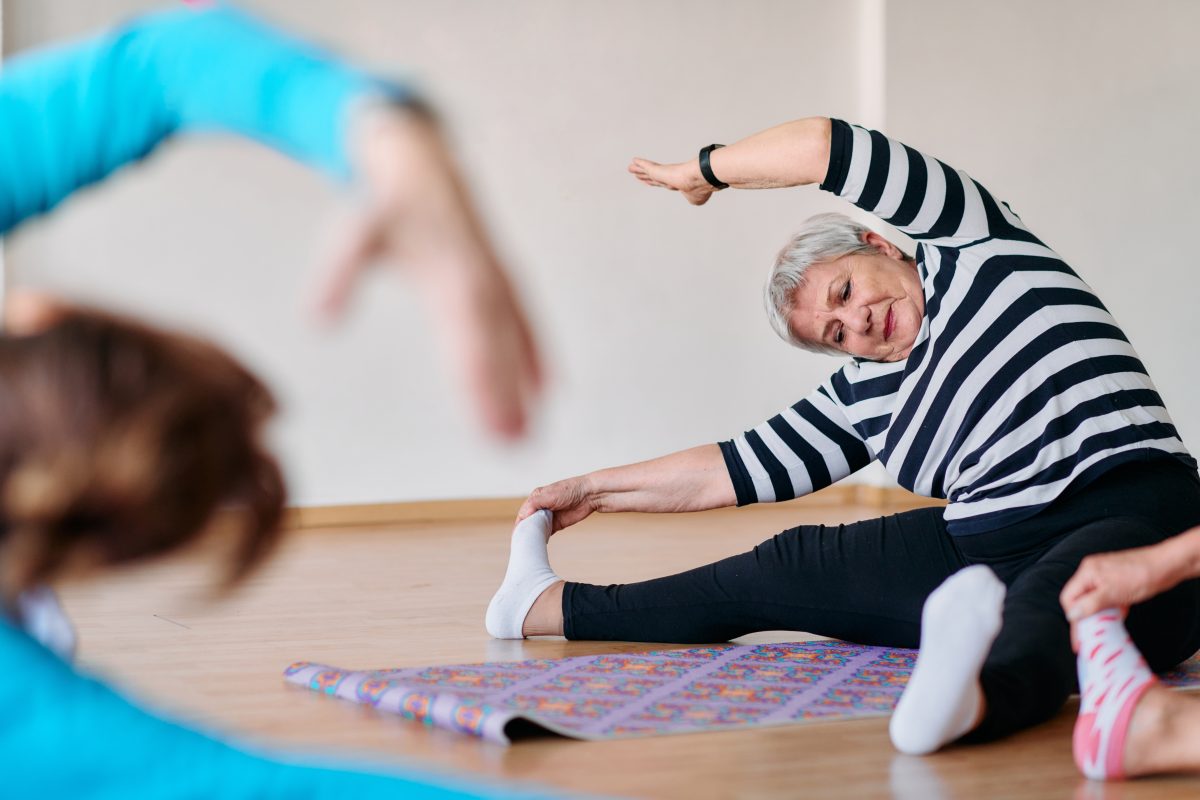
- Side stretches (1 minute): Reach one arm over your head while leaning to the opposite side. This stretch targets your obliques and sides.
- Seated hamstring Stretch (1 minute): Sit with one leg extended, reach toward your toes, and hold the stretch. This lengthens the hamstrings.
- Calf stretch (1 minute): To extend your calf muscles, take a step back, press your heel down, and use a wall for support.
- Quadriceps Stretch (1 minute): Stand on one leg, hold your ankle behind you, and gently pull to stretch the front of your thigh.
- Hip Flexor Stretch (1 minute): Step one foot forward into a gentle lunge to open up the hips.
- Ankle Circles (1 minute): To increase your range of motion, sit or stand, elevate one foot a little, and rotate your ankle in both directions.
Post-stretching tips
After completing your stretching routine, cooling down properly is important to maximize the benefits and help your body recover.
- Slow down: Take a few moments to gradually reduce your activity level. Continue with deep, slow breathing to help your heart rate return to normal and to promote relaxation.
- Hydrate: Drinking water after stretching is crucial to replenish any fluids lost and to keep your muscles hydrated. Staying properly hydrated lowers the chance of cramping and promotes muscle recovery.
- Listen to your body: Pay attention to how your body feels after stretching. If you experience any discomfort or tightness, consider adding more gentle stretches to your routine or adjusting your current ones. It’s essential to honor your body’s signals and avoid pushing too hard.

What are some of the common mistakes made when stretching?
As you age, stretching is an excellent technique to keep your flexibility and avoid stiffness. However, some errors can impede your development or cause harm [3]. Here are some common mistakes to avoid to make the most of your stretching routine:
Skipping the warm-up
Skipping the warm-up before stretching is a common mistake that can lead to injury. Stretching is less beneficial and dangerous at colder temperatures because cold muscles are less flexible and more prone to strains.
A quick warm-up, such as three to five minutes of fast walking, light running, or easy arm swings, increases blood flow to your muscles, preparing them for the stretches ahead [4].
Overstretching
Overstretching occurs when you push your muscles beyond their natural limits, leading to strain or injury. It’s important to recognize that stretching should feel comfortable, not painful.
When you overstretch, you risk tearing muscles or tendons, which can set you back significantly in your fitness routine. Instead, ease into each stretch gently, holding it only until you feel mild tension, not discomfort.
Bouncing while stretching
Bouncing while stretching, known as ballistic stretching, can do more harm than good. This jerky movement puts unnecessary strain on your muscles and increases the risk of injury, such as muscle tears or strains.
Instead of helping you stretch further, bouncing can cause your muscles to tighten as a protective response, reducing the effectiveness of the stretch.
Holding your breath
Holding your breath while stretching is a common mistake that can hinder your progress. When you hold your breath, tension builds up in your body, making it harder for your muscles to relax and lengthen effectively. Proper breathing enhances your stretches by delivering oxygen to your muscles and helping you maintain focus.
Remember to breathe deeply and consistently—inhale through your nose and exhale through your mouth. This rhythmic breathing will help you stay relaxed, allowing for a more effective and comfortable stretch.
Ignoring proper form
Ignoring proper form while stretching can lead to strain and reduce the effectiveness of your routine. Poor posture, such as hunching your shoulders or arching your back, puts unnecessary pressure on your muscles and joints, increasing the risk of injury [5].
To stretch safely, maintain a straight back, relaxed shoulders, and an engaged core. Focus on aligning your body correctly and stretching the intended muscle groups without forcing the movement.
In closing
Taking care of your body, especially as you age, is essential for maintaining flexibility, mobility, and overall well-being. Stretching regularly might help you stay comfortable and active throughout your day.
Now is the perfect time to make stretching a routine. It’s a small investment of time that can lead to big rewards in how you feel and move every day.
Begin with the fundamentals and advance step-by-step. Stretching should be a part of your everyday routine, even if it’s only for a little while because consistency is important.
FAQs
How often should I stretch?
Aim to stretch at least 3-4 times a week for the best results. Daily stretching can offer even greater benefits.
How long should I hold each stretch?
Hold each stretch for 15-30 seconds. Gradually increase the duration as your flexibility improves.
Can stretching help with back pain?
Yes, stretching can relieve tension and improve flexibility, which may reduce back pain. Focus on stretches that target the lower back and hamstrings.
Can stretching improve my posture?
Yes, regular stretching can help correct muscle imbalances and improve posture. Focus on stretches that target your chest, shoulders, and back.
[1] Colorado State University. The simple act of stretching
[2] The New York Times. Stretching: The Truth
[3] Sports Medicine. The Effects of Stretching on Strength Performance
[4] Tri-City Medical Center. Why Warming Up and Cooling Down is Important
[5] Harvard Health Publishing. The importance of stretching

